West Yorkshire’s bus network is set for a new round of timetable and route adjustments at the end of October 2025. Most of the changes take effect from Sunday 26 October, with a smaller number following on Monday 27 October. The revisions span Leeds, Wakefield, Kirklees and Calderdale, touching everything from the frequency of evening journeys to the shape of daytime routes.
Leeds Services
One of the more substantial updates concerns the link between Wakefield, Leeds and Holt Park. Operated by Yorkshire Buses, service 1 and the associated 1A route will be reworked from Monday 27 October. The timetable will be pared back to two journeys in each direction, marking a significant reduction in service. Alongside that, service 1A will be withdrawn altogether. As part of the same package there will no longer be journeys running between Holt Park and Leeds, and the routeings that had taken buses via Pinderfields Hospital will cease.
Service 15 between the city centre, Armley, Gamble Hill and Old Farnley will see its route through Gamble Hill altered by First from Sunday 26 October. Due to access issues, all journeys will operate clockwise around the Gamble Hill loop. There is no change to the published timetable, which is expected to run as at present.
Evening travel options will alter on the corridor serving St James’s Hospital, East End Park, Hunslet Shopping Centre and the John Charles Centre. The 61, 61A and 61E, operated by Yorkshire Buses, change from Monday 27 October with the withdrawal of evening journeys after 1900 that had been branded as 61E. Those late trips were introduced commercially on a trial basis in January 2025 and will now come to an end. Daytime journeys on the 61 and 61A will continue to run until around 1900 as they do now.
Service 81 between Leeds, Armley and Pudsey, operated by Squarepeg, will have some journeys retimed by around five minutes from Sunday 26 October.
Squarepeg will launch service 253 from Sunday 26 October, running hourly between Leeds and Heckmondwike via Birkenshaw and Gomersal. The service is set to operate between approximately 0700 and 1800 on weekdays.
Wakefield Corridors
The 116 runs between Wakefield, Horbury, Ossett, Gawthorpe, Shaw Cross, the White Rose Centre and Leeds under the operation of Yorkshire Buses. From Sunday 26 October buses will be rerouted in Shaw Cross to run via Windsor Road and Chidswell Lane. Along with the diversion, some journeys will be retimed by up to five minutes.
Arriva’s service 126 via Horbury, Ossett and Chickenley will also see its timings refreshed. From Sunday 26 October some journeys will shift by around five minutes.
Arriva’s 189 between Wakefield, Normanton and Castleford will see a more positive movement. From Sunday 26 October, weekdays will gain two additional early evening journeys, namely an 1805 from Castleford to Wakefield and an 1843 from Wakefield to Castleford. These will sit alongside a broader retiming of many journeys by around five minutes.
Leeds to Castleford
Arriva’s service 168 between Leeds, Woodlesford, Swillington, Allerton Bywater and Castleford will have many journeys retimed by around five to ten minutes from Sunday 26 October.
Dewsbury and Bradford
Arriva’s service 283 to Bradford via Batley and Birstall will have a notable early morning adjustment. From Sunday 26 October, the first morning journey from Dewsbury to Bradford on weekdays and Saturdays will run 30 minutes later than at present. Other early morning journeys towards Bradford will also be significantly revised.
Huddersfield Network
First’s service 328, linking Balmoral Avenue, Huddersfield and Bradley, will gain additional early morning and late evening journeys from Sunday 26 October. Alongside these additions, many journeys will be retimed by five to ten minutes and some will be significantly retimed.
The 343, operated by Team Pennine under Transdev and running between Huddersfield, Ainley Top, Elland, Greetland, West Vale and Halifax, will have some journeys retimed up to 20 minutes later from Sunday 26 October.
Services 370 and 371, also operated by First and covering Rawthorpe or Dalton to New College or Lindley, will see early morning and late evening timetables significantly revised from Sunday 26 October and some additional journeys introduced. There will also be changes in how evening movements are branded, with some evening 370 journeys replaced by 371 journeys. In addition, certain trips will be split at Huddersfield Bus Station. Many journeys across the day will be retimed by around five to fifteen minutes.
Calderdale Radials
Team Pennine’s service 524 between Halifax, Ovenden and Mixenden will have most journeys retimed three minutes later from Sunday 26 October.
Service 534 from Halifax to Northowram via Shibden Dale will be retimed on some journeys by around five to fifteen minutes from the same date.
The 563 and 563A between Halifax, Copley, West Vale, Elland, Rastrick and Brighouse will have some journeys retimed by around five to ten minutes.
Service 574 from Halifax via Sowerby Bridge, Luddendenfoot and Booth will also see some journeys retimed by around five to ten minutes.
First’s 576 between Halifax, Queensbury and Bradford will have many journeys moving by around five to ten minutes.
Team Pennine’s 577, which serves Halifax, Savile Park, Sowerby Bridge, Sowerby and Boulderclough, will see the outbound route from Sowerby Bridge to Sowerby change to operate via Sowerby New Road from Sunday 26 October. The inbound route from Sowerby to Sowerby Bridge will continue to run via Pollit Avenue, Bates Avenue, St Peter’s Avenue and Fore Lane, and the timetable will remain unchanged.
Team Pennine’s inter-urban 587 between Halifax, Sowerby Bridge, Ripponden, Littleborough and Rochdale will have some journeys retimed by around five to fifteen minutes from Sunday 26 October.
Seasonal Changes
From Sunday 26 October, Winter DalesBus services commence. This marks the transition to the winter programme for services that reach into the Yorkshire Dales on Sundays and bank holidays.
Closing Remarks
The late October changes blend several types of adjustment. A handful of services see additions at the edges of the day, such as the new early evening trips on the 189 and the extra morning and late evening journeys on Huddersfield’s 328. There are reductions too, most notably the withdrawal of the 61E evening journeys and the scaling back of the 1 and 1A corridor that also removes direct links through Holt Park and Pinderfields Hospital. Much of the rest comprises retimings in the five to ten minute range, occasionally rising to fifteen or even twenty minutes. A small number of routes adopt different alignments to respond to access issues or to recalibrate the streets served while maintaining coverage of key destinations.
Cornwall’s network of branch lines has long offered a simple way to reach parts of the county that otherwise would be awkward by rail. Threading along estuaries, skirting surf beaches or cutting across quiet countryside, these short links add a great deal of flexibility for anyone planning day trips or longer stays without a car. They connect the main Cornish towns with smaller seaside communities, make coastal walking easier to plan thanks to convenient returns by train, and provide journeys that are as attractive as the places they serve.
The St Ives Bay Line: Coastal Views and Artistic Heritage
The St Ives Bay Line between St Erth and St Ives is the best known of the set, largely because of its setting. The track runs close to the shore with open views over the Hayle Estuary before turning to follow the curve of Carbis Bay, so the last minutes of the ride feel like an extended coastal lookout. The train drops you near the heart of St Ives, where beaches are within easy reach and the town centre is compact enough to explore on foot without effort. Cultural stops such as Tate St Ives and the Barbara Hepworth Museum sit alongside Porthmeor and Porthminster beaches, and there is straightforward access to the South West Coast Path for those who want to combine rail with a short clifftop walk. The line’s brevity aids its popularity, keeping travel light and allowing time for unhurried wandering.
The Looe Valley Line: River Journey to a Working Harbour
By contrast the Looe Valley Line from Liskeard to Looe offers a quiet river journey. The train winds along the East Looe River, hugging the water meadows and creeks in a way that feels particularly scenic at high tide when the river fills and glints beside the track. The end of the line is the harbour town of Looe, where a sandy beach spreads out from the river mouth and trawlers still come and go. Simple pleasures are at hand here, from fish and chips to short boat trips, and the immediate surroundings lend themselves to easy strolling. Those wanting more exertion can follow the coast path towards Polperro for a stretch before returning by train. Adding to the character of this route is the unusual connection at Liskeard, where the branch diverges from the Cornish Main Line on a sharply curving link that requires trains to reverse direction. It is an oddity in the network and often remarked upon, yet it functions smoothly and adds a memorable twist to the excursion.
The Maritime Line: Connecting City and Port
The Maritime Line between Truro and Falmouth Docks forms an east–west spine that ties Cornwall’s only city to its main port. This is very much a line of two halves. Truro offers the striking three-spired cathedral, a tidy compact centre, and markets and shops that work well for a short meander before catching the next train. Falmouth then brings an entirely different setting with beaches, a busy harbour and a choice of attractions that includes Pendennis Castle on its headland and the National Maritime Museum Cornwall by the water’s edge. The service also acts as a gateway to the Fal estuary’s ferries, opening up simple hops across to St Mawes for another change of pace. Because the Maritime Line runs frequently for most of the day, it is straightforward to fold into a wider plan or to use as a base for a relaxed afternoon in a single place.
The Atlantic Coast Line: Cross-Country Route to Surf Country
If there is a wilder thread in the set it is the Atlantic Coast Line from Par to Newquay, a cross-country arc that takes in rural scenery and glimpses of Cornwall’s china clay country. In some sections the landscape feels distinctly inland before the line approaches the coast again and ends at Newquay, a resort town whose name is practically shorthand for surfing. Beaches such as Fistral are the main draw, while the Blue Reef Aquarium and easy access to the coast path lend variety to a visit. The service to Newquay is seasonal and timetables can be more limited than on the other branches, so advance checking is important, but when it is running the route adds another option for a day out that does not rely on a long bus journey or a car.
Planning Day Trips: Combining Multiple Lines
Together these branches form a useful framework for exploring Cornwall without driving. They link the county’s principal settlements with seaside towns such as St Ives, Looe, Newquay and Falmouth, while leaving Truro within easy reach for urban diversions. They do so along corridors that in many places shadow estuaries or coastlines, giving the train ride its own value as a scenic interlude. For those planning to walk parts of the South West Coast Path, the lines are practical too, because they create natural start and end points for an out-and-back day when the return is by rail rather than retracing steps on foot.
Because the branches are short and connections on the main line are regular, it is simple to build a day trip around one or two of them. Starting in Truro, one natural shape is to go west first to St Erth for the St Ives Bay Line. The connection is quick, the sea views begin almost at once, and a morning in St Ives can be spent split between the art galleries and the beaches, with time left for a harbour wander. After returning to Truro around midday, the afternoon can be given over to the Maritime Line. This keeps travel times short and steady, and allows for a sequence that moves from a compact city centre to a port town with a different rhythm. In Falmouth the National Maritime Museum Cornwall is close to the station and makes a straightforward visit, though it is equally easy to walk the harbour front or take a ferry over to St Mawes for an hour before catching a return train. An evening meal in Falmouth or back in Truro rounds off the day without the need to watch the clock too closely.
For those beginning further east, Plymouth offers another simple pairing. The Looe Valley Line lies within easy reach after a short trip on the main line to Liskeard. The ride down the valley is a pleasure in its own right, and time in Looe can be used to explore the harbour and beach or to stretch out along the coast path towards Polperro, keeping an eye on the timetable to ensure a relaxed return to the station. By early afternoon, carrying on along the main line to Truro brings the Maritime Line within reach for a second leg. Even a brief look at Truro’s cathedral and centre adds balance to the day before heading to Falmouth for a stroll by the harbour and perhaps some seafood. From there, returning east is simple because main line services run frequently, and the overall structure gives variety without a succession of long journeys.
In summer, adding the Atlantic Coast Line makes sense when a beach day in Newquay appeals. From Truro a change at Par is all that is needed to reach the resort, where the long sands and surf schools make the most of fair weather. The Blue Reef Aquarium sits close to the shore for a compact indoor visit, and a short section of the coast path can easily fill an hour before the return train. Because the Newquay service is seasonal and sometimes less frequent, a little timetable planning goes a long way, but for those who want the colour and bustle of a classic seaside spot it is an obvious inclusion.
A Complete Circuit: All Four Branches in One Day
Some prefer to make the journey itself the focus. In that spirit a one-day circuit that crosses most of the branches can be arranged when services are running to their summer pattern. A workable weekday example using Summer 2025 times begins in Plymouth with an early main line train at about 07:18 to Liskeard, arriving around 07:49. The first branch is the Looe Valley Line, with a departure from Liskeard at 08:16 reaching Looe at 08:49. This allows a short harbour wander or a coffee before taking the 09:02 back to Liskeard, due at 09:34. The next step is a westbound main line run to Par, aiming to be there by 12:00 to meet the Atlantic Coast Line departure at 12:16 for Newquay, which arrives at 13:04. After a quick look along the seafront, the 13:20 makes the return to Par by 14:08. From Par the main line hop to Truro sets up the Maritime Line, where a 15:15 departure rolls into Falmouth Docks at 15:39 for a mid-afternoon harbour stroll or a swift museum visit. The 16:50 back from Falmouth reaches Truro at 17:18, which leaves comfortable time to continue west to St Erth for the St Ives Bay Line. An early evening departure at 18:18 reaches St Ives at 18:29, often just in time for late sun on the beaches and an easy bite to eat. The 20:05 return to St Erth arrives at 20:16, after which the main line eastwards completes the circuit back towards Plymouth.
This sample itinerary is designed with enough slack to feel unrushed. The individual branches are short, typically between ten and forty minutes end to end, so no single leg dominates the day. That makes it possible to step off, take in the scene, and step back on without feeling constrained, and it provides a mix of riverside, inland and coastal views that rarely repeats itself.
Practical Considerations and Travel Tips
As always, the plan depends on current timetables. The times cited above are taken from the Summer 2025 schedules for the branch lines, which are published to apply from 18 May to 13 December 2025, and they match with the pattern of frequent main line services that link Plymouth, Liskeard, Par, Truro and St Erth. Falmouth trains run broadly every 30 minutes for most of the day, while the St Ives service is also generally half-hourly. The Newquay branch sees a seasonal pattern with fewer trains outside the peak months, and the Looe line has no Sunday service after late October. With that in mind, a quick check of National Rail or the operator’s timetable before travelling is advised, and if travelling on a Sunday or in shoulder seasons, making allowances for last trains helps keep the day relaxed. Leaving comfortable interchange time at the bigger stations is sensible too, particularly when changing between branch and main line platforms.
Any plan will benefit from a small amount of preparation. Picking a weekday in summer or early autumn simplifies matters because services are more frequent and the Newquay line is running to its seasonal pattern. Checking the latest times shortly before travelling helps avoid surprises, especially if planning the all-in-one circuit where missed connections can compress later stops. Travelling light keeps station changes swift, and choosing footwear that works both on platforms and on short coastal paths ensures spontaneous detours are comfortable. With those simple steps in place, the branch lines reward curiosity with a range of experiences that can be fitted into a single day or spread over a week with equal success.
Walking Integration: Rail and Coast Path Connections
Beyond the obvious highlights, the branch lines lend themselves to simple add-ons. Ferries across the Fal can augment a Falmouth visit without adding much complexity, and the short walks that radiate from St Ives and Looe make it easy to balance time on the train with time on foot. The unusual reversing manoeuvre into and out of the Looe branch is an attraction in its own right for railway enthusiasts, yet even for casual travellers it creates a pleasing sense of variety within a relatively compact network. Meanwhile, the Atlantic Coast Line’s glimpse of china clay country sets it apart from the more overtly seaside routes, and adds breadth to a day that might otherwise be entirely coastal.
Making the Most of the Network
The overall effect is to make Cornwall feel smaller in a good way. Linking the mainline corridor with these branch spokes allows quick access to St Ives, Looe, Newquay and Falmouth from hubs such as Truro or Plymouth, with the option to combine two or more in a day without excessive effort. Because the trains spend so much time alongside water or within sight of the sea, the journeys themselves rarely feel like gaps between attractions. Instead, they provide vantage points that are hard to gain by road, crossing tidal estuaries at the right height or rounding bays in a way that consistently reveals fresh views. For those who enjoy walking, being able to step onto the South West Coast Path, follow it for an hour or two, and then rejoin a branch line for the return neatly solves the usual problem of out-and-back routes.
In summary, Cornwall’s branch lines form a compact, scenic, and practical network that opens up the county well beyond the main line. The St Ives Bay Line offers a coastal finale into a walkable town rich in art and sea air. The Looe Valley Line follows its river to a classic harbour with straightforward access to coastal walking, and reflects a quirk of railway design with its reversing link at Liskeard. The Maritime Line ties the county’s city and port together with frequent trains that make combining cathedral, castle and quayside simple. The Atlantic Coast Line cuts across to Newquay with a seasonal service that rewards timing with surf beaches and an energetic seaside atmosphere. Used individually or woven together, they provide an easy framework for car-free exploration that makes the most of Cornwall’s shorelines and estuaries while keeping travel straightforward.
In causing a notable shake-up to the public transport landscape of Derbyshire and the Peak District, the closure of Hulleys of Baslow in March 2025 marked the end of an era while also setting off a flurry of activity as alternative operators stepped in to take over key routes. With a legacy stretching back over a century, Hulleys had been a fixture in the region. However, ensuring the continuity of service for local residents and visitors required swift action by both Derbyshire County Council and bus companies alike.
The tendered routes previously supported by Derbyshire County Council were among the first to see new operators step in. Routes 110 and 111 are now under the management of Ashbourne Community Transport, a transition that promises continuity for residents relying on these services. The picturesque areas of Bakewell and its surroundings, served by routes 172, 173, 178, and 257, which are now operated by Andrew’s of Tideswell. Meanwhile, Stagecoach Yorkshire has taken on Route 63, which connects Chesterfield to Matlock, following a contractual agreement with the council.
In contrast, the commercial routes previously operated independently by Hulleys present a more complex picture. For instance, route 170, which links Chesterfield to Bakewell via key stops such as Baslow and the renowned Chatsworth House, faced some uncertainty when High Peak Buses Stagecoach Yorkshire both expressed an interest in taking it over. The actions of the latter caused the former to withdraw to introduce a similar service, albeit bypassing Holymoorside, prompted High Peak to withdraw. The result is that Stagecoach now exclusively operates this service, albeit bypassing Holymoorside.
Routes 271 and 272, traversing the scenic stretch from Sheffield to Castleton via Hathersage and Hope Valley, now sees High Peak Buses operating journeys to compliment those of First Bus, maintaining the previous service level for routes particularly useful to walkers in this well-visited part of the Peak District. Prior to their closure, Hulleys did likewise for the same routes.
Similarly, the Chesterfield to Alfreton route, known as Route 55, encountered a brief hiatus before Notts and Derby took the helm in early April 2025, reinstating the service with minor timetable modifications but retaining its essential structure. This particular route enjoys partial funding support from Derbyshire County Council, underscoring its importance to the area’s public transport network.
From April 13th, public transport around Liverpool is undergoing several changes, with both timing adjustments and more substantive modifications affecting various bus routes across the region. This is in addition to the Easter service changes on Good Friday and Easter Monday (18th and 21st April), which are public holidays. On those days, Sunday service schedules will be implemented across the entire network.
Apparent from route 211, which introduces an entirely new service replacing the previous Arriva ‘Click’ operation around Speke, most are timing changes. Routes 3 and 3A get timing point changes: Camberley Drive is removed while Mackets Lane, Roskell Road is added as a timing point on journeys towards Huyton. Otherwise, Halewood Caravan Park is re-instated in the timetable for these services.
Moving to the timing changes, these affect service 3a in addition to the other changes. Other affected routes include 10, 10A, 12, 13 and 204. Service 15, connecting Liverpool and Huyton, has seen timing changes specifically affecting weekend schedules and certain weekday evening journeys. Route 320 has undergone a slight retiming, with the Monday to Friday service that previously departed at 14:33 now leaving five minutes later at 14:38, along with further timing modifications along the journey. Specific weekday journeys on route 217, which runs from Bootle through Kirkby Bus Station to Huyton or Halewood, have been retimed. These include the 07:45 service towards Kirkby and several afternoon trips.
As of 31st March 2025, a wave of changes will be sweeping through the public transport services in the Cheshire and Greater Manchester areas. These adjustments come as a result of new contracts awarded by Cheshire East Council and Cheshire West and Chester Council, aiming to enhance connectivity and efficiency across the network.
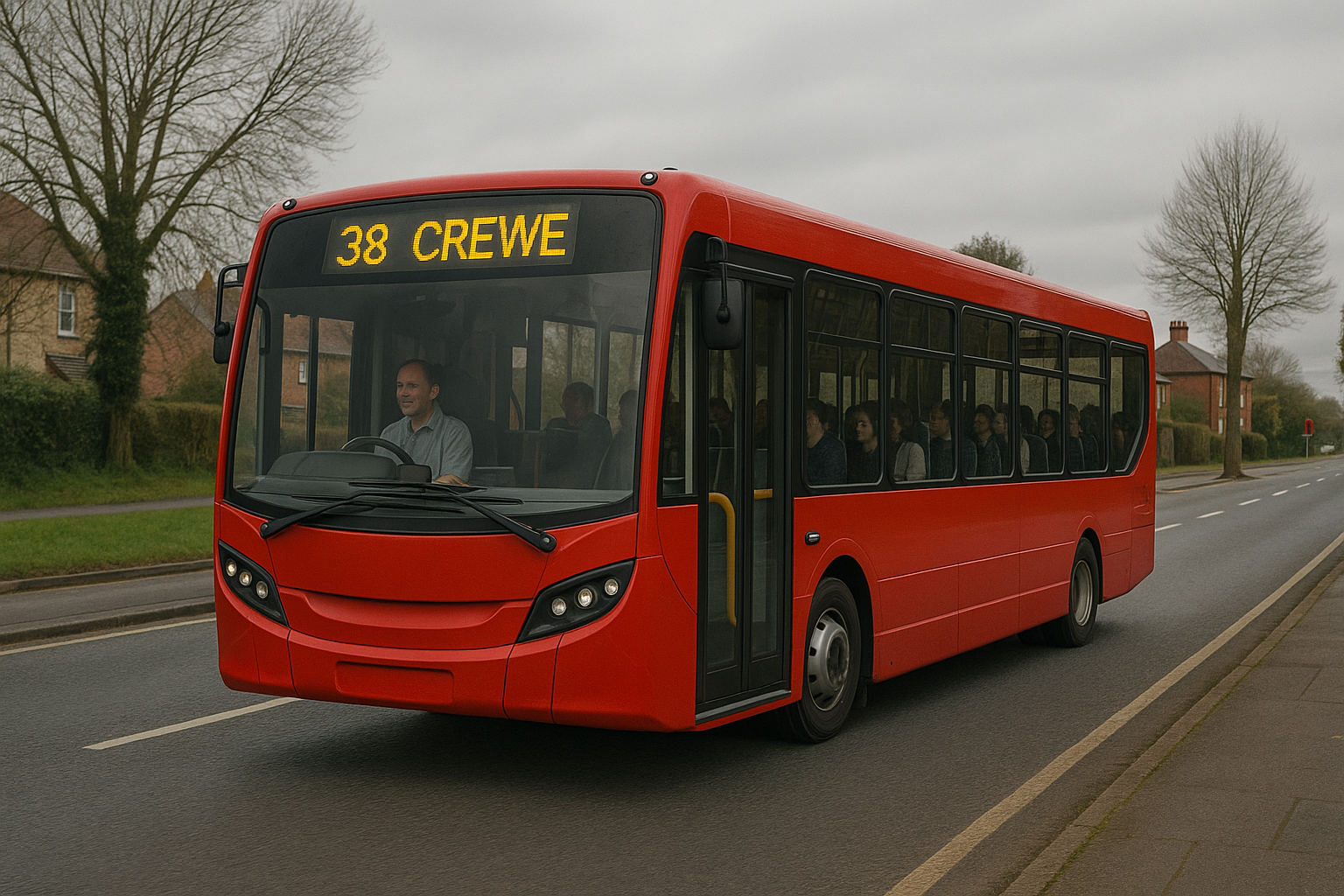
One of the changes is to Service 38, where the 1845 journey departing from Crewe will now set off 10 minutes later. Passengers can view the new timetable for precise scheduling. Changes are also being introduced to Service 42, with modified timings and additional Monday to Friday early evening journeys to better serve passengers travelling to and from Leighton Hospital.
Services 48 and 48A have undergone a significant revamp to boost reliability. While some journeys will bypass Withens Lane and Lime Avenue in Weaverham, the withdrawal of Service 48A will be mitigated by the introduction of additional journeys on Service 48 every Thursday. Crucially, the route segment around Overton and Ship Street in Frodsham will now operate as Service 47. Timetables for both new services are available for those seeking detailed information.
New routes are introduced with Services 51 and 52, both offering fresh links between Wrenbury, Aston, and Sound with Nantwich and Leighton Hospital. Running from Monday to Saturday, these services promise to expand transport options in the area. Similarly, Service 53 is set to launch, establishing a new connection between Audlem, Buerton, and Hankelow and the key destinations of Nantwich and Leighton Hospital.
Changes are also afoot for Services 87 and 88, with the latter being divided to form a separate Service 87 from Knutsford to Macclesfield. Despite this split, the transition will be seamless with through fares remaining in place and no need for passengers to change buses at Knutsford. Moreover, Service 87 will now run into Radbroke Hall grounds with an increased hourly operation from Monday to Friday.
Enhancements extend to Service 89, where the revised timetable introduces extra afternoon journeys, while Services 90, 91, and 92 will now be operated by D&G Bus instead of Hollinsheads Coaches, with routes and schedules remaining consistent. For those reliant on Service 130, certain early morning and late afternoon journeys will be extended to include Wythenshawe, complemented by minor timing modifications to enhance service reliability. However, Service 312 will be withdrawn following the end of its developer funding.
The changes affect Service 317 as well, with timing alterations accommodating an increased number of buses serving the Cranberry and Pikemere estates in Alsager. Additionally, new Saturday journeys between Sandbach and Alsager are being introduced to further support local travel needs.
These comprehensive adjustments reflect a continued commitment to improving public transport services across Cheshire and Greater Manchester, offering passengers revised options for their commutes and ensuring a more efficient travel experience. For those looking for more information, timetables for each service have been updated and are readily accessible.
From 1st November 2026, service 424 between Galway and Lettermullen via Carraroe will have additional capacity, serving Bearna and An Cheathrú Rua. On weekdays two new peak morning journeys run in each direction between Galway Ceannt Station and Bearna. In the evening a new journey runs in each direction between the station and Bearna, and an additional journey runs in each direction between the station and An Cheathrú Rua, calling at Bearna.
Under a new timetable starting on Monday 2nd November 2026, service 105X between Dublin and Fairyhouse Road via Ratoath gains new weekday journeys calling at the M3 Parkway Park and Ride. In the morning one journey runs from Ratoath to the park and ride, and a later journey starts there and heads for Dublin. In the evening two journeys from Dublin end at the park and ride, while a separate journey starts there and proceeds through Dunboyne to Ratoath.
21:21, October 12th, 2026
From October 25th, Bus Éireann is introducing revised timetables for its Expressway Route 13 and Route 14 services, which operate between Limerick, Tralee and Killarney. The changes aim to improve reliability and punctuality by adjusting departure times according to traffic conditions. A new Sunday morning departure from Tralee to Limerick has been added, and some weekday and Sunday journeys have been withdrawn. Discounted online fares are available until the end of November and customers are encouraged to book tickets in advance to secure their seats.
 Posted on November 4th, 2025