Considering Possible Bus Routes to Glendalough and the Wicklow Mountains
 Posted on September 25, 2026
 Reading time: 8
minutes.
Reading time: 8
minutes.
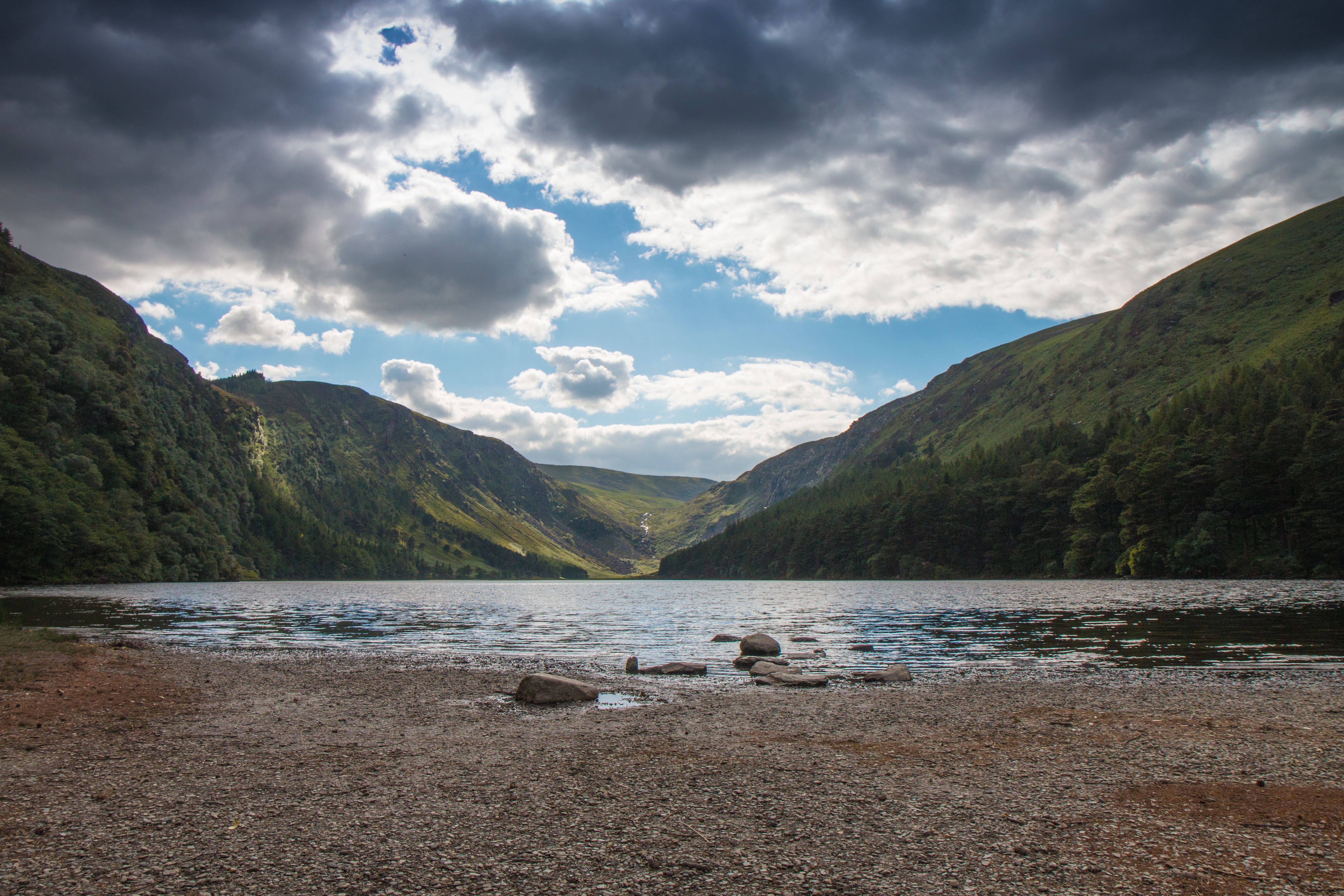
The Wicklow Mountains have become reachable from Dublin by more than one route, though the direct coach to Glendalough remains the best-known option. For years, that coach seemed like the only practical way into the hills south of the city, with Glendalough treated as the one destination worth aiming for. What had been missed was a pair of local services that have reshaped how those mountains can be crossed on foot, which may be why some walkers still default to the old route without checking what else now exists.
The landscape has attracted visitors for generations, and its rounded hills, wooded slopes and walking trails remain within easy reach of the capital. For me, the appeal is also personal. Wicklow was a favourite place for my own parents, and Bray, on the coast, where they spent their honeymoon, is one of the stops on St Kevin’s Bus, linking that familiar seaside town with the uplands further inland.
Direct Travel from Dublin
St Kevin’s Bus covers around fifty kilometres between Dublin and Glendalough, according to the operator’s own description of the route. The journey takes passengers out of the city and towards the mountains, with a stop at Bray along the way, where the promenade provides views across the Irish Sea. Further inland, the route passes Roundwood, reputed to be one of the highest villages in Ireland, before reaching Glendalough.
The current timetable has the bus leaving Dublin’s St Stephen’s Green North once each morning, so the direct coach makes the journey straightforward for anyone who wants to spend the day around the lakes or explore the valley. It remains a useful starting point for planning a trip, although the published timetable should be checked before travel, particularly if the intention is to connect with another bus or to attempt a longer walk.
Glendalough lies within Wicklow Mountains National Park and is a focus for both outdoor recreation and heritage. The Upper Lake and Lower Lake draw visitors for lakeside walks, picnics and longer hikes, while walking trails lead into the surrounding hills and rock climbing and other outdoor activities are also available. The valley’s combination of water, woodland and steep mountain slopes makes it possible to spend a day there at a range of different levels of activity.
The direct bus, however, is no longer the only way to reach the area. The expansion of the local bus network has added useful options for walkers, including services that reach Roundwood and Wicklow Gap, and these make it possible to plan linear walks that end at Glendalough rather than returning to the starting point.
An Alternative Option for Getting to Roundwood
Route 183 is the relevant local service for reaching Roundwood, and it operates between Arklow, Wicklow, Roundwood and Glendalough with seven or eight departures a day under the expanded timetable introduced on 4th December 2025, roughly every two hours from early morning into the evening. A mid-morning service reaches Roundwood shortly after 10:00 and continues on through Laragh to Glendalough a little later.
Since it does not start in Dublin, reaching Roundwood for that mid-morning service means connecting from a station on the Dublin to Rosslare line, such as Wicklow or Rathdrum, both of which the route also serves. Checking that connection using Iarnród Éireann’s Journey Planner in advance, rather than assuming it, makes the difference between reaching Roundwood in time and missing the useful morning departure.
Once in Roundwood, walkers can join a stage of the Wicklow Way that climbs over Paddock Hill and descends through Brockagh Forest to Glendalough, roughly ten to twelve kilometres with about 350 metres of ascent and three to four hours of walking. The trail itself lies around two kilometres from the village, so the walk begins with a short approach near Oldbridge.
With that approach done, a walker arriving in Roundwood at around 10:00 could set off at about 10:10, and at an unhurried pace might reach Glendalough between 14:00 and 15:00. That leaves time for lunch or a shorter walk around the lakes before heading back.
The 183 timetable provides several possible return journeys from the Glendalough and Laragh end of the route through the afternoon and evening. An early-evening departure is a reasonable target for a full day, while an earlier or later service could suit anyone who finishes quickly or wants more time.
This creates a straightforward eastbound day out, with one option being to travel from Dublin to Wicklow or Rathdrum by train, board the 183 service to Roundwood, walk the Wicklow Way to Glendalough, then return by the 183 service towards Wicklow or Rathdrum and continue to Dublin by rail. The Roundwood option makes for a fuller day than a simple visit to Glendalough, and each connection is still worth checking against current timetables rather than assumed.
Putting the Wicklow Gap Within Reach
Route 895 runs between Sallins, Naas, Blessington and Glendalough, and it operates daily, including public holidays, giving scheduled access to Wicklow Gap, a location that can otherwise be difficult to reach without a car or a pre-arranged lift. It runs four times a day from Sallins, and the bus reaches Wicklow Gap an hour after leaving, then continues to Glendalough a few minutes later, with the most practical departure for a Dublin-based day out leaving Sallins at 11:40 and reaching the gap at 12:40.
Since it does not start in central Dublin either, reaching Sallins for that practical 11:40 departure means taking a suitable train from Dublin Heuston, as an earlier service cannot reliably be reached by rail from the city in time. Checking that connection using Iarnród Éireann’s Journey Planner in advance, rather than assuming it, makes the difference between the practical mid-morning departure and the less dependable early one.
Having reached Wicklow Gap, walkers can leave the bus there and follow St Kevin’s Way down through Glendasan to Glendalough, a route that offers a different experience from the Wicklow Way approach from Roundwood. Doing so removes the need to arrange a taxi or a lift to the start, which otherwise makes this a difficult point to begin a walk from.
The return journey on the 895 service makes a useful link across the mountains, running several times through the afternoon and early evening. An early-evening service is particularly convenient after a walk from Wicklow Gap, reaching Sallins around an hour later, though a later 183 service also offers a return heading east rather than west for anyone who prefers it. From Sallins, travellers can connect with trains towards Dublin on the Heuston to Portlaoise commuter corridor.
This creates a straightforward westbound day out, with one option being to travel from Dublin to Sallins by train, take the 895 service to Wicklow Gap, walk St Kevin’s Way to Glendalough, then return to Sallins by bus and continue to Dublin by rail. It is not necessary to travel east towards Wicklow town or the Rosslare railway line after completing the walk, and the daily operation of the 895 service also means the plan is not restricted to a particular weekday, although each connection still needs to be checked against current timetables.
An Enhanced Network Across Wicklow
Glendalough can function as a meeting point between the two local bus routes. Route 183 provides an eastbound connection towards Wicklow, Rathdrum and Arklow, while route 895 runs west towards Blessington, Naas and Sallins, and the services were deliberately timed to connect at Glendalough, adding a degree of flexibility for walkers. Depending on the day’s rail connections, it may be possible to return by a different side of the mountains from the one used to arrive.
Route 895 also broadens access to places beyond the two walks I have described here. Its route through Blessington and towards the Poulaphouca and Valleymount area provides a starting point for exploring the western Wicklow uplands, which have long been awkward to reach without a car, while route 183’s increased frequency makes travel between the eastern towns and Glendalough more flexible than it was previously.
These changes followed the enhancement of route 183 and the introduction of route 895 by TFI Local Link Carlow Kilkenny Wicklow on 4th December 2025. The operator says route 183 was increased to seven or eight daily departures, while the new route 895 was introduced specifically to link Sallins, Naas, Blessington and Glendalough, and together the two routes make the local network more useful, not only for visitors heading directly to the lakes but also for people planning walks with different start and end points.
The two routes from Roundwood and Wicklow Gap offer contrasting ways to explore the mountains. Roundwood to Glendalough is the longer walk, following the Wicklow Way over a route with a substantial climb, while Wicklow Gap to Glendalough is a transport-assisted walk along St Kevin’s Way, with a later start but a convenient return to Sallins. Both finish in the same valley, where there is time to visit the lakes or take a shorter walk before catching a bus.
For anyone planning a countryside escape from Dublin, the main change is that Glendalough is no longer the only useful destination in the area. St Kevin’s Bus remains a direct way to reach the valley, while routes 183 and 895 add options for crossing the Wicklow Mountains on foot, and with the correct connections checked in advance, buses can make these landscapes and walking routes accessible without a car.
Recent Musings
West Cork Bus Connections for Walkers and Other Visitors
Planning County Kerry Walks and Day Trips by Bus
Discovering County Mayo Using Public Transport
Appraising Bus Routes for a Car-Free Walking Trip in Donegal
Exploring Mid Wales by Public Transport from Shrewsbury, Newtown and Llandrindod Wells
Extras & Utilities
Carrying Bicycles on Buses in Britain and Ireland
Not Just Blogs, A Collection of Public Transport News Sources