Discovering County Mayo Using Public Transport
 Posted on October 11, 2026
 Reading time: 5
minutes.
Reading time: 5
minutes.
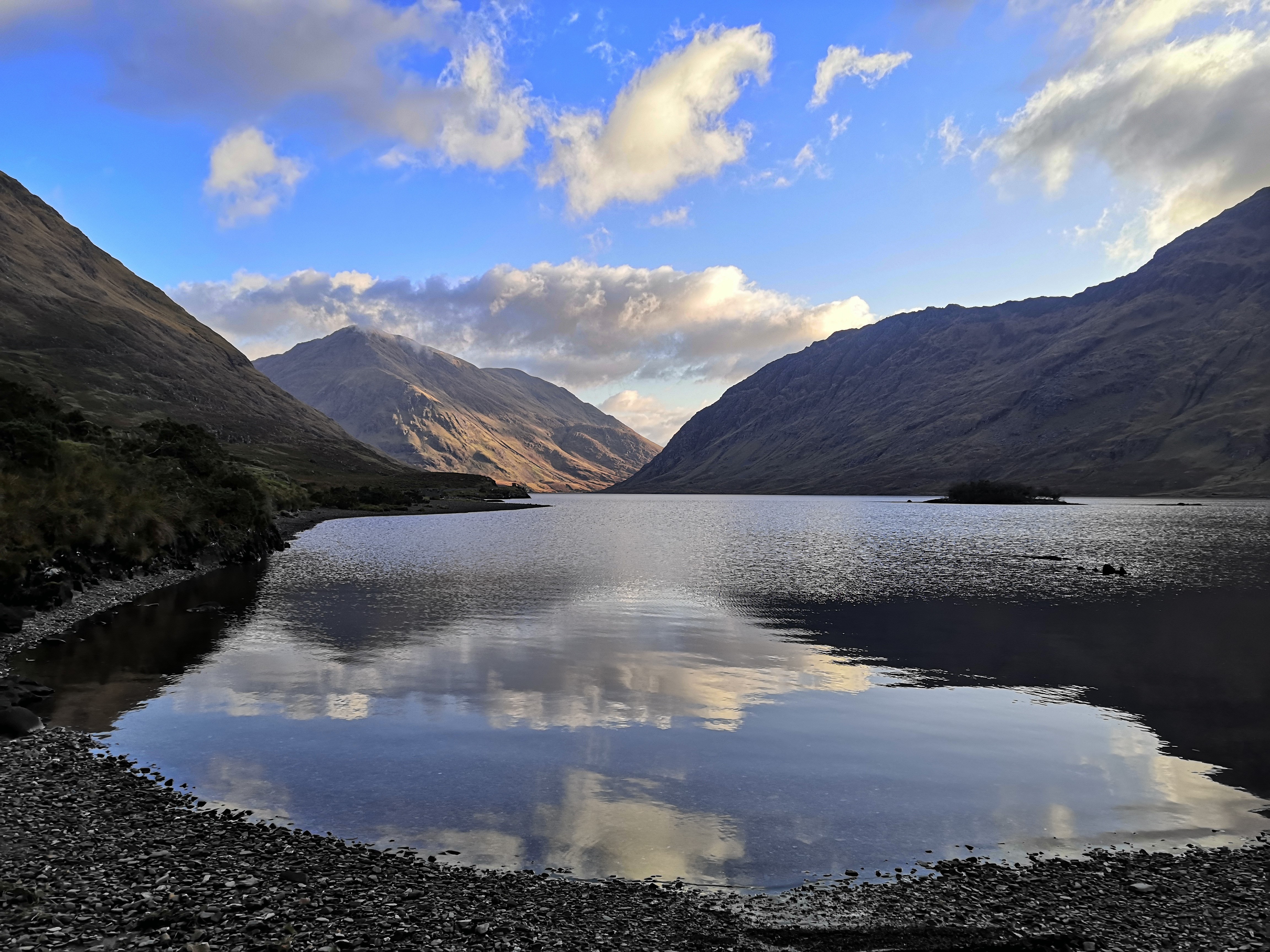
County Mayo has a reasonably useful public transport network by the standards of the west of Ireland, though services are spread unevenly across a large and varied landscape. The main towns are linked by rail and by Bus Éireann services, while many of the more remote coastal and upland areas rely on TFI Local Link Mayo.
The central difficulty is rarely reaching a town or station. What matters more is whether a bus can then take you to a trailhead and, just as importantly, bring you back before dark.
Rail Connections
The railway enters Mayo from the east and runs across the middle of the county to Westport on Clew Bay. Trains on the Dublin Heuston to Westport and Ballina route run through Athlone and Roscommon to Ballyhaunis, Claremorris, Castlebar and Westport, and Westport has several direct trains to and from Dublin each day.
Ballina is less convenient because it lies on a branch of about 33 km that leaves the main line at Manulla Junction. Irish Rail advises changing trains there for Foxford and Ballina, so it is worth allowing time for the interchange.
Beyond Westport and Ballina, the rail network does not go any further. There is no train to Achill, Belmullet, Louisburgh or Newport, so reaching those places means continuing by bus, and the connecting service often decides whether a day trip is practical.
Buses and Coaches
Bus Éireann runs most of the regional corridors, and Transport for Ireland publishes the full list of routes. Castlebar, Pontoon and Ballina are linked by route 420, while route 423 runs from Westport to Clifden by way of Leenane and Kylemore. In the north, route 445 serves Ballina, Killala and Ballycastle, and route 446 continues from Ballina through Belmullet to Blacksod. Further afield, route 440 connects Westport with Athlone and route 458 links Ballina with Sligo and Enniskillen.
In the west, route 450 runs from Dooagh on Achill through Keel, Achill Sound, Mulranny and Newport to Westport. It then continues to Murrisk and Louisburgh, which makes it the most useful single route for the western side of the county.
The other important corridor is route 456, which runs from Castlebar through Westport, Ballinrobe, Kilmaine and Headford to Galway. Departures from Castlebar towards Galway run roughly every three hours from early morning to evening, which makes it the most frequent service of its kind in the county.
Local Link in the West
TFI Local Link Mayo runs Regular Rural Services on fixed timetables with no booking needed, which covers routes 454, 460a and 460b. Route 454 runs between Ballina and Castlebar, route 460a between Gob an Choire on Achill and Castlebar and route 460b between Belmullet and Castlebar, with all three operating seven days a week according to the Local Link Mayo timetables.
According to the Transport for Ireland announcement, the 460a has five return journeys a day and the 460b has three. Together they give eight daily returns between Mulranny, Newport and Castlebar.
The 460b keeps three journeys each way on Sundays, including an evening bus from Castlebar back towards Belmullet. It calls at Bangor Erris, Ballycroy, Mulranny and Newport, which brings the northern edge of Wild Nephin within reach of a day trip.
Reaching the Walking Areas
Achill needs the most care because two routes reach it in different ways. Route 450 runs all the way to Keel and Dooagh at the western end, whereas route 460a stops at Gob an Choire near Achill Sound. Walks around Slievemore and Croaghaun are therefore best approached on route 450, and the return journey needs checking before setting out. For Wild Nephin National Park, the 460b through Bangor Erris and Ballycroy is the main link. During the summer months the park also runs a free shuttle between Bangor Erris and Westport from Tuesday to Saturday, with no service on Sundays or Mondays. Croagh Patrick is best approached from Westport, because route 450 calls at Murrisk at the foot of the mountain. The Doolough Valley is harder to reach without a car, since route 450 finishes at Louisburgh and onward travel into the valley needs separate planning. Downpatrick Head is reached through Ballycastle on route 445, but the walk from the village and the availability of a return bus both need checking.
Choosing a Base
Westport is the strongest all-round base, with the railway, route 450 to Achill and Louisburgh, route 423 to Connemara and route 456 to Galway all within reach. Castlebar works well as an interchange because routes 420, 440, 454, 456, 460a and 460b all call there, along with the railway station.
Ballina suits the north of the county, with routes 420, 445, 446, 454 and 458 plus the branch trains. Belmullet is useful for exploring Erris, being served by routes 446 and 460b, but arriving and travelling locally both need more planning.
Making Mayo Work Without a Car
In summary, Mayo is more promising for public transport than its dispersed population and mountainous terrain might suggest. Achill, Croagh Patrick, the Lough Conn area and the Ballycroy region all have identifiable bus corridors, even though the final approach to the hills may still involve a significant walk.
The practical next step for any day trip is to compare the first and last departures, check what runs on Sunday and confirm where the bus can stop. The TFI Journey Planner covers Bus Éireann, Local Link regular services and Irish Rail in one place, which makes that comparison much quicker.
Recent Musings
Discovering County Mayo Using Public Transport
Considering Bus Routes for a Car-Free Walking Trip in Donegal
Exploring Mid Wales by Public Transport from Shrewsbury, Newtown and Llandrindod Wells
Getting to Know the Bannau Brycheiniog (Brecon Beacons) National Park using Train and Bus
Considering Possible Bus Routes to Glendalough and the Wicklow Mountains
Extras & Utilities
Carrying Bicycles on Buses in Britain and Ireland
Not Just Blogs, A Collection of Public Transport News Sources