Helpful Councils
 Reading time: 9
minutes.
Reading time: 9
minutes.
Local councils play an important role in shaping public transport across the United Kingdom. They are often responsible for supporting bus services, managing transport infrastructure and providing information that helps residents and visitors make effective use of local networks.
Just because areas are hilly and mountainous or that there are far-flung islands doesn’t mean that there isn’t a useful public transport service for getting about (the name of this part of the council website as it happens). There are timetables to be found for next to every means of travel imaginable with ferry and air services complementing the more usual fare of bus and train information.
A while back, Bedfordshire County Council was replaced by Bedford Borough, Central Bedfordshire and Luton unitary councils. Of these, only the first is sticking with having bus timetable information, so that stays in this listing; the rest have been removed, as happens from time to time.
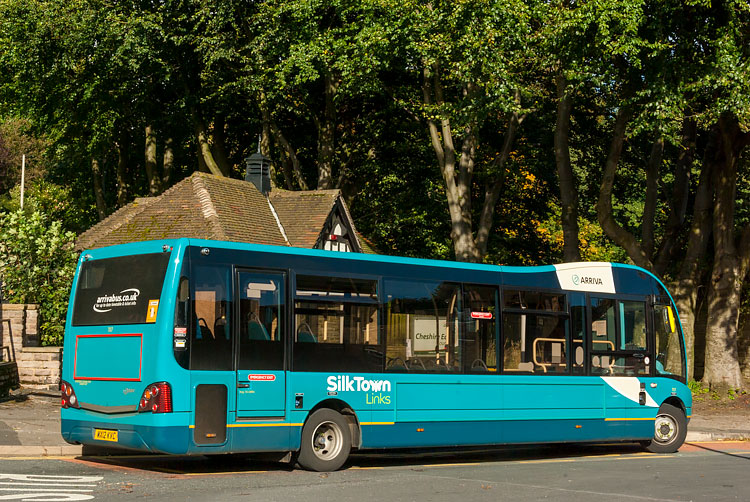
Following on from the now-defunct Cheshire County Council, Cheshire East Council coordinates and provides information for bus services across its borough, including Crewe, Nantwich, Macclesfield and Congleton, through a comprehensive online system that lists route numbers, operators and recent changes. The council publishes downloadable public transport maps, maintains information on over 999 bus stops with timetable displays throughout the area and offers journey-planning tools alongside details about passes, tickets and service updates.
Cheshire West and Chester Council
Also carrying on from its predecessor, Cheshire County Council, Cheshire West and Chester Council provides comprehensive public transport information through its council pages, including downloadable PDF timetables organised by route number, network maps for different areas showing bus stops and interchange stands, and links to journey planning tools such as Traveline and the iTravelSmart app which offers both live and scheduled information. Whilst timetable information is readily available online, the council shows consideration for less digitally engaged residents by offering printed copies on request.
The council operates a public transport information service that includes searchable bus timetables organised by location or service number, fare details and payment options, and live arrival times for services. In addition, they maintain systems for reporting issues with bus stops and shelters whilst also providing regular updates on service changes and cancellations.
All in all, the information provided is comprehensive for a predominantly rural region, though specific service frequency guarantees are not explicitly stated across all routes. For explorations of the Lake District, of which part is in the council area, all of this is particularly useful for those travelling without a car.
A few years back, this local authority took an enlightened view and had a separate website offering travel information. Sadly, that no longer is the case, and you are left having to work a little harder than before. Nevertheless, there is a satellite website with bus timing information that remains more than useful. In a way, it’s a shame that things like these are as easy to find as they were, particularly given that the county plays host to a very popular national park that gets crowded in places every bank holiday weekend, but that can be an outcome of piling more things into an already cluttered structure if you’re not careful.
As well as a section on their main website, Devon County Council also has JourneyDevon for promoting the use of public transport in their area. Like what Powys offer, there is an interactive map where you can click on a route number and see the timetable for that service. Community transport offerings are on there too and that’s important with two areas of wilder countryside within the county area: Dartmoor and Exmoor. Two stretches of coastline allow for the promotion of certain routes for their scenic value and videos show off these. For those unfamiliar with the use of buses and trains, there also are helpful guides on how to do just that. That is never to say that the main website section is redundant since there are links to district timetable guides in e-book form for those wanting a more traditional feel than an interactive map, as good as that is.
This is one of the few local authorities that owns its own buses, primarily for school travel provision but also for less frequent socially necessary public bus services. Naturally, timetables for all bus services are available on here along with the sort of other local travel information that we have come to expect of local authority websites.
Never let the usefulness of a list of timetables be downplayed when it comes to exploring an area and that’s how it has proven with the Gwynedd of the Snowdonia National Park. In addition to the usual sections on day-to-day bus and train travel, there’s a section devoted to the Snowdon Sherpa services for those wanting to get to know those hillier areas while leaving the car after them.
Another one of Cheshire’s unitary authorities and one that didn’t reach my consciousness until recently, it also has a devotion to the provision of public transport information. The area centres around Runcorn and Widnes together with smaller places such as Helsby and Frodsham too. There are bus timetables listed here like so many other council websites, and it is an area that I might go exploring too. After all, the Sandstone Trail starts in Frodsham, so a walking idea came into place.
This county is surprisingly rural given its proximity to London yet is a place where I wouldn’t have thought of going but for business trips within the last few opportunities. That’s not to say that there aren’t countryside walking opportunities for the locals so having buses for getting about would be handy. Usefully, the county council’s dedicated public transport website seems a good port of call for travel information with a library of bus timetables like the others on this page.
In addition, they also are involved in the Network St. Albans initiative for reducing the amount of traffic generated by single-occupancy motor vehicles. Along with the usual mix bus and train travel options, cycling and walking are mentioned along with car-sharing.
It’s an island through which many pass on their way to and from Irish Sea ferries to Dublin, but it surprised me by having its own (county) council. Very usefully, it does its share when it comes to providing public transport information and there’s a comprehensive list of bus timetables available; there’s even a link to the website of the local airport!
Following a round of savage bus service cuts, there is a partial restoration in progress following a change of council cabinet. The increase in support for bus services is welcome, and they do get a whole independent section of the council website with a timetable listing being part of the offer. Nevertheless, that doesn’t mean that there isn’t a nod towards rail and tram (in Blackpool, that is) services either.
This has been a county that evaded my notice for several reasons but a dedicated bus service website has come to my attention. Both scheduled and demand-responsive services get their place on there along with a news section for service updates too. The county may not be that hilly, but it does have its Wolds and the city of Lincoln is well worth a trip as I found on two visits.
This is another area worthy of attention from the outsider and one where the local council does its bit for ensuring that you know how to get around too. Some of the areas served are surrounded by hills, and it may surprise you where services go. The list of bus timetables is split by area, but a useful overview map ensures that you don’t end up scratching your head to work out where the likes of Craven is.
While my two visits to this part of Wales were separated by several years, it is heartening to see that information useful for planning a long-overdue return to the area remains easily accessible. Included among the available bus timetables are those for leisure services that enable the exploration of the spectacular coastline that is to be found down there. Pointers for rail and ferry information are to be found too.
Is it telling that clicking on a link named Public Transport Information takes you to information about trains? Do they feel that an apparent bias towards bus travel would be unfair? I am not going to venture an answer to either of these questions about that one, but a spot of concentration will fish out the bus travel information for you. Saying that, an obvious suggestion would be to have a general landing page for public transport information rather than arriving at the train one like now.
They may be Scotland’s, and hence Britain’s, most northerly islands but that is not to say that regular travel services do not operate. Given that these are a set of islands, it should not come as any surprise to find bus running information complemented by that for air and sea services too. The latter pair is necessary for getting from one island to another, let alone connecting them to the rest of the world around them.
It came as a recent surprise to learn that Staffordshire County council has a library of bus timetables. That was enough to get it added on here, and there is information of bus service changes as well as on other forms of transport.
Western Isles (Na hEileanan nan Iar)
Some may find it a surprise to discover that these outliers from the Scottish mainland have their bus services too along with the requisite ferry and air travel links on which any island is so dependent. However, given the size of the grouping (spending a few days getting from top to tail or vice versa is likely), those bus services prove invaluable if you are without a car, and they very handily link in with ferry and air services too.
The council offers a comprehensive bus service information portal featuring a searchable directory of timetables organised by location or route number, details on various bus passes and fare options, live tracking of bus arrivals and facilities for reporting issues with stops and shelters. This covers another part of the Lake District, meaning that the details will be of interest to any non-driving fell wanderer or anyone else who wants to explore the area without recourse to private transportation.
Learn More
Recent Musings
October 2026 Wirral Bus Network Changes Under Liverpool City Region Franchising
West Cork Bus Connections for Walkers and Other Visitors
Planning County Kerry Walks and Day Trips by Bus
Discovering County Mayo Using Public Transport
Appraising Bus Routes for a Car-Free Walking Trip in Donegal
Extras & Utilities
Carrying Bicycles on Buses in Britain and Ireland
Not Just Blogs, A Collection of Public Transport News Sources