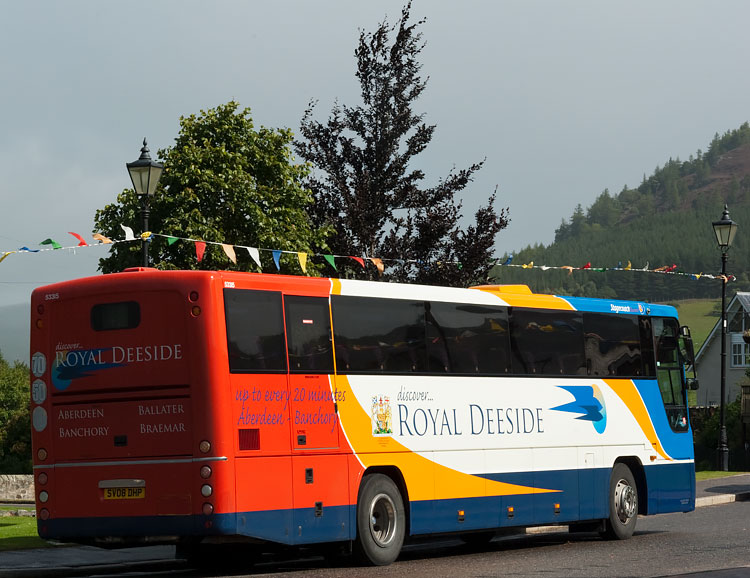
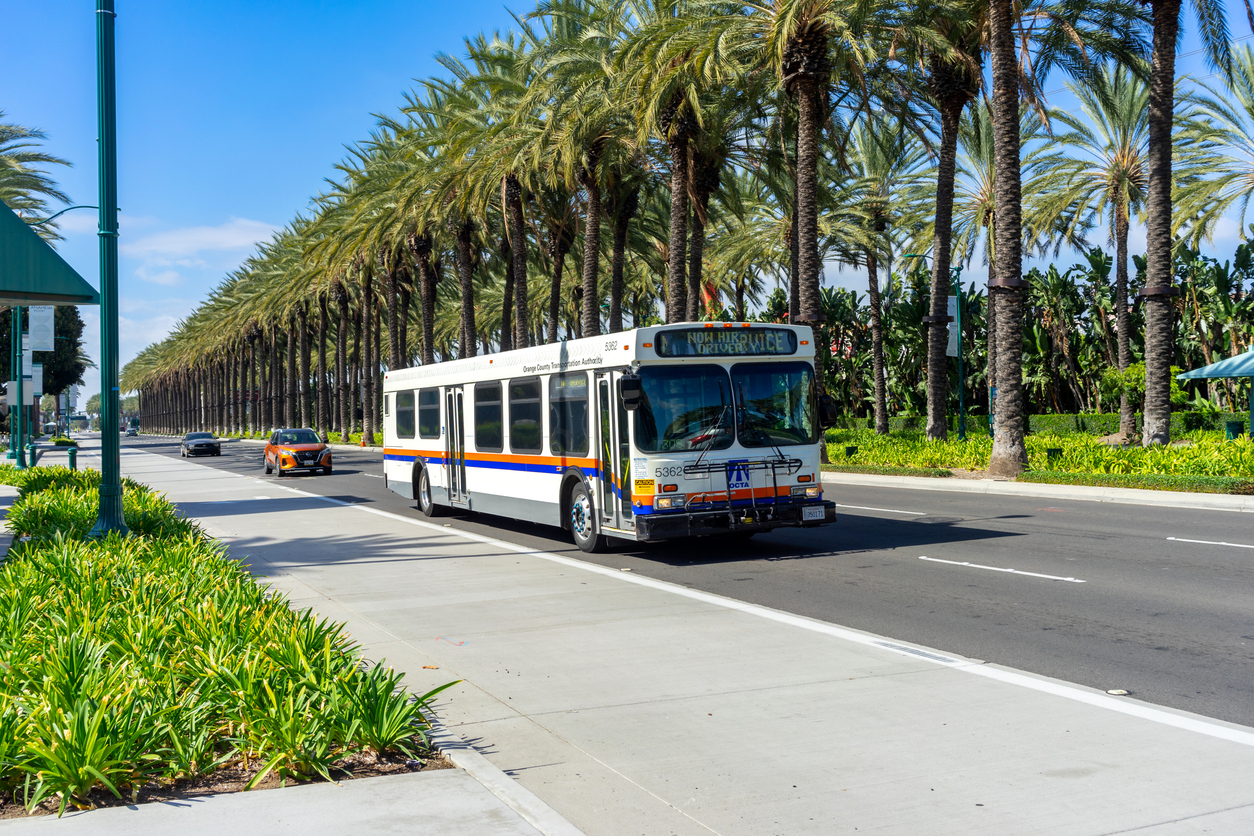
Bus travel remains one of the most extensive and accessible ways to get around Britain, connecting cities, towns and rural communities that other forms of transport do not always reach. However, the number of different bus companies, operating across distinct regions and under different brands, can make it difficult to know who runs what and where.
Here, you will find a clear and organised collation of bus operators providing services across Britain, helping you identify the companies serving different areas. Whether you are planning a journey, exploring unfamiliar places, or simply trying to make sense of the operators you encounter, this compilation brings together the information needed to navigate the landscape of British bus services with greater confidence.
The bus industry continues to evolve, with operators expanding, contracting or rebranding regularly. While the list gets updated to reflect these changes, some developments may not appear immediately. Please get in touch if you notice anything that needs updating.
When this company started trading in 2008, it was known as New Adventure Travel and I wondered how it could sustain its growth in South Wales, especially when new buses are being added to the fleet too. In 2018, they were bought out by Comfort DelGro with a change of name and livery coming later. While I first encountered them when they took over Monday to Saturday bus services in Gower from First Cymru, their network now includes Swansea, Cardiff, Brecon and many other places in their area.
Much of the history of Arriva in the UK is shaped by its evolution from a network of smaller operators and its enduring presence in regions like North Wales. The company was originally acquired by Deutsche Bahn in 2010 but has since been sold to I Squared Capital, reflecting changes in ownership over time. It operates as a major bus provider across several regions, including North East, North West, Midlands, South East, Yorkshire and Wales, with a mix of urban, inter-urban and contracted services.
A significant part of its identity in North Wales stems from its inheritance of Crosville Motor Services, which once served coastal towns, rural routes and links to Liverpool. After deregulation, Crosville’s North Wales operations became Crosville Cymru, later rebranded as Arriva Cymru and now forming the core of Arriva Buses Wales. While the Crosville name no longer appears, its legacy remains in the route patterns, depots and service structures that continue to shape the network. This continuity highlights how historical planning and geography have influenced modern operations, particularly in areas where buses remain a primary transport option.
Publicly owned by Cardiff Council, Cardiff Bus operates as a municipal company within the UK, distinguishing itself from private operators by prioritising local governance and urban service delivery. It focuses on dense urban coverage within Cardiff, connecting suburbs, employment zones and less commercially viable areas, while maintaining high-frequency routes and integrating with broader transport policies. The company blends commercial and public service objectives, offering branded services such as baycar and a consistent red livery, alongside a fleet featuring double-deck and low-floor vehicles, with a growing emphasis on electric and low-emission technology. Its historical continuity since 1986 ensures alignment with long-term civic planning, and it represents a model of local control that contrasts with privatised networks, contributing to discussions on bus franchising and urban transport integration within the UK.
Though private coach hire may be their mainstay, this operation also provides bus services linking such places as Welshpool, Newtown, Aberystwyth, Llanidloes and Llandrindod. In so doing, they traverse a part of Wales that might not be so easily accessible. What caused me to learn about these was an as-yet unrealised interest in walking around Pumlumon, where both the River Severn and the (Welsh) River Wye rise. There should have been a National Park centred hereabouts, but that has not come to pass. Nevertheless, it may not stop me from paying a visit to an otherwise overlooked area of hill country.
Based in Leicester, Centrebus is an independent bus operator serving rural and smaller urban areas across several English counties, including Leicestershire, Northamptonshire and Yorkshire. It specialises in providing essential connectivity through services such as school transport, local authority-contracted routes and links between market towns, often filling gaps left by larger operators in regions with lower passenger demand.
Established in 2001, the company has grown through organic expansion, acquiring smaller operators and taking over tendered services, maintaining private ownership that allows a flexible approach to operations. Its fleet typically includes single-deck vehicles, with some double-deckers on busier routes, and it prioritises practical, community-focused services over high-frequency urban models. Centrebus plays a vital role in sustaining rural mobility, supporting local transport strategies and ensuring continuity when larger companies withdraw from routes, contributing to the diversity and resilience of the UK’s bus network.
It is a set of local bus services around Whitby that drew my attention to this operator, and they do private hire too. As if that were not enough, they also offer a summer season open-top bus tour around their home town and vintage bus hire is yet another thing that they do.
This is a major independent bus operator in Devon with several services operated in conjunction with the local council and Dartmoor National Park Authority as well as others being provided on a commercial basis. This is worth a look if visiting places such as Newton Abbot (their main base), Okehampton, Teignmouth, Paignton and Brixham.
Now owned by Centrebus, this smaller operator started in north Staffordshire before turning its attention to Cheshire. For a time, the Cheshire operation was its mainstay after selling its Staffordshire operations to Arriva. However, 2014 saw this situation change with D&G taking over the bus business of Bakers and then buying out Arriva’s Wardle Transport in Stoke-on-Trent. These acquisitions were funded by the sale of South Lancashire Travel to Rotala and has made the company one of the major players in Cheshire East with substantial interests in Staffordshire too. A few years ago, they took over from Arriva in much of Cheshire once their Macclesfield and Winsford depots closed.
This Rotala-owned operator has expanded from their West Midlands base and that shows in their website. Not only is the Northwest of England included, but the network now serves Derbyshire, Leicestershire, Shropshire, Staffordshire and Surrey as well as pre-existing haunts in Warwickshire, West Midlands and Warwickshire. So far, the network is confined to England and the website offers travel news, timetable information and online ticket sales too.
This is yet another private hire operator that has branched into running bus services and these serve places such as Auchterarder, Crieff, Perth and Stirling. Most of the routes are school services, but there are a few that should interest other travellers. The one between Stirling and Auchterarder passes along the north of the Ochil Hills and that is sending my mind wondering about another hike through their extent.
This operation only came to my notice through an article in Buses magazine and connects Dundee with both Edinburgh and Glasgow using electric coaches. There are numerous stops along both of those routes, though this is a book-ahead service and not a hop-on one. There appears to be a focus on comfort too with some services getting booked out while others may be available up to ten minutes prior to departure. The innovation is an interesting one, so this is an operation to watch, since intercity coach travel may not appear all that compatible with the use of electric vehicles.
For far too long, the First strategy was to cut costs in the pursuit of profitability with service frequencies and bus quality suffering along the way. That has been changing in recent years though there also has been a period of selling off companies in places like Wigan, Chester and even London, there is an attempt at reinvigorating local companies with First’s operations in Somerset getting rebranded as Buses of Somerset. Around Taunton, liveries are in green and there scarcely is a mention of the First name anyway. More of that is needed along with continued investment in new vehicles for First to transform travel in the right way. It’s long overdue.
The entry of this German upstart in the international interurban coach market came at the height of the pandemic, but the operation is persisting. Like other similar operations, it works with contractors to provide its services. Its current network largely spreads out from London with routes serving Scotland, the English West Country and North as well as other places. The global operation has expanded rapidly in the last ten years or so and that makes one wonder about its sustainability. Only time will tell…
What gets this largely private hire operation included here are the three scheduled bus services that they run around their part of Scotland. One rounds Gareloch and is operated in conjunction with Wilsons of Rhu, who are included later on in the list. This is a seven-day operation with even half-hourly running on Monday to Saturday daytimes. Then, there is a Monday to Saturday service between Helensburgh and places on the shores of Loch Goil that also takes in some on the side of Loch Lomond too. Lastly, they run a Monday-to-Saturday service on the more distant Isle of Jura too even if it looks like a strange inclusion among others on the list. Timetables for all of these are on the website and that is what’s needed for any company’s inclusion here.
In many ways, Go-Ahead is unusual for such a large company in that it allows its subsidiaries to retain distinctive identities. It is for that reason that you see a bundle of different company names above, They are headquartered in the northeast of England and I remember a Go-Ahead Gateshead fleet name from a visit to Newcastle for a conference in the mid-1990’s, my first visit to England as it happened. Because of where they are located, I don’t get much of an opportunity to sample the group’s bus services, but that’s another story…
This Bedfordshire operator provides a range of bus services serving places in its native county while extending its reach into parts of Buckinghamshire and Hertfordshire. For a company started in 1999, they appear to have accumulated a good selection of routes and now are set to operate via Luton’s new busway too.
The foundation of this company was the result of a joint venture between Centrebus and Trent Barton that became reality at the start of April 2012. Bowers’ old depot at Chapel-en-le-Frith has shut, and all operations are based at the former Trent Barton depot at Dove Holes instead. Trent Barton wasn’t a major player in the part of Derbyshire surrounding Buxton, so the resulting network gained a bigger contribution from Bowers’ roster. Some that were operated by Trent Barton include the Monday to Saturday Buxton town service to and from Harpur Hill, the 199 from Buxton to Stockport and Manchester Airport along with the Transpeak service that crosses Derbyshire. Some services go as far as Macclesfield in neighbouring Cheshire and there is even a Macclesfield town service that they operate as well.
The name may not suggest it, but this operator has a sideline in contracted bus services. At the time of writing, there were only two of these. One was a park and Ride service in Stirling and another a local service in Clackmannanshire. Timetables need to be sought elsewhere, and you have to wonder if the bus side of the business will persist.
This may not be a part of the world that would come to mind as a place for me to visit, but this bus operator does seem to care about its business, so it deserves a mention. Interestingly, they seem to name some of their vehicles too and a good number of them are very modern. All the usual information that you’d need is on here though I wouldn’t mind learning a bit more about the company.
This is another Wellglade subsidiary, this time in Loughborough. The same penchant for quality that applies to Trent Barton applies here too. The company is smaller though with a focus on a smaller number of routes around its base. They still include town, university and airport services so there’s a good mix on offer here.
Well known to me from my associations with its home city, Lothian Buses operates as a municipally owned entity in Edinburgh, with the City of Edinburgh Council as its primary shareholder and is frequently cited as one of the UK’s most effective urban bus networks. It distinguishes itself through strong local authority oversight, a focus on high-quality public transport and consistently high passenger satisfaction, demonstrating that public ownership can coexist with commercial success.
The network spans Edinburgh and surrounding areas, featuring high-frequency routes, simple branding and radial connections to the city centre, creating an integrated and user-friendly system. Its services include distinct sub-brands such as Airlink and the fleet comprises modern, accessible double-deck vehicles with significant investment in hybrid and electric models, supported by reliable operations and clear fare systems.
With roots tracing back to early 20th-century municipal transport, Lothian has maintained public ownership since deregulation in 1986, enabling long-term planning and stability. It is often regarded as a benchmark within the UK’s bus sector, frequently compared to other municipal operators and is seen as a model for how local control and sustained investment can produce a well-structured, efficient urban transport system that challenges conventional notions of public sector inefficiency.
My impression is this private hire coach operator is a relatively recent entrant into the business of bus service operation following business failures in North Wales. The Vale of Conwy would be their main patch, but their reach also extends into Gwynedd and Denbighshire too. Places like Conwy, Llandudno, Llanrwst, Betws-y-Coed, Blaenau Ffestiniog, Bethesda and Corwen all form part of their route network.
It may seem surprising given the size of the place but Machynlleth used to host to no less than two bus depots next to its train station until Arriva closed down one of them. The one that remains is owned by local independent public service and private hire operator Lloyd’s. Council contracts and Arriva’s exit have allowed the family-owned business to operate a goodly number of routes for which timetables are available on the website, so it’s a worthwhile port of call.
This west Norfolk operation is a recent entrant to bus service provision and has expanded from a single route between King’s Lynn to Hunstanton to become a larger network. It is a local company that has benefited from an upheaval in the area, so it will be interesting to see how things go from here.
As well as being a private hire operator, this Nottinghamshire firm also operates some bus routes around Newark-on-Trent and Nottingham. It was during a spell of snow when I learned of the company’s existence because they needed to cancel their last services between Nottingham and Newark-on-Trent due to the road conditions. Let’s hope that stranded no one even if they did do it for safety reasons, with the best of intentions in other words.
This is again a useful provider of services in the Loch Lomond area, especially around Balloch now that they have gained SPT contracts once held by Garelochhead Coaches. Their work for the SPT also involves the provision of several demand-responsive services along with some other scheduled services within the transport agency’s area. Since contracts come and go, there is a good deal of sense in their offering a private hire business as well, but it is the public bus services that matter here.
It was a 2011 trip to Dunoon that reminded me of this operator and that got it included in this collation in the first place. Then, its network centred around Glasgow, Renfrewshire and Inverclyde but there have been acquisitions in Dundee and other parts of eastern Scotland since then. The former was a National Express operation now trading as Xplore Dundee while the latter was the last of the First Group operations that once stretched from the Scottish Borders through Edinburgh and the Lothians to Stirling and Clackmannanshire. All in all, this appears to be a quality operation that invests in its fleet, so it will be interesting to see how things go from here.
Stagecoach’s Megabus operation has been something of an upstart in the intercity coach market, but it does seem to be establishing itself as time wears on; that tie-up with Scottish Citylink (see below) surely must have helped. Its buy-ahead (on the web) approach may not suit those who prefer an unplanned hop-on service but having £1 fares between the likes of Manchester and Leeds certainly does appeal. North American visitors may wonder at the British focus of the piece, but it did start on this side of the Atlantic before it crossed the water.
When Arriva deserted Aberystwyth, this is who took over the town services that it once operated. There are a surprising fourteen services in all and some are in service only during university term times. Other than the town services, the company offers private coach hire and details of this appear on the website along with timetables for the scheduled bus services.
Though mainly a private coach hire operation, they also operate daytime services between Shrewsbury to Stiperstones and Bishop’s Castle, Monday to Saturday. The only thing to watch is that the last services of the day are in the late afternoon and there are no evening or Sunday services any longer. With careful planning, they still help with day walks though.
A key player in the UK’s long-distance coach network, this company operates intercity services connecting major cities, airports and transport hubs, offering reserved-seat journeys with fewer stops than local buses. Part of the Mobico Group since its rebranding in 2023, it focuses on national routes rather than regional or local operations, with a fleet featuring reclining seats, luggage compartments and onboard amenities such as Wi-Fi. Its services appeal to price-sensitive passengers seeking alternatives to rail, particularly for airport access and routes with limited rail connections.
Historically linked to the former National Bus Company, the company’s legacy shapes its nationwide reach and distinct identity as a coach operator, separate from its smaller, locally operated divisions around Birmingham and Coventry. It plays a significant role in the transport landscape by providing direct links between smaller towns and major cities, often serving as a cost-effective option for longer journeys where rail services may require multiple changes.
Formerly known as Newport Transport and owned by Newport City Council, Newport Bus has operated as the primary bus network for the city since its origins in municipal transport dating back to 1901, later being restructured as a separate company following deregulation in 1986 but remaining in public ownership throughout. The network is primarily city-focused, serving residential suburbs, hospitals, retail areas and employment sites, with some routes extending to nearby destinations such as Cardiff, Cwmbran, Chepstow and Monmouth.
There are quite a few things that you can do with a fleet of coaches. First, there are private hires and excursions but scheduled express intercity coach services are another possibility and this pervasive operator proves it by offering all of this. For decades now, they have undertaken National Express and Scottish Citylink work, but a more recent innovation has been their taking over services previously run by the latter of these following a Competition Commission inquiry.
As well as offering private hire coach services, this Pontypool-based concern also provides bus services around Torfaen and Monmouthshire. It was their network around the latter that drew my attention to the company since one of their routes once got you between Chepstow, Tintern and Monmouth in the lower reaches of the Wye Valley.
Now owned by the Rotala group, this company was the subject of some controversy when Stagecoach acquired it as a hostile takeover with some fierce competition preceding that outcome. The intervention of the Competition Commission meant that Stagecoach had to sell off some of its business in the Preston area and the re-emergence of Preston Bus as a Rotala subsidiary took place late in 2010. It’s been an eventful ride for what once was a council-owned operator and I hope that its future is less dramatic than its recent past. The website has been refreshed, and timetable information is on there as you would expect.
This operation came to light while exploring travel options to and from Heathrow Airport. At the time of writing, there are three routes: on each serving Reading and Watford (the most recent of the lot) with another serving both Guildford and Woking. These are near enough to round the clock operations with reading enjoying a half-hourly frequency at times while the others get an hourly one. You can book a seat in advance, but there is the flexibility of using another departure if your flight is delayed, dependent on the availability of capacity.
Here is proof that you can have a vibrant council-owned bus company in England, and the website does what you’d expect in that they operate scheduled services and then share new, fare and timetable information via the web.
If you go exploring Pembrokeshire without a car, the chances are that you’ll end up on a bus service operated by this local company. In its own way, it adds to the distinctive feel of the area not to have a big transport conglomerate dominating its bus market. That leaves Richards as the biggest operator around there, and they offer a fair number of services alongside their private hire coach business.
This family-owned North Norfolk operation has an extensive network spreading out from Norwich as far as the coast and features a mix of coastal and inland routes. As the name suggests, there also is a private hire side to a business trading since 1975. Hopefully, that long history makes for a stable bus network in the area too.
It is their provision of bus services around such places as Kington and Knighton that gets this operator listed here, but they also operate services around Herefordshire as well. This is a scenic if overlooked part of the Welsh Marches where you will find Offa’s Dyke Path National Trail as well as other walks, and it is always good to be able to use public transport to get to these.
When this became a joint venture between Comfort DelGro and Stagecoach, I began to have concerns about undesirable results such as a certain lack of responsiveness to demand, changes in contracts and the outbreak of bus wars. Since then, things have settled down with innovations like Citylink Gold coming on stream. After all, it remains the coach company that operates many of the express bus services between major Scottish towns and cities, blessing Scotland with a decent network of express coach services. Even so, you do have to watch out for eccentricities in some of the timetables, especially with destinations in the Scottish Highlands.
If you need to get between Fort William and destinations such as Mallaig, Morvern and Ardnamurchan, then this family-owned firm could be conveying you. Service frequencies are such that it’s best not to bet on a day trip but go for the multi-day option instead. Nevertheless, that’s only what this part of Scotland deserves. More recently, they also became the main operator around Lochaber too, and those service frequencies are far better, meaning that some day trips are possible there unlike other places that they serve.
This is a major UK bus operator with a significant presence in England, Scotland and parts of Wales, having emerged as one of the dominant transport groups following bus deregulation in the 1980’s. Now owned by DWS Group since 2022, it continues to operate under its established brand, focusing on high-frequency urban services, commercial routes with minimal subsidy and standardised fleets featuring distinctive orange, blue and white livery.
Its operations span key regions such as Scotland, North East England and South West England, with a strong emphasis on regional networks and well-developed city corridors. Historically shaped by post-deregulation expansion and competitive strategies, Stagecoach remains influential in shaping modern commercial bus models, particularly through its innovative approach to network design and integration of low-emission technologies.
My first encounter with this Carluke-based operation was on an overnight journey between England and Scotland that they were operating for National Express. That was quite a while ago, and I recently learned that they operate local services in Scotland as well. One of these connects Lanark with Wanlockhead, raising the possibility of traipsing along this part of the Southern Upland Way. However, there are numerous others that ensure you see this company’s appearance in this collation.
Numerous bus services in Powys and Shropshire are operated by this family business, and they could have a use for getting to and from walks along the Offa’s Dyke Path national trail. Many are operated on council contracts and there are express services offered on a commercial basis too. Service frequency can vary, so it is best to check timetables before you travel. Aside from the bus service work, private hire, driver training and vehicle maintenance all form part of their diversified operations.
Until the last few years, this was an independent operator serving South Yorkshire and Derbyshire. Since then, it has been acquired by Wellglade, the owners of Trent Barton, and the website now features route and timetable information. The addition of this information is what got the site added to this listing and is a very welcome result of the acquisition. Before then, there was nothing of that kind, and it was a disappointing state of affairs to notice.
All of these are subsidiaries owned by French company Transdev with those in Yorkshire and Lancashire being part of the Blazefield group. The London company doesn’t seem to provide much in the way of travel information while the others very much do so, and you are set to wonder if they expect Transport for London to pick up the slack in that area. Nottingham City Transport is co-owned with Nottingham City Council, the latter retaining the majority shareholding.
A public transport operator in Northern Ireland, this organisation integrates bus and rail services under a single entity, distinguishing itself from typical UK models by being fully state-owned and operating across an entire region rather than fragmented markets. It manages multiple service brands, including urban bus networks in Belfast, regional and rural routes and rail connections between key cities, with a focus on coordinated timetables, unified ticketing systems and modern infrastructure such as high-capacity buses and off-board payment options.
Unlike the deregulated approach common in Great Britain, its structure resembles integrated transport authorities found in mainland Europe and Ireland, with central planning and a commitment to expanding low-emission fleets. The system’s historical roots trace back to the consolidation of earlier transport services in 1996 and its model offers insights into alternative approaches to public transport organisation, particularly in discussions around regional integration and public ownership.
Trent is a name dating from the National Bus Company days and the establishment of its joint venture with Centrebus to serve Buxton and its surrounding area, called High Peak, means that it can concentrate its efforts on services in south and east Derbyshire along with Nottinghamshire.
There cannot be many bus companies that began life at the behest of a university, but that exactly is what this one is. It was started by the University of Hertfordshire in the southeast of England to provide student transport in its catchment area. However, things have expanded from there to include services offered to members of the public too. That meant a name change from UniversityBus to the present-day Uno with the strap-line being “the university bus for everyone”. A look down its list of routes reveals many Monday to Friday services though ones are operating at weekends too. All in all, it’s amazing what can happen to an idea once the wider public comes in on the act and that certainly seems apt when it comes to Uno’s operations, which fan out from its base in Hatfield to include locations such as St. Alban’s, Hitchin, Stevenage, Borehamwood and Watford to name but a few.
Also branded Warrington’s Own Buses, this council-owned operator continues to hold its own and even beat off incursions from rivals a decade or more ago. Recent investment has made an impact even if Sunday services have suffered as a result of the current economic climate.
This lot is well worthy of a look because they remain the predominant operator of scheduled bus and coach services around Argyll, Bute, Mull and even in Glasgow. They also operate coach services on behalf of Scottish Citylink with a direct service between Glasgow and Edinburgh Airport, complementing their more usual Oban and Campbeltown departures from the same city.
While primarily a private hire operator, this concern always offers some bus services. The one that caught my eye is the X43 that goes between Brecon and Abergavenny, and that is what gets the company listed here. There are others serving a part of Wales that suffers from sparse timetabling, which means that they are worth checking as well.
Rhu is located on the shore of Gareloch not far from Helensburgh and this operator has three scheduled bus services on offer in addition to its private hire business. Timetables for all their scheduled services are available on the website. One of these is a Helensburgh town service and another goes around Gareloch with a frequency and a spread of the day that would shame others, and it runs seven days a week too, albeit with reduced Sunday frequencies; working with Garelochhead Coaches probably helps on this one. Lastly, there’s a link between the Vale of Leven Hospital and Royal Alexandra Hospital with the occasional extension to Helensburgh. There’s a fair mix between all of these and the inter-hospital service is more regular from Monday to Friday too and even offers a mid-evening run on all days of the week.
Ireland’s bus network is more unified and easier to interpret than Britain’s, with Transport for Ireland providing a national framework and companies such as Bus Éireann, Dublin Bus and Go-Ahead Ireland delivering many of the core services. Alongside these are a number of private operators, particularly on regional and long-distance routes, which together form a comprehensive national network.
Bringing these operators together in a single collation helps clarify who provides services in different parts of the country and how they relate to the wider transport system. This makes it easier to recognise operators, interpret services and build confidence when travelling.
Formerly a home-grown Irish company, this First Group subsidiary has moved on from its days of getting passengers between Dublin’s city centre and from its airport to serving Galway, Cork and Belfast as well as having several routes operating around Dublin and Wicklow.
The company that runs the majority of Éire’s bus services outside Dublin as well as maintaining all the Republic’s bus stations. Besides services that run between different towns and cities, Bus Éireann also runs bus services within the other cities in the Republic.
The name that actually appears on these coaches is that of Feda Ó Dónaill, but it is easy to see that we would be talking about the same operation. There is a bi-daily route between Donegal and Galway via Sligo and Mayo that was the cause of my realising this operation existed and there is a Donegal to Glasgow route as well. Otherwise, private hire and excursion services complete what is on offer.
Frequent daily coach services linking Cobh with Carrigtwohill, Little Island and Cork city centre are the mainstay of this operation. There are two routes: a seven-day one between Cobh and Cork city and a Monday to Friday one linking Cobh with Carrigtwohill and Little Island. The first of these might have had a use for a recent evening visit to Cobh, but I stuck with rail travel instead. Otherwise, they really are a good offer to commuters.
To my eyes, this looks like a sister operation to Cobh Connect, yet there is no admission of that on either website. The service here is a Monday to Friday offering that links Holyhill, Cork city centre and Little Island. Again, commuters possibly make up the target market for this though other travellers could find this useful too, and I wonder it connects with a Cobh Connect service as well.
Even after tendering of some of their routes to another service provider, this state-owned subsidiary still runs most of the bus services in the Irish capital together with numerous commuter counterparts linking the city with areas surrounding it.
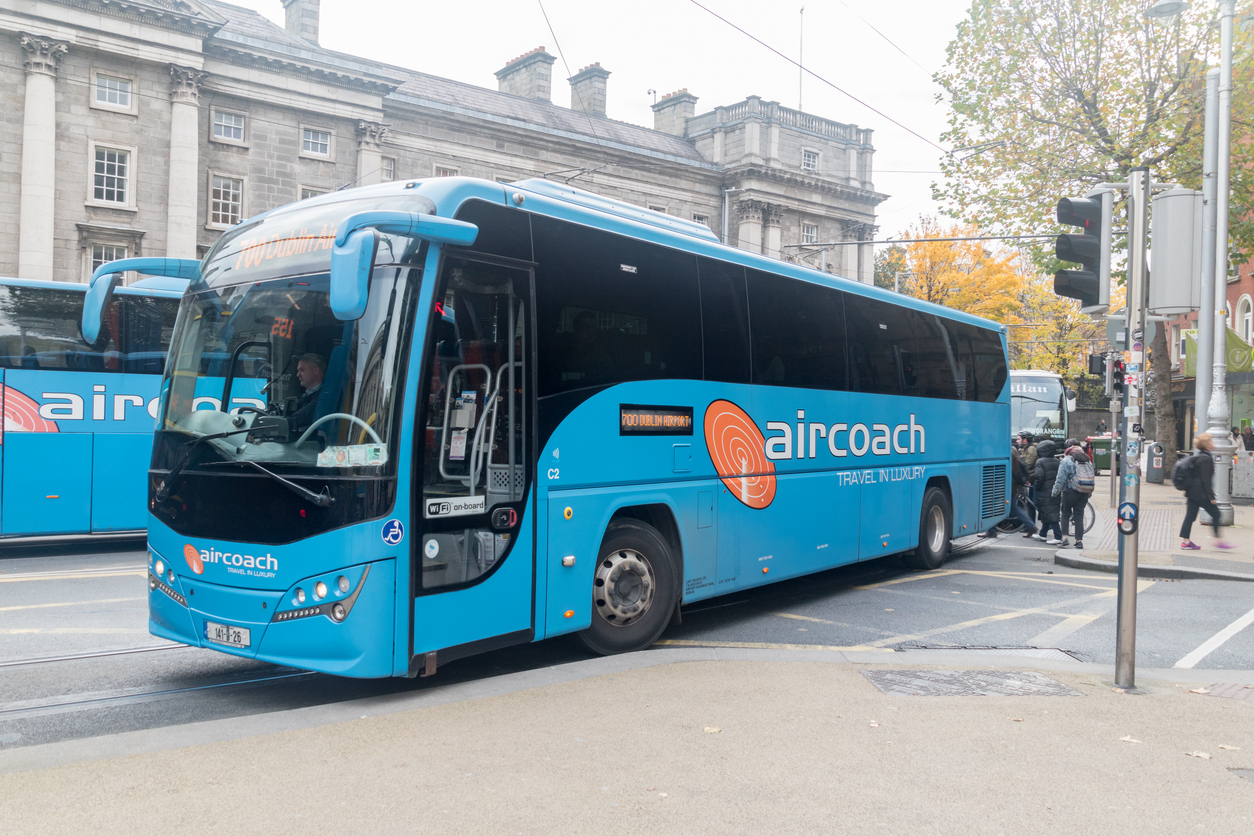
2009 wouldn’t have struck me as the best time to be starting up an hourly coach service in Éire, but that is what this operation is. Looking again at the website, it would appear that this is an enterprise founded by the founder of Aircoach who has gone on to other things since that enterprise was sold to First.
With the start date for the new company, one had to wonder if it would succeed. It would appear that they are doing OK because they now have two routes: the M7 between Limerick and Dublin and the original N7 from Portlaoise to Dublin Airport. Frequencies are hourly on both and look very good services to be offering too, particularly given that they use coaches.
This National Express currently limits itself to just one thing: running coaches between Dublin’s city centre and its airport, much as Aircoach did in its early days. The service frequency is half-hourly and even includes the city’s Heuston Station, its western train terminus, as one of its stops along the quays together with Tara Street Station for connecting with suburban and east coast train services.
Though primarily a private hire operation across Ireland and Scotland, their Swords Express and Fingal Express routes are enough to get them mentioned here. Both are commuter services to and from the city centre with the purpose of the first of these being self-explanatory. The second one serves such localities as Skerries, Rush and Lusk at peak times on working weekdays while the first is a seven-day service offering at least a half-hourly frequency throughout the day.
During a previous trip to Ireland, I noticed a sign at a Dublin Airport bus stance for this company. Curiosity took me online, and I later heard about them from others. At the time of writing, they operate coaches between Dublin Airport and Killarney every day of the week from early until late. There are five journeys in each direction that call at Farranfore, Abbeyfeale, Newcastle West and Adare along the way. These will be complemented by routes operating between Dublin Airport and Limerick, and between Dublin Airport and Ennis. These will add to the travel options that are available today, so it will be interesting how things go for this Limerick-headquartered company.
There was a time when Dublin Bus operated nearly all the Irish capital city’s metropolitan bus services as well as many extending into nearby counties where commuters live. The tendering of 25 Outer Dublin Metropolitan Area (ODMA) routes changed that and Go-Ahead became the sole beneficiary. In addition, they also operate 5 Dublin Commuter routes. The state owns most if not all the vehicles used in both contracts and Go-Ahead needed to set up new depots as well as recruiting a new team of staff.
This is the Irish cousin of Scottish Citylink and providers of services to places such as Ballina, Clifden, Cork, Dublin, Limerick, Shannon Airport, Galway and Dublin Airport. For a time, they directly owned many if not all of their coaches, but that has changed to a franchising model. Unlike in Scotland where there are several contractors operating Citylink services, there is only one in Ireland and that is based in Galway. The result is that Citylink feels like a Galway headquartered organisation from the information presented on its website. It certainly is a counterpoint in a country where so much is headquartered in its capital city, so it’s good to see that success doesn’t need it either.
When I was at university in Cork, I saw coaches from this long-established (since 1919, apparently) family-owned operation quite a lot. Even so, they seem to have expanded from their original Urlingford base since then to amass a not inconsiderable number of routes served by a fleet of coaches. Private hire is part of their business too, but it’s the services to places like Dublin Airport and Clonmel that earns them their place in this list.
In addition to their private hire work, this company also operates rural routes between Kilkenny, New Ross and Graiguenamanagh so that gets them an entry here and makes local explorations all the more feasible. It was a section of an Irish outdoor adventure guidebook that brought this to my attention while highlighting water sports possibilities in the area.
Probably more of a transport network than a bus company, this organisation complements other Irish operators by offering additional rural bus services to be used by local people. Kerry is one stronghold and there are routes in numerous other counties, with one bus travelling from Skibbereen to Kinsale looking well patronised when I saw it. One of their routes in West Limerick has been especially useful for me too.
It was the dropping of some stops from Bus Éireann’s Cork-Dublin Expressway coach service that was the cause of this Kilkenny-based (Ballyragget, actually) coach hire operator providing a local service to cover for the omissions after securing a contract to do so from the National Transport Authority. That was the 828 between Urlingford, Abbeyleix and Portlaoise and a newer service 828X began between Cashel, Urlingford and Portlaoise. Timetables for both of these are on the website and offer several departures a day with a more extensive service offering from Monday to Saturday than on Sundays. The main focus is on daytime services with none early in the morning and later ones on Fridays and Sundays, possibly because of folk travelling home from elsewhere, more likely Dublin, for weekends. Sometimes, a focus on faster journeys can cut out others while making opportunities for more.
On forays via Dublin Airport, I have noticed coaches operated by these people working what appeared to be scheduled services. Their website confirms that impression with places such as Dundalk, Drogheda and Bettystown being connected with Dublin’s city centre.
This family-owned operation came to my notice while planning a summer day trip to Bantry from Cork city. They also operate a service linking the city with Skibbereen, and there are plans afoot for a Kinsale service. The Skibbereen service is the more frequent and that is their home base too. Even so, the service frequencies are not as extensive as those offered by Bus Éireann. Still, the promise of lower fares and the ability to book ahead of travel time makes them worth noting.
Not only does this operator run services around Wexford town and county, but they also connect the county with Dublin and Cork too. Until the Christmas 2010 arctic weather, I hadn’t heard of them, yet their service frequencies look impressive for most of what they provide.
The Isle of Man, Jersey and Guernsey are self-governing Crown Dependencies, each responsible for its own transport system. This independence means their bus networks are planned, organised and presented separately from those in the United Kingdom and Ireland, with their own operators, branding and structure.
Identifying these operators helps place each island’s transport system in context and makes it easier to understand how services are provided. This offers useful perspective when comparing transport across the British Isles.
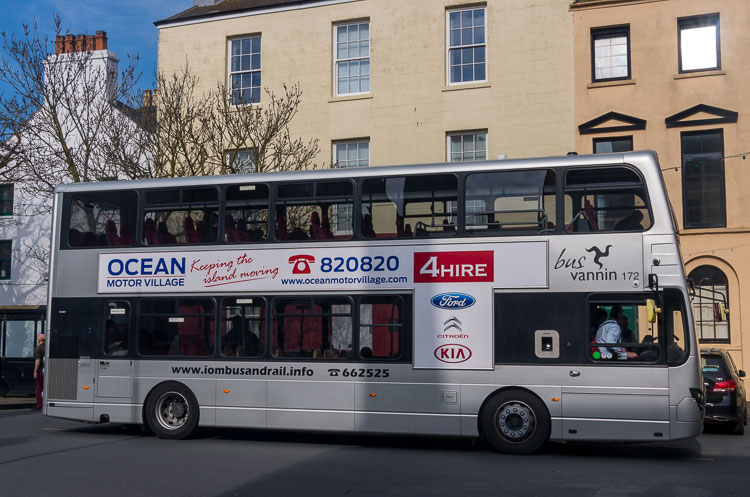
The mainstay here is Bus Vannin, the predominant Manx bus operator but an electric tramway and a steam railway also come within the organisation’s remit. Over the years, I have made three visits to the Isle of Man that have involved hikes made possible by the bus network. It worked well each time and shows mainland Britain how things should be done.
For longer than I care to remember, Jersey only saw me make one trip there and that was during a school trip to Brittany. Then, I sampled no buses because this was a day outing, yet the island appears to have an extensive network. Only recently did repeat visit come to pass and various hikes around the island meant that its bus network saw plenty of use. It helped that this is an efficient, dependable and courteous operation, so it got me everywhere that I wished as long as I got to the stops in time. There was one case of my own lateness, but such is the network that another option was available.
Like its Jersey counterpart, this operation is now owned by Tower Transit after a takeover from the now defunct HCT group. The network is again extensive, and the timetable information really came in handy while I enjoyed a trip to Guernsey. However, there are times when the company’s small buses get overloaded and those serving the airport could do with better luggage space. Otherwise, there was little cause for complaint.
It is easy to assume that the United States is exclusively a fly and drive destination, yet a wide range of public transport options exists across the country. Bus services, in particular, provide vital connections between cities, towns and regions, though information about the companies involved is often scattered and difficult to assemble.
This is where you can discover bus operators across the United States, helping you identify the companies serving places that you may be planning to visit or simply wish to understand better. The entries collected here reflect ongoing exploration of the American transport landscape, with intercity carriers, shuttle operators and local transport authorities all within scope. Because of the country’s continental scale and the breadth of what exists, the collection will grow progressively over time.
Useful external references do exist. Transit.Wiki provides excellent coverage in many states, including Arizona, California, Colorado, Michigan, Texas and Washington, while Wikipedia maintains a comprehensive list of American bus operators on Wikipedia. However, bringing together operators encountered through practical investigation and travel planning helps create a more navigable and experience-focused reference.
Progress necessarily will be gradual, with priority given to locations that emerge as realistic travel possibilities. While the United States maintains a National Transit Database, it is not designed as a traveller-facing resource. This collection therefore aims to provide a clearer and more accessible way to identify and understand the bus operators that form part of the American transport network.
Serving destinations across Maine, New Hampshire, Massachusetts and New York, this is one of several operators in the northeastern states. Boston’s Logan Station and South Station see regular services at up hourly frequencies while New York gets up to three arrivals and departures a day. Some of the services are compatible with commuting too.
A one-time part of Stagecoach is an independent entity even though it still offers Megabus services throughout the eastern states and the west coast of the U.S.A. There are a variety of local subsidiaries that also provide commuter and local services.
The fact their websites are cross-linked suggests that these are partner companies and Concord Coach Lines certainly does own Boston Express. It seems that routes from the three companies overlap each other’s areas with Maine, New Hampshire, Massachusetts and New York seeing service. That means that it is sensible to compare the routes on each website to see what suits your travel needs. Most feature several departures a day and some journeys are not so long either. For example, those between Portland, Maine and Boston are around two hours in length, and it takes about six hours to get from Portland, Maine to New York with two departures a day.
This part of Arrow Stage Lines offers long-distance travel across Colorado, Montana, Nebraska and Wyoming. At the time of writing, four routes are being served: Norfolk to Omaha, Omaha to Denver, Denver to Buffalo via Casper and Cheyenne to Billings via Shoshoni. The last of these only offer two journeys in each direction a week, so you need to check your day of travel. Otherwise, there typically is one journey in each direction a day since the journey times are long.
The brand is an iconic one though the network is not as extensive as it once was, and it now is a subsidiary of FlixBus, which tried out the brand in the U.K. for a few years before abandoning the effort. Even so, the company’s long-distance services are worth checking when it comes to travelling between the major conurbations of the U.S.A. and even to some destinations in Canada or Mexico.
Scheduled shuttle services from fifteen U.S. airports to several nearby locations is essentially what is offered here though there are separate connections between Flagstaff and the Grand Canyon National Park too; Flagstaff is connected to Phoenix Airport, so travel can be organised from there to the Grand Canyon if you so desire it. The Arizona operation once had another identity as did the Oregon one. All services need pre-booking and the website allows you to do just that.
When you look at the overall route map for this long-distance bus operator, it covers a lot of flyover states in the middle of the U.S.A. The list includes Arkansas, Idaho, Iowa, Kansas, Minnesota, Missouri, Montana, Nebraska, North Dakota, Oklahoma, South Dakota, Washington, Wisconsin and Wyoming. The network came to my notice when I was looking into transport options for Montana, especially near Glacier National Park, while writing up an article called Pondering Car-free Explorations of American Wilderness for my travel website. Then, another company had ceased to exist and this now century-old entity provided part of the route replacement.
Salt Lake City can be a good starting point for an exploration of Grand Teton National Park as this daily service proves. There are two round trips from Monday to Friday and a single one at weekends. Some of those departures are very early, but the lunchtime ones are better when they are offered. Other destinations in the Star Valley get served too, so the website timetable is worth examining.
This is a third-generation operation with scheduled services connecting numerous places in Washington D.C., New York, States, Pennsylvania, Rhode Island, Connecticut and Massachusetts. There was a one-time alliance with Greyhound, but those days have passed, and the privately owned independent is free to service its spread of routes across the northeastern states.
As the name suggests, this company is based in Utah but its network also reaches Nevada, Idaho, Wyoming and Montana. It was when checking out the last of these that the company came to my notice since it serves Great Falls and this is its northernmost terminus. Others might be interested to know that the company will get you to Jackson in Wyoming or Las Vegas just as well.
When Greyhound began to become pervasive, there was a feeling that they should not monopolise long-distance bus transport services so Trailways was established as a network involving different local operators such as Adirondack Trailways in New York state or Northwestern Trailways in Washington State and Idaho. While the prevalence of car and air travel has diminished the market, the network remains to a smaller extent than once was the case so the website facilitates bookings and tells you where you can go. Unlike Greyhound, there is no route map, so it may be a matter of trying the ticket search to see what you can get, and it is possible to charter buses for group travel as well.
My interest in this network was piqued by connections to or near East Bay Parks near Oakland and Berkley. Weekday and public holiday services are more restricted than what is offered on weekdays, but all is workable provided you pay attention to timetables. Connections with BART, the Bay Area underground rail system, help those coming from San Francisco.
The fulcrum for this bus network may be Mammoth Lakes but links to Reno (which is a calling point for the California Zephyr train service between Chicago and Emeryville, near San Francisco) and Lancaster along with other places makes it worth a look. Monday to Friday service operation is typical of their routes while some run on certain days of the week or month while one summer shuttle may operate on a seven-day schedule. With hiking possibilities offered by the surrounding Sierra Nevada and even desert areas like Death Valley and the Mojave Desert, the area certainly has its attractions and there is the unusually salty Mono Lake too.
This is more than a bus operation since it also runs ferry services as well as those of the eponymous bridge. The bus services connect San Francisco with Marin County on a seven-day basis. These also connect with services for scenic parts of Marin County at Sausalito and San Rafael. There also is a service connecting the latter with the East Bay Area as well as commuter services. Many frequencies are hourly with a service period extending from early morning until late at night.
Getting to and from Lake Tahoe is made easier by this scheduled pre-booked shuttle service connecting Reno-Tahoe International Airport with Truckee and places along the north and west of Lake Tahoe. Three are three different routes, each with round the clock coverage, and journey times are in the region of 60 to 90 minutes depending on traffic, departure points and destinations.
Both Reno and nearby Sparks are found in Washoe County, Nevado and this is the website of its Regional Transportation Commission’s Public Transport subsite. Carson City is further away on the eastern side of Lake Tahoe, but that gets included here too. Services are mainly daily but some are Monday to Friday in extent and that surprisingly applies to Reno’s airport as well. Still, some routes are operated around the clock every day of the week, so it just depends on where you want to go, and this website will tell you what you need to know.
California’s state capital is Sacramento in the heart of the state, which acts as a staging post on the way from the coast to natural attractions such as the Sierra Nevada and Lake Tahoe. It, too, has its own its historical sites and a vibrant cultural scene, so it needs a public transport provider like Sacramento Regional Transit, established in 1973, to operate a wide network of bus and light rail services. This runs over 80 bus routes daily, covering an area of 438 square miles, and includes regular buses, an Airport Express, and paratransit services. That complements a light rail system that has 42.9 miles of track, 53 stations across 3 lines, and operates from early morning until late at night.
Also known as the Muni, this multi-modal operation provides bus and light rail services around one of the world’s best known cities. The place is not that big, but these could have a use in what otherwise is a walkable part of the world. The system is just one of several covered by the 511 website that serves as a transport information hub for the San Francisco Bay Area. That is operated by the Metropolitan Transit Commission who also do the same for the Clipper app and card.
They might splash resorts across parts of their website, but this is a scheduled airport shuttle service between many of them and Reno airport, and it is more convenient than other public transport options. It is possible to pre-book your journey and I suspect that is encouraged strongly, but there is an around the clock service with the added concept of checking in for it, an unusual idea for ground travel.
Lake Tahoe is shared between California and Nevada and there are concerns about its water quality, so there are various initiatives to curtail private transportation in the area. This organisation is part of that and the main reason for its inclusion here is that this is the place to find out about bus services serving places along the south and east of the lake. Some of these extend to nearby Carson in the state of Nevada as well as reaching into California too. Service frequencies typically are hourly from early morning until early evening and journeys are on offer daily too.
This bus network usefully serves numerous places around the western and northern shores of Lake Tahoe and links them with Truckee, which is a stop on Amtrak’s California Zephyr route. Truckee also gets its local services, so it is not all about Lake Tahoe, as attractive as the area is for hiking and other outdoor activities. Frequencies are often hourly and there are year-round services so a car-free holiday in this part of California looks very viable. What is even better is they promote such an approach through the Linking Tahoe website and that adds even more confidence for visitors.
Yosemite National Park gets a year-round public transport service because of this operation that connects the place with Merced, where connections with Amtrak train services and flights to Merced Airport are possible, so you should be able to manage a car-free visit from elsewhere. Seasonal services to Fresno, Mammoth Lakes and Sonora are also on offer with Fresno services offering Amtrak connections together with journeys to and from Fresno airport. The operating dates for seasonal services may change from year to year, so the website is worth checking before you make any plans. Generally, the Mammoth Lakes route is June to September only while the others operate during May as well.
Here is another bus service operator around Sacramento that also serves West Sacramento, and Davis, while extending into parts of Sacramento and Solano counties. Regular routes generally run hourly, such as the Southport and West Sacramento local services, while commuter routes focus on peak weekday travel and express routes offer faster connections between key areas like Davis and Sacramento. Additional services include on-demand options like “YOUR Ride Microtransit” and BeeLine On Demand Transit. All buses are wheelchair accessible and equipped with bike racks, providing kerb-to-kerb journeys for individuals with disabilities.
The town of Estes Park bills itself as the base camp for the Rocky Mountain National Park and there is a free shuttle bus extending into the park from there during summer. Getting that far without a car is another matter so having scheduled shuttle services to and from Denver International Airport helps to make visits far more feasible. These get operated year-round with a more extensive timetable during the summer and work better than the approach from the Amtrak station at Granby, which only is possible during the summer road opening period.
Denver’s metropolitan transport network not only operates bus services but also offers tram and train travel options as well. Some bus routes serve the park and ride facilities on the edge of the area while Boulder is very much part of the network. The mile-high city offers much for the outdoors enthusiast too, so it is good to see transport connections getting people close to the foothills of the Rocky Mountains.
Its seasonal Island Explorer bus network around Acadia National Park is what brought this operation to my notice. However, there are other year round services that service locals, including commuters, as well as offering connections to Bar Harbour for incomers. Without the local bus operation, visitors might need the services of Bar Harbour Shuttle, which possibly should be kept in mind for out of season trips anyway, even if it is more expensive.
The mainstay of this company’s operations is a seven-day out and back journey between Calais and Bangor (and its airport) that goes along the Maine coast. Other services are offered on certain days of the week or even on certain days of the month. These include single return journeys between Beals Island and Ellsworth, between Steuben and Machias and between Luben and Machias. There also are Monday to Friday services between Steuben and Jonesport along with a school service to complete the list.
The North Central Regional Transit District (NCRTD), commonly known as the Blue Bus, operates an extensive public transport network across 10,000 square miles of north central New Mexico, serving four counties, eight Northern Pueblos and the Jicarilla Apache Nation, all mainly on a working day Monday to Friday basis. With a fleet of 75 buses and 76 employees, the service manages 29 routes through a combination of fixed-route buses, an app-based MyBlue rideshare service, and free paratransit options for eligible passengers. The predominantly fare-free system, which maintains 449 bus stops and 48 passenger shelters whilst covering 1.54 million vehicle miles annually, connects with various regional transport services including the New Mexico Rail Runner and Santa Fe Trails. Despite facing recent driver shortages leading to temporary service reductions in January 2024, NCRTD has garnered recognition for excellence, including multiple Government Finance Officers Association awards and Federal Transit Administration honours for outstanding rural public transportation service.
Klamath Falls is served by this operator with routes all around the city. None extend beyond it, but there is Monday to Saturday service provision that may get a traveller arriving at the city’s train station to their hotel for a night or more. Of course, it will help locals to get about as well. Hourly route frequencies are common and buses run from early morning to early evening.
Two routes are on offer from this organisation and one of them is part of the NW Connector network. That is the Coast to Valley Express between Newport and Albany with other stops being at Toledo, Eddyville and Corvallis. Handily, there also is the possibility of connections with Amtrak train services at Albany and there are four journeys in each direction on days of operation. The second route is called the 99 Express, and it offers three journeys in each direction between Corvallis and Adair on its days of operation, which allows the possibility of connections with the Coast to Valley Express and other local services around Corvallis.
While there were rumours of its demise, this reservation-only shuttle operator connects Portland’s airport with a variety of locations every day of the week. Most of the destinations are coastal and each gains one return journey a day, but that should be enough if you slow things down and narrow your ambitions a little. Departures to the airport leave in the morning while return trips start in the early afternoon.
Aside from the wintertime only Mount Bachelor Shuttle, this operator runs year-round Monday to Saturday routes serving Bend, La Pine, Madras, Prineville, Redmond, Sisters and Warm Springs. Saturday’s frequencies typically consist of three journeys in each direction and there are more on weekdays. Other leisure services include the summer shuttle around Lava Butte and serving river activity participants, so the range of services gets a mix of users.
This agency serves Coos Bay, Coquille, Charleston, Myrtle Point and North Bend with a mix of interurban and urban services. Most are Monday to Friday operations, but there also is a Saturday service between Coos Bay and North Bend that has multiple journeys, unlike its weekday counterparts.
What interests me about this daily operation between Bend and Portland is that it calls at Government Camp near Mount Hood, thus adding possibilities for outdoor exploration around one of Oregon’s landmarks. There are one or two journeys in each direction per day with weekend and holiday services gaining the extra departures. If you are content to try your chances, you can travel on a walk-on basis, but it is much safer to book in advance and arrive at a stop at least ten minutes before scheduled departure times.
This network serves Salem and nearby Keizer with a mix of urban and interurban bus services that also link with those provided by other operators. Monday to Friday services operate from early morning until late at night while Saturday ones are not as extensive as this. Frequencies vary with some seeing only a few departures a day and others enjoying an hourly service.
The cities of Corvallis and Philomath are the places served by this operator and there are connections with other interurban services too. Some routes are served seven days a week and others are Monday to Saturday or Monday to Friday in scope. In addition, Thursday to Sunday night bus services are operated during Oregon State University term time. Service frequencies typically are hourly and some run on a half-hourly basis.
Apart from a dial-a-ride service, the main reason to include this operator is its operation of a Monday to Saturday Coastal Express service. The extends north from Smith River in northern California to North Bend in Oregon so that the state’s lesser frequented southern Pacific coastline gets public transport connections. The timetable on the website looks odd at the time of writing, but there are between three and four journeys in each direction with some parts of the route doing better than others. Even so, the result is that it is possible to explore Brookings, Gold Beach, Port Orford and Coos Bay without a car. It also may be possible to organise a bespoke additional stop and one example would be North Bend Airport, but there can be others.
The Columbia Gorge near Portland in Oregon is such a major attraction for outdoors enthusiasts that there is added encouragement for the use of public transport. This can be seen from the Gorge Translink initiative (which also includes other operators like Sherman Transit) of which Columbia Area Transit is part. After all, they run the seven-day Columbia Gorge Express between Portland and the Dalles as well as serving other Monday to Friday services around Hood River. In addition to those, there also is the seven-day Gorge to Mountain Express between Hood River and Mount Hood Meadows. As such, there is much to assist outdoors enthusiasts in going on car-free outings.
Although the operation is seasonal and visitor-focussed, the website does include some useful information about getting to this National Park in southern Oregon and that is enough for it to get added here. For car-free summer visiting, it makes a good first port of call.
Operating services around the city of Eugene are the mainstay of this network, but there is one intriguing route that serves McKenzie Bridge within the Williamette National Forest. That offer involves four return journeys a day on weekdays and two return journeys a day at weekends. Other routes see far more frequent travel and some are interurban too.
Urban services are on offer around both Lincoln and nearby Newport with near hourly frequencies. The former of these is served Monday to Saturday and while the latter enjoys a seven-day service. In addition to these, a timetable for the Coast to Valley service between Lincoln and Albany’s Amtrak railway station is also to be found.
Baker County and Union County may have sections on this website, but it appears to be more useful for Wallowa County, especially during the summer months. It startles me a little to see a commuter bus route being served on a Monday to Thursday basis, butt there is one of those and others only operate on certain days of the week. In truth, the public transport in these parts is about as easy to navigate as the website offering route, timing and fare information.
There may be a link to an interurban route operated by Lane Transit District, but this company also runs two services of its own. The first goes between Redmond and Chemult (calling at Bend, Sunriver and La Pine) and is an Amtrak Thruway route while the second goes between Bend and Eugene. At the time of writing, the latter also continues to Coos Bay on the coast, but that is due to change and a stop in Sisters is to be introduced. There are two return journeys between Redmond and Chemult and a single return trip between Bend and Eugene (extending to Coos Bay at the time of writing).
It was while looking for Southwest Point or Northwest Point after seeing them mentioned in a guidebook that I came across this operation that serves various destinations across Oregon. There are four long-distance routes in total: Portland - Astoria, Portland - Eugene, Bend - Ontario and Klamath Falls - Brookings. The first two of these have journey times of around three hours and two or more departures a day. With one departure in each direction a day, the latter two east-west routes are longer with there even being a stopover of several hours on the journeys between Bend and Ontario. Even so, these remain useful ways to get around the state, so avoiding the need for any long-distance driving.
The acronym stands for Rogue Valley Transit District and this bus network spreads out from Medford to serve such places as Ashland and Jacksonville. All of their routes run from Monday to Friday and some operate on Saturdays too. Hourly service frequencies are common, so this bus network is a very useful alternative to car travel.
This is not the only scheduled shuttle operation connecting Bend with Portland and its airport, but it is the only one that also serves Sisters and Salem. There is one return journey every day and the website will announce any deviation from this. Sisters and Bend are adjacent to some spectacular countryside, so it helps that we also have this travel option without needing to resort to using a car.
Tram and commuter rail services may be offered by this organisation, but it is their bus network that earns them their place here. The whole network serves all of Portland as well as some nearby population centres like Oregon City. The latter is but one of the attractions of the area so a comprehensive public transport network also helps to get to the likes of Forest Park and other centres of outdoor activity.
The name may be generic, but this operator serves Grant County with routes linking Baker City, Bend, Burns, Canyon City, John Day, Monument, Prairie City, Redmond and Walla Walla. Services to and from all of these make the network an extensive one, but days with single return journeys are common and some even operate on certain days of the week or month. That makes planning a little more important and so is the checking of timetables even if the website feels less user-friendly than might be ideal.
Along with urban services around McMinnville and Newberg, there also are interurban routes between the former and places such as Grand Ronde, Hillsboro, Tigard and West Salem. Most operations are Monday to Friday only but the routes serving Grand Ronde and Tigard also run on Saturdays. There is a near hourly frequency on many services too and the one serving Grand Ronde gets you somewhere that has notable hiking country nearby.
There are not many ways to get to Olympic National Park without using a car, unless you use a shuttle service provider like Olympic Hiking Co. However, Clallam Transit offers a regular scheduled service between Port Angeles and Forks as well as a seasonal shuttle service to Hurricane Ridge. That makes it worth mentioning here but there also is a long-distance service between Port Angeles and the ferry terminal on Bainbridge Island, where crossings to and from Wenatchee or Tacoma near Seattle are available. Naturally, there are numerous other services too, so the network is well worth checking out if you live there.
While a network of express bus services is what got this organisation listed on here, it also operates light and heavy rail services in the area too. The light rail network is seeing heavy expansion at the time of writing. The area served includes Everett in the north and Tacoma in the south along with Bellevue in the east, so it is not just about Seattle. If a visit to this part of the world ever came to pass, then the mix of bus and rail services would have its uses.
This company came to my notice when pondering the possibility of visiting Grant Teton National Park. Its main area is the town of Jackson and the village of Teton. Though I have yet to see their summer timetables, I have seen it mentioned that there may be summer services into the National Park, which would be useful for those without a car. Otherwise, it seems a little strange to see no service to Jackson Hole airport but the number of connections between Teton and Jackson along with other places makes the network worth mentioning.
Railways form the backbone of public transport across many countries, yet the companies that operate train services are not always obvious. Different operators are responsible for different routes, regions and types of service, which can make it difficult to identify who runs the trains you encounter or plan to use.
Identifying these companies helps clarify who runs specific services and how the network is organised. This improves understanding of the railway system and makes it easier to interpret and navigate rail travel.
Alaska’s railway is detached from other parts of the U.S.A. as a consequence of geography but there still is one going through its wild Nordic landscape. Timetabling for passenger services is seasonal, but the network extends north from Seward to Fairbanks calling at such places as Whittier, Anchorage and Denali. The last of these is an access point for the National Park containing North America’s continental top.
Frequencies typically involve one departure in each direction a day, so this may not a strong option for a day trip. Journey times can be long too with trains between Anchorage and Fairbanks taking a whole day though others trips may be shorter. This is a way to sample the scenic surroundings of the railway and Alaska’s countryside has plenty of majesty that gets lost if you just fly over it.
Some of the operations are on a flag stop basis, which means that you can stop a train anywhere, so times may vary because of this. You also need to remember that early departures are possible too because they only wait for passengers with reservations and not anyone who decides to try travelling on a walk-on basis. So, it all needs planning and the expansiveness of Alaska together with its climate commands that.
You cannot talk about train travel in the U.S.A. without mentioning Amtrak since its network is the backbone of passenger rail transport in the contiguous forty-eight states. Given that they can get you to and from National Parks without a car, the option is certainly worth considering.
Since journeys can take several days, it is not the quickest way to go and timetable frequencies often involve one departure in each direction every day because of the distances involved and associated timetables may need you to read them from bottom to top to see times in an opposing direction. However, there are sleeping quarters for any overnight travel, and it can be a good way to see a lot of America as you go. Flying may be faster but long-distance train journeys have their place too.
Even so, some of the routes are not transcontinental, and a better frequency is on offer dependent on state support and Thruway bus connections also extend travel options. Nevertheless, even these may not support day trips as one might hope. Thus, a spot of extra planning is in order to explore a part of the world where distances can be vast.
This company connects Birmingham, Glasgow, Liverpool, Manchester and other places with London via the West Coast Mainline. There also are services between Birmingham and both Glasgow and Edinburgh as well as several London-Edinburgh journeys.
The acronym stands for Bay Area Rapid Transit, and the bay in question is San Francisco Bay. The system is an underground that serves all manner of places from San Francisco Airport, to Downtown and the East Bay Area. The network looks extensive and very useful should I ever make a visit to that part of the world.
This Florida-based operator provides an up to hourly service calls at Miami, Fort Lauderdale and West Palm Beach while there is work in progress to include Orlando too. As if that were not enough, there also are plans to link Los Angeles with Las Vegas as well so there their business could take in both the Atlantic and Pacific coasts of the contiguous 48 states. Business and commuter patronage is welcomed along with leisure traffic that includes connections to cruise liner sailings.
Until recently, overnight services between the likes of Fort William, Inverness, Aberdeen, Edinburgh, Glasgow and London were part of the ScotRail franchise but now are separated into a separate contract and that is being fulfilled by Serco. There are big plans for improving the service and teething problems meant a delay to their introduction before the onset of the ongoing pandemic.
The main part of the route plied by this operation extends between San Jose and San Francisco. The frequency is essentially hourly every day of the week, and there are weekday commuter service extensions going as far south as Gilroy. Connections with BART trains going to San Francisco Airport are possible at Millbrae. Electrification of the line is ongoing at the time of writing, and new electric trains will get introduced when this is complete. Then, service frequencies may increase.
They may not be operating in my usual stomping ground, but this is the only train company in England with a twenty-year franchise deal. Is that why they have been investing so much in the infrastructure that they use? As if rebuilding Birmingham’s Moor Street station wasn’t enough, they also are looking to open up a new route between Oxford and London, adding a few miles of new track to help them get onto their usual line near Bicester. Alongside all of this, the Deutsche Bahn subsidiary runs services from London Marylebone to places as far afield as High Wycombe, Birmingham, Stratford-upon-Avon and Aylesbury with less frequent services to the likes of Kidderminster, Oxford and London Paddington.
Also abbreviated as ČD, this is the largest operator in Czechia (Czech Republic). Its network features local, national and international trains along with overnight services. It has been around for nearly two hundred years and operates thousands of trains a day, carrying many passengers too. Thus, planning a trip to Czechia surely involves checking out what this operator has to offer.
Following Virgin’s loss of the CrossCountry franchise, it is now in the hands of Arriva and developments such as the removal of buffet facilities and fare increases have in for criticism from the likes of Barry Doe. Even without west coast mainline Anglo-Scottish services, their franchise area is probably the biggest of the operating companies with places like Cardiff, Aberdeen and Plymouth falling within their sway. Quite how the new catering arrangements play is unknown to me, but I do get to wonder what those who expressed a preference for at-seat catering make of the new arrangements.
Germany has only served me as a way to get to Innsbruck in Austria and my exposure to Deutsche Bahn services is nearly as brief since I only used an S-bahn service to get between Munich Airport and München Ost train station for change to and from a return journey to my eventual destination. Their network includes high speed, regional and local rail services as well as some bus operations and my previous limited experience was good enough to encourage me to try longer journeys in the country. After all, the company is its main train operator while Abellio Deutschland operates in several regions and wholly owns Westfalen Bahn. Those areas may not be the focus of a possible next visit since the Bavarian Alps appeal and that moves things beyond the use of Deutsche Bahn’s journey planner as I used to do regularly a while back.
Along with services between London St. Pancras and destinations such as Sheffield, Chesterfield, Derby, Nottingham, Leicester and Loughborough among other paces, local services in Derbyshire, Nottinghamshire, Leicestershire and Lincolnshire. Another offering is the Norwich-Liverpool service and places in Cheshire such as Alsager and Crewe fall within their sway too. I have always wondered if weekday peak time travel to London might be cheaper if I went via Derby and I do admit to going that way on a journey to London to visit friends when railway engineering works were causing disruption. The journey does take longer but avoiding extortionate fares would make it worthwhile.
The current climate situation coupled with an awareness of how polluting air travel can be is fuelling an interest in overnight train travel in continental Europe. This operation between Berlin and Brussels with stops at Antwerp, Rotterdam and Amsterdam, among other places. Services leave Brussels on Monday, Wednesday and Friday, while those from Berlin depart on Sunday, Tuesday and Thursday. There are plans to include Dresden and Prague on the network in 2024, and Barcelona in 2025. You can choose from sleeping and seated compartments, with former being single sex for women only and mixed sex otherwise.
With the construction of the Channel Tunnel, Britain joined the international high-speed rail travel league with speedy journeys to the likes of Paris and Brussels on offer. Being part of Railteam, high-speed train to destinations not served by Eurostar themselves is a possibility. The addition of High Speed 1 between Dover and London St. Pancras added even more speed though it meant deserting Waterloo. One benefit of the move is that trans-European train travel now becomes more accessible from more northerly starting points in Britain and plans are in preparation for High Speed 2. That holds the tantalising prospect of high-speed train travel reaching Scotland, but it is looking more likely that it will extend only as far as Leeds or Manchester at this time, especially with the budgetary constraints being placed on public sector spending in the coming years.
It cannot be said that the Swiss are not inventive. To have a service running on two different gauges with the same carriages is some feat, even if a change of locomotive is needed. That is what is offered by this offering between Montreux and Interlaken and the changeover happens at Zweisimmen without a change of train. That there are panoramic carriages giving superb views of the surrounding mountains only adds to the appeal and there is onboard catering too.
This franchise has a history starting from the dawn of privatisation when it was an express train operation with the same name that it has today. These still run with the London hub being Paddington station and services fanning out to reach places in Herefordshire, South Wales, the West Country and England’s southwestern corner. First’s involvement then became more apparent when it became First Great Western. It was later that local and commuter train services were added from the Thames and Wessex areas to take their reach into Oxfordshire with the former. The restoration of the old name was a recent development and the prestige of that brand may be helped by line electrification and the introduction of new trains to replace the now venerable HST’s. It could with all the help it gets from those advances because poor performance earned it the moniker “Worst Late Western”. Passenger fare strikes were a consequence, before things improved to the point that those headlines are history now.
Now part of First Group, there have been several complaints about the performance of this once stellar open access train company. In recent months, there has been a change of management, so it’ll be interesting to hear if things are on the way up. The website has a very upbeat feel to it, so I hope that the onboard service is in line with it.
This state-owned concern runs all of Éire’s train services, with the possible exception of some services between Dublin and Belfast, as well as maintaining stations and railway track. In comparison with Britain, the network doesn’t look anywhere near as extensive, even on a pro rata basis, but it has to be said that it runs well and achieves what it sets out to do.
Saying that, the journey planner can suggest odd routes on some journeys. For example, some from Cork to Galway can take you to Dublin, and others involve changes at Portlaoise and Portarlington; recent decades have seen a reduction in the number of stops on a typical Cork to Dublin service; there was a time when such trains stopped at nearly every station on the way. The most logical ones go via Limerick Junction and Limerick’s Colbert Station, but services on the Limerick - Galway route are not that numerous.
Liberalisation of the railways within the European Union has allowed this operator to commence high speed services within Spain. Thus far, its destinations include Madrid, Barcelona, Zaragoza, Valencia, Seville, Malaga, Cuenca, Córdoba, Alicante, Albacete, Antequera and Tarragona. This is a joint venture between the Spanish airline Air Nostrum, the Italian train company Trenitalia and Globalvia whose progress will be interesting to watch.
There seems to be the sort of developing trend with East Coast Mainline franchises that leads one beyond a certain quip attributed to Oscar Wilde (losing one parent is unfortunate, but two seems careless). GNER, National Express East Coast and Virgin Trains East Coast came to a bad end due to paying too high a premium to H.M. Government and financial difficulties arising when passenger patronage growth did not meet expectations. Parent company problems such as the NXEC overextending itself with debt when money was being shovelled at all and sundry haven’t helped either.
Between NXEC and VTEC, there was East Coast, and we now have LNER and that is another public sector affair. Usefully, they introduced new trains from Hitachi and these have been branded Azuma, the Japanese for “east”. Things seem steady for now and its seems that LNER will last longer than what perhaps was the initial intention.
Together with its sister companies Glacier Express (offering slow scenic trips between Zermatt and St. Moritz or Davos) and Gornergrat Bahn (a vertical climb to a viewpoint for the Matterhorn and Monte Rosa), this operation reaches parts of Switzerland that the country’s main operator does not serve. An example is Zermatt where I visited in September 2015 on a day trip from Geneva. The last part of the journey needed a change at Visp and car drivers cannot get to Zermatt anyway, so there are shuttle services between there and Täsch.
MTR also has contracts to run local train services around Stockholm from SL, so it probably should not come as a surprise that it might try its hand at Swedish intercity services too and this is its offering for the Stockholm to Gothenburg route. National operator SJ also serves the two cities with a similarly high-speed service but MTRX also calls at Skövde, Herrljunga and Alingsås depending on which service you book.
Northern Ireland’s railways may not be that extensive, and they should be invaluable nonetheless. Along with services within the province, they also work the cross-border Belfast-Dublin Enterprise service with Irish Rail, their counterpart in the south.
NS is better known to me through its former Abellio subsidiaries operating rail franchises in the U.K. (they are listed here separately) than it is for rail services in its home country of the Netherlands. Attendance at a conference in Amsterdam during November 2019 had me using its intercity services for getting between the city’s airport and the city itself, and they did exactly what was asked of them. It was only a limited encounter though and the network extends to other cities and towns within the Netherlands to offer travel possibilities should a return trip materialise.
If you’re travelling on a local train service in the north of England, chances are that it’ll be operated by this lot. Not only do they serve cities like Manchester, Liverpool, Leeds, Sheffield, Newcastle among others but their reach extends into the rural parts of Yorkshire, Lancashire, Cumbria, Northumberland, (County) Durham and Cheshire too. They even operate the seasonal Yorkshire Dales Explorer services from Lancashire into Yorkshire and then along the renowned Settle to Carlisle railway line as well as the Esk Valley Railway between Middlesbrough and Whitby.
It was on an extended weekend visit to Innsbruck, and around there, that I last made use of Austria’s national rail operator. That was for getting between Munich and Innsbruck and between Innsbruck and Jenbach. These services were part of the Eurocity network and proved to be quiet, comfortable and efficient as expected. The network is an extensive one that more than covers the countries main cities, and I was tempted by the idea of a day trip from Innsbruck to Salzburg or Vienna using a high-speed service but decided to stay local instead. There are sleeper trains too should the need arise for overnight travel.
The reason for the three sets of letters above is that this is Switzerland’s main national railway company. September 2015 was when I sampled its services extensively on an extended weekend that saw me travel to Bern, Zermatt and Grindelwald from my base in Geneva. Despite their reputation for timeliness, there were some small delays, but none were significant. What was not contradicted was the reputation for being expensive though obtaining a Swiss Travel Pass in advance would have helped a lot with reducing that and there is a Half Fare Card available. All the trains that I used during my stay were comfortable affairs and did exactly what I asked of them so there probably is little reason to travel around the country by car given how extensive public transport is there.
The French national rail operator became known to me during French lessons that were part of my Irish secondary schooling, and it was the existence of their high-speed TGV services that attracted the most attention. Of course, they provide other intercity, regional and local train services and I did spot one of them while on a visit to Switzerland in September 2015, but further exploration of France remains outstanding. There may be an ambition to travel to Paris by TGV during a school trip in the summer of 1989, even if it never came to pass. Other high-speed operations like Eurostar and British train franchises operated by subsidiary Keolis have come into being since then, yet I have yet to sample what to me feels like the original of them all.
Transport Scotland may be calling the shots these days and new train liveries are only part of this. After National Express, and First Group and Abellio, this is now a nationalised entity that operates most of Scotland’s daytime rail services. Given the wonderful countryside to be found there, the routes are well worth checking out and using.
My experience with Sweden’s main national rail operator is limited to its Stockholm to Gothenburg high-speed route while local rail services are provided by other undertakings. That was in August 2017, and it did exactly what I needed from it though leaving earlier and returning later would have left me with more time in Sweden’s second city, but that was my doing. The network does reach into neighbouring Denmark and Norway too and there are sleeper trains that facilitate overnight travel as I saw on my first ever wander around Stockholm in July 2010. If I ever do fancy a return to Sweden to sample its arctic regions, then more use of SJ may result, and this English language site could facilitate such an escapade with its timetable and fare information as well as its ticket booking facilities.
This is another local line in California with an acronym for a name. This one stands for Sonoma-Marin Area Rail Transit and the service runs between Sonoma County Airport and Larkspur where there are ferry connections to San Francisco. The route also serves such places as Santa Rosa, Novato and San Rafael.
The timetable does not operate on a clock face basis and service frequencies vary from near two-hourly to half-hourly according to the time of day and the day of week. Sundays get six return journeys in the day while Saturdays get seven. There is also an extra evening return journey on Fridays compared to the rest of the weekday timetable.
Passenger capacity has been a bugbear on services operated by this company but three new five carriage fleets are coming into service that should help a little with that though some routes retain their older three carriage ones. Their network features Anglo-Scottish services as well as those around the north of England, and it has come a long way since it consisted of two routes served by two carriage trains. Those originals are now complemented by others on the west coast and east coast mainlines.
For many years, Wales wasn’t even considered as a single railway “region” but the establishment of an all-Wales rail franchise changed that. Given that their services run into and skirt several national parks and other areas of outstanding beauty, the website is worth a call. They also connect Wales with the likes of Birmingham and Manchester, the latter of which brings them through Cheshire. New trains are promised, so it will be of interest to see if there is added capacity since that is much needed, especially on the Manchester to south Wales route.
Since Canada is the world’s second-largest country by land area, it creates challenges for the country’s railways so multi-day trips with departures on certain days of the week are common, especially for northern, eastern and western destinations. The corridor between Montreal, Toronto and Ottawa does see service by several departures a day though and there are a few different routes from which to use. There also are services going to the U.S.A. with Amtrak operating the majority of them.
As with the network’s counterparts elsewhere in North America, Canada’s passenger train services are for those who relish the idea of going slower and seeing more of the place while most will fly for sake of convenience and speed. In these environmentally conscious days when we are thinking more about our carbon footprints, there is a place for long-distance train travel across continents, and you always can see a lot more on the ground than in the air anyway.
Until 2019, the Norwegian state railway company was known as NSB but changed to a new identity for its rail and bus operations. Its network got trimmed by the awarding of the contract for train service operation between Oslo and Stavanger along with associated branch lines to Go-Ahead Nordic, and SJ NORD then took over much of is network north of Oslo too. Otherwise, its business is as before with multiple services per day on all lines even if journey times eat up much of the day in some cases. Train tickets for all of Norway remain on sale through the website and that is just as well since the ones for the others, Go-Ahead Nordic and SJ NORD, are only in Norwegian while Vy does have a solid English language version.
West Midlands Trains
This used to be known as London Midland, but the name changed when the franchise was re-tendered to Abellio. However, the new name is not the one that passengers are likely to see since it operates its networks using two different brand names: West Midlands Railway for local services around Coventry, Birmingham and Wolverhampton while long-distance services along the West Coast Mainline use the name of London Northwestern Railway. The latter means that it runs trains between London Euston and such places as Birmingham, Stoke-on-Trent, Crewe, Winsford, Hartford and Liverpool.
Now that I think of it, most of the train services that I have used in overseas trips have been powered by electricity while my incursion in Zillertal was different for the railway between Jenbach and Mayrhofen is plied mainly by diesel trains. The same company also operates some journeys with steam locomotives and offers bus services as well. The main business involves the half-hourly service between the Austrian mainline and the then easy to reach terminus in Zillertal from which many an outdoor excursion has started. My visit there was beset by rain and there was an out of season feel to that Sunday afternoon in May 2016, but there remains a cause for a return.
Tram systems have made a strong return to cities after several decades of decline, offering a transport option that sits between buses and heavy rail. Their growing presence reflects the need for reliable, high-capacity urban transport that can move people efficiently through congested areas. As new systems open and existing ones expand, it becomes easier to encounter tram networks when exploring different cities.
Recognising where tram systems operate and who runs them provides valuable insight into urban transport networks. This helps place tramways in context and understand their role within the wider public transport landscape.
Why Tram Systems Have Returned
After a few decades on the transport scrapheap, trams are coming back into vogue again thanks to increasing congestion in our cities and the need for an option mid-way between buses and trains. Quite a few schemes have come into being over the last decade or two and more are in the pipeline. One of these has become something of a long-running saga that I would like to see brought to a good end sooner rather than later: Edinburgh’s project. Let us hope that it does not forestall others because many are successful ventures, and there remain places where tram systems could play a useful role.
How Tram Systems Compare
In their early days, trams were horse-drawn affairs, and one still runs along Douglas’ promenade on the Isle of Man every summer. Most now are electrically powered, making them cleaner in urban environments than buses. A two-car tram can carry more passengers than a bus while still operating along city streets, something that gives them a flexibility that conventional railways cannot match.
Some systems also run along former railway alignments, yet their lighter infrastructure requirements can make construction more economical than heavier rail systems such as the Docklands Light Railway in London or the Tyne & Wear Metro serving Newcastle, Gateshead and Sunderland.
All in all, trams have re-established themselves as a flexible and effective transport option. Once seen as outdated, they now offer a dependable way to move through busy cities, often avoiding the delays faced by buses in congested traffic.
Local Operators
The following is a growing reference to tram systems, helping you identify networks, understand where they operate and place them within the wider public transport landscape.
London had its trams too with ones running around Croydon until 1951 when the system was shut down to make more space for cars and buses. The current one returned in 2000 and has four routes extending around Croydon and Wimbledon with more potentially in the pipeline.
When we Irish set our minds on doing something, we just get on with the job and the return of trams to Dublin’s streets in 2004 was an example of this; before that, the last ones ran in 1959. They look modern and are operated well by Veolia/Transdev under contract to the Irish government. There is even a plan to link up two separate lines (one from St. Stephen’s Green to Sandyford and another from Tallaght to Connolly train station and the O2 Arena, formerly the Point Depot) now, something that should have been done in the first place. Due to the economic situation, more adventurous plans need to be postponed though some did reach the drawing board.
This system is operated between Wolverhampton and Birmingham by National Express, the main bus operator in England’s West Midlands, on behalf of local transport authority Centro, who owns it. It started working in 1999 and an extension to Stourbridge is being considered.
This is a tram system of which I have better knowledge since I live not that far away from Manchester. It started operating in 1992 and is council-owned with a private operator running the network. It now is RATP after terms with Stagecoach and Serco. There are five lines in existence and progress is being made towards the total replacement of the first generation of trams and new lines are planned too. The current lines have termini at Altrincham, Bury, Chorlton-cum-Hardy, Eccles and Oldham with the route between Piccadilly and Victoria train stations being a busy and useful thoroughfare. It is a good example of the place of light rail in modern city public transportation.
This is one of the newer tram systems, starting as it did in 2004. So far, there is just one line with more being planned. It, too, has its predecessors though the middle of the twentieth century saw a move away from trams altogether until the dawn of the one in which we live now.
1985 saw a parliamentary act passed that set in train the re-establishment of a tram network in Sheffield; its predecessor lasted until 1960. That work was completed in 1994/5 and the network passed from council ownership to Stagecoach in 1997. There are three lines and ticketing is shared with Stagecoach’s bus operations in the city.
From October 25th, Bus Éireann is introducing revised timetables for its Expressway Route 13 and Route 14 services, which operate between Limerick, Tralee and Killarney. The changes aim to improve reliability and punctuality by adjusting departure times according to traffic conditions. A new Sunday morning departure from Tralee to Limerick has been added, and some weekday and Sunday journeys have been withdrawn. Discounted online fares are available until the end of November and customers are encouraged to book tickets in advance to secure their seats.
18:47, October 9th, 2026
The National Transport Authority, in partnership with Clare County Council, has introduced a new Ennis Town Bus Service, which will begin operating on 18th October 2026 as part of the Transport for Ireland network. The service includes two routes, NS1 and NS2, connecting key areas of Ennis such as the town centre, Ennis Hospital, Ennis Bus and Rail Station and surrounding residential areas. Both routes operate every 30 minutes throughout the day, with a 15-minute frequency along a shared central section and run from early morning until late at night.
The buses are low-floor, fully accessible and high capacity. Standard fares apply, with discounts available for Leap card users and free travel for certain groups. This development is part of the NTA’s Town Bus Programme, which seeks to provide sustainable and accessible public transport in regional towns across Ireland.