Discovering Montreal, Ottawa, Gatineau and Quebec While Using Public Transport
 Posted on August 28, 2026
 Reading time: 10
minutes.
Reading time: 10
minutes.
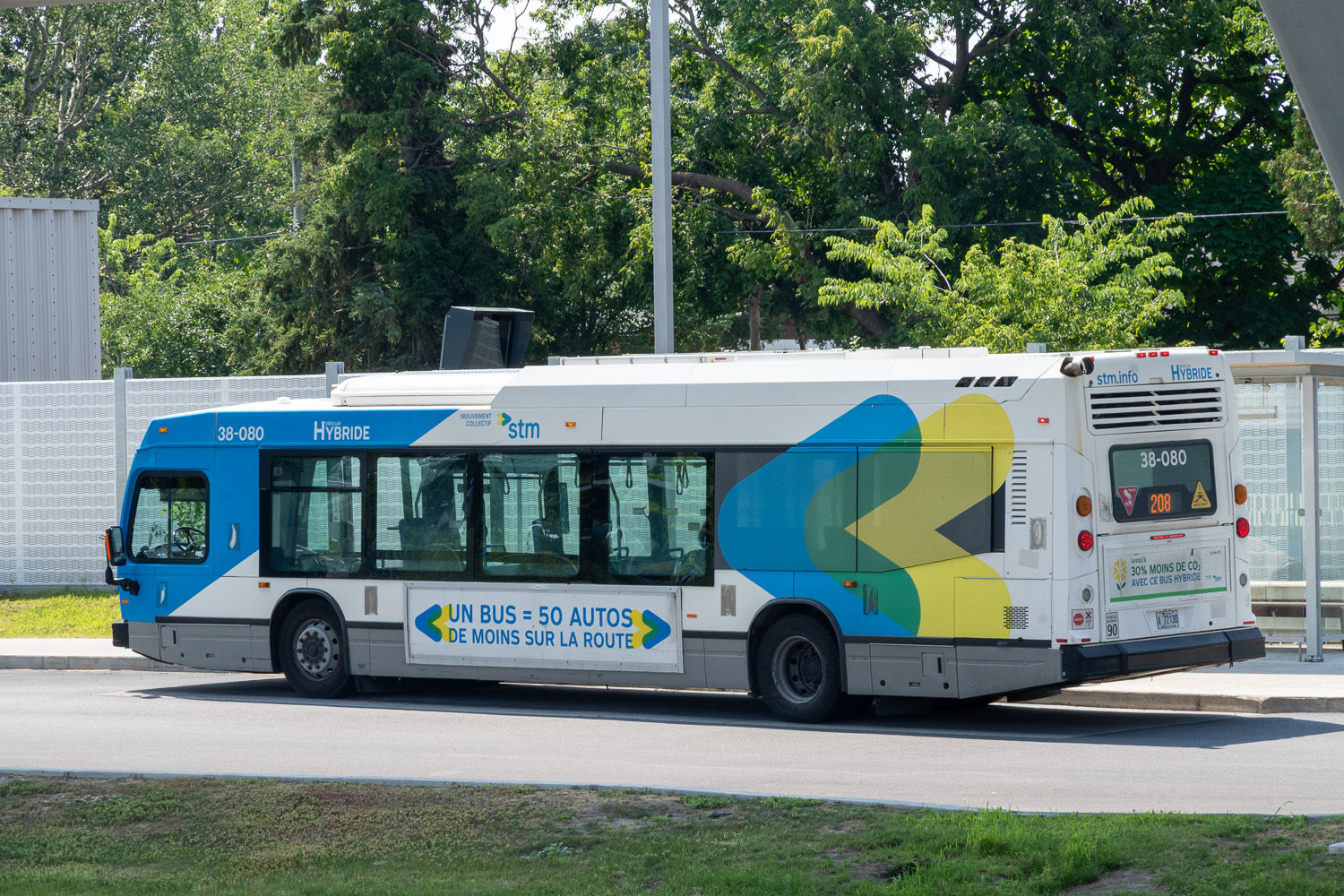
Learning about public transport in a faraway location using the web is hypothetical until you get there. Thus, it was when I based myself in Vancouver for a first Canadian getaway and went about sampling public transport in British Columbia. At the end of last month, I returned to Canada, this time basing myself in Montreal, adding yet more experiences to my life.
Around Montreal
Though I initially may have thought of Montreal more as a jumping off point for exploring other places, the reality was there were so many parks that leaving the island on which the city is located became the exception rather than the rule. That meant figuring out how to pay for the services that I used while I was out exploring.
First, you need to realise that the Greater Montreal area is divided into three zones. Zone A covers the island on which the city is located, which gives a lot of flexibility for any day ticket that you buy. This can be located onto an Opus card or bought as a paper ticket. It is when I started to venture into Zones B and C that my having a Zone A Opus card showed its limitations, necessitating the buying of paper day tickets, only after a staff member let me in on this state of affairs. My limited time in the area meant that it was not worth getting an Opus Plus card.
All of this starts to hit when you attempt to bus service 747 to get from Montreal’s international airport (YUL) to the city centre. In fact, you are presented with the same machines that you will find in metro, bus and rail stations around the city. This means dealing with a learning curve not long after coming off a long flight, which meant that the assistance that I eventually received was essential. This bus stops in various places, so it helps to pat attention so as not to end up in the wrong place, especially when one version of route terminates at a metro station instead of proceeding the whole way. An added complication was the closure of Rue Berri, which meant a search for the right stops from which to commence a journey to the airport at the end of my stay. You do need to allow for traffic congestion at times, which may have brought to the airport early, not that it bothered me at all.
One good thing is that any day tickets are multi-modal across Exo, REM, STM, STL (Laval) and RTL (Longueuil)services. Of these, I used Exo buses when visiting Mont-Saint-Hilaire, while REM automated rail services got me as far as Deux-Montagnes as well as allowing me to reach Cap-Saint-Jacques. In time, REM is set to serve YUL as well, which could have uses for avoiding any traffic delays. Otherwise, it was mainly STM bus and rail that got me around, with Google Maps helping to guide me as I went.
One thing that one needs to watch is the effect of any seasonal pedestrianisation on bus services. Meeting this on the way to Parc des Rapides was the cause of some confusion before I began to walk the rest of the way instead. On a warm sunny day, that was no affliction, especially when much of the journey was beside the St. Lawrence River. All that needed attention was the presence of passing cyclists until I veered off cycle paths.
Otherwise, I mixed metro train and bus to get me pretty much where I wanted to go. Parc Angrignon, Parc Jean-Drapeau, Parc-nature de la Pointe-aux-Prairies, Parc de la Visitation, Parc-nature du Bois-de-Liesse as well as Parc-nature du Cap-Saint-Jacques all were more than reachable using STM services, while voluntary walking took me by Vieux-Montreal, Vieux-Port, Parc Mont-Royal, Parc La Fontaine, Jardin Botanique and Pont Jacques-Cartier as well. At times, I was tempted by the possibility of hiring out a bike from one of the stands, only for the desire to keep walking to occupy instead. This was unlike Vancouver where the courage would not come, though cycling on another continent and trying out a different side of the road appeals when there are so many off-road cycle paths.
To Ottawa & Gatineau
My accommodation was near the Gare d’autocars de Montréal, making coach enabled day trips a possibility. One of these took me to Ottawa and Gatineau, making use of the services of Orléans Express for reaching Ottawa. The way there was timely and comfortable with much gazing out the window. This was as much about sightseeing as embarking on a journey with purpose. Picking a downtown stop instead of using a Via Rail station around five kilometres away from the city centre proved wise, even if it brought a little unfounded uncertainty about the way back.
My time around Ottawa centred around the Rideau Canal and Parliament Hill before I started to wonder about getting to Gatineau Park. That needed a consultation with OC Transpo staff before I got the day ticket that got me there and back. Both places are in different provinces, one in Ontario and the other in Quebec, with different transport operators. Thus, I needed to make use of STO services for my trip to Gatineau to reach greener shadier surroundings on a warm sunny day; the heat was starting to catch me around Ottawa.
Even with the time all that used up, I still had a relaxing way for my return coach to Montreal, watching Coach Canada and OC Transpo vehicles coming and going. Earlier, it had been a departure operated by Maheux to Montreal that hinted that the stop where I arrived was the one from which I needed to depart again. The gathering of others added to that certainty, while the arrival of the Orléans Express coach on time erased all doubt more effectively than any other means.
While we left on time, our arrival was to be delayed by our needing to await the delayed arrival of a coach from Toronto at Ottawa’s Via Rail station. When that appeared, we filled up even more before an accumulation of cars to collect those arriving by coach or by train meant that getting away from there was further delayed. Adding to all this was ongoing works around the station as well, which made for even more congestion as warned by Via Rail themselves. The holding of connections by Orléans Express continued with the service from Montreal to Quebec City, so this must be a typical experience and one that must add customer confidence too, even if a Toronto to Quebec City journey would be a lengthy affair needing a day of travel (think around twelve hours, and you would have the measure of it).
A Day Trip to Quebec
One thing about coach departures from Montreal is that they can be much more convenient and more frequent than going by train. That especially is the case when travelling between Montreal and Quebec City, which gains a near hourly timetable. Journeys take around three hours, and there can be delays on the way into Quebec City at times. One of them was when I went there, mainly because of a tall ships event in the city. That also curtailed my travel times: early departures on the morning of my intended travel day, Saturday, were fully booked, as were some departures from Quebec on that Sunday evening.
Nevertheless, Sunday morning worked, and I set off seeking a flavour of what is in Quebec. Once I got away from the quays where many strollers slowed me, I could make for the Plains of Abraham, where the British won over the French to change North American history, the Citadel and Old Quebec. Other sights such as the Parc de la Chute-Montmorency had to be left for another time should that come to pass, even if I glimpsed Chutes-de-la-Chaudière from a slow-moving coach on the way to crossing the Saint Lawrence again. The over and back travel was questioned in my mind, though it appears to facilitate the shortest travel times otherwise.
Unlike Montreal, Quebec’s coach and train stations are side by side, which can be handy for becoming provisioned with food and drink before setting off. Another thing is that I discovered that returning to Montreal by train gave me another ten minutes after a coach departure and gained an experience of travelling by intercity rail in Canada. If I had hoped that I would have riverside views that were missed on the coach journey, that was set to be foiled too. Via Rail services also are not known to be on time either, a possible consequence of being a guest passenger service on a busy freight railway.
The train journey was comfortable with customer hosts and a trolley service selling refreshments if I needed them. At times, the train approached junctions so slowly that anyone might have passed it on a bicycle with any aid from battery propulsion. Full speed was never held for very long anywhere, either, particularly given that much of the time was spent on single track railway line with passing places. That was brought home while awaiting a late freight train in the middle of nowhere. The result was a delay of around thirty minutes without any talk of delay repay that you find on British trains. You are forewarned of fifteen to forty-five minutes in advance and things are left at that. Even so, this was my first experience of North American intercity train travel, and I cannot fault it for that.
Much That Was Learned
For various reasons, my time around Quebec and Ontario became more of a learning curve than when I went to British Columbia. In Vancouver, you could charge up a travel card and pay fares using that, without having to pay again if connecting to a service so long as the journey time remained within a certain limit. That has echoes of how the Irish Leap card system works, and there is something to said in its favour too. Even getting to Vancouver Island by ferry and then travelling to and from Victoria by bus was not that taxing, and booking a shuttle to and from Squamish also was not so tricky to do either.
Maybe there is added complexity in the places that I visited during my latest visit to Canada, but their urban transport systems could do with being made easier to use by visitors like myself. After all, finding that I cannot access the OC Transpo website from this side of the Atlantic could fit a certain trend. However, having AI to hand on a mobile device had plenty of uses when navigating urban networks and orienting oneself at the same time. Occasional assistance from staff had to be sought at times, which never was needed during my time in British Columbia.
That also applies to identifying future possibilities like reaching the Laurentides (Laurentian Mountains), even if a 07:30 departure is not the handiest if you fancy getting breakfast in advance of a day trip. There is an afternoon departure which better facilitates relocation during a stay in Quebec, and that might be my choice if there ever was a return to this part of the world. Then, I would check out what is on offer from Galland Laurentides. Speaking of an escapade that overnights in different place, the luggage limits on Via Rail services were constraining enough to make me abandon thoughts of a counterpart that divided time between Montreal, Ottawa and Quebec, which is something to consider should one be thinking of moving around, for there are ample reasons for doing so. Intriguingly, Amtrak is much more generous in this regard, which makes a combined trip to Seattle and Portland (Oregon) all the more feasible.
Recent Musings
Considering Possible Bus Routes to Glendalough and the Wicklow Mountains
Bus service enhancements for Congleton and the Crewe–Nantwich corridor
October 2026 VIA Rail Schedule Changes on the Quebec City to Windsor Corridor
September 2026 D&G Bus Service Revisions Across Cheshire, Staffordshire and Shropshire
Ireland's Public Transport Fares Set to Rise in 2027
Extras & Utilities
Carrying Bicycles on Buses in Britain and Ireland
Not Just Blogs, A Collection of Public Transport News Sources