Spain's Rail Network for Independent Travellers
 Posted on January 21, 2026
 Reading time: 9
minutes.
Reading time: 9
minutes.
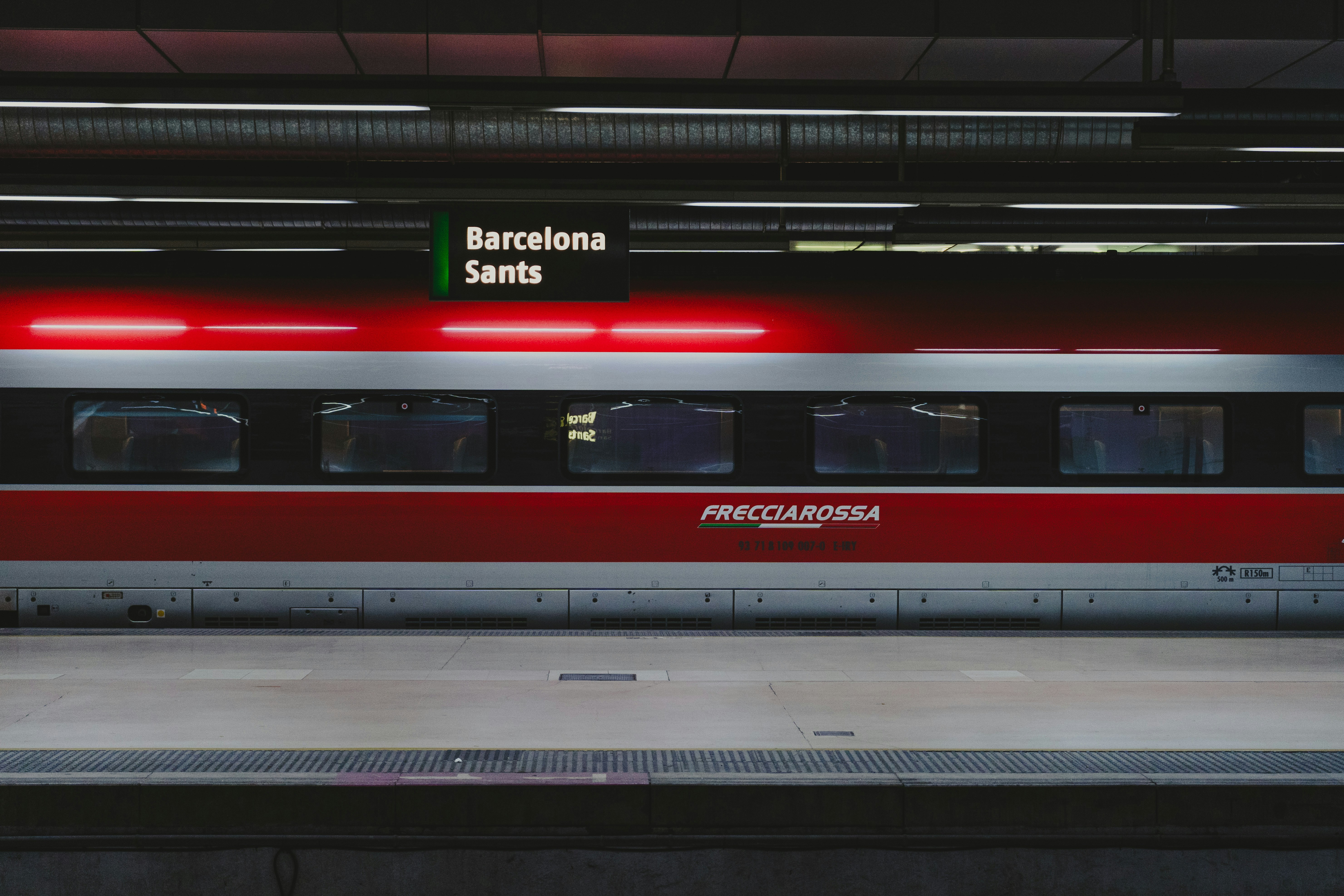
Spain’s extensive rail network offers one of the most effective ways to explore the country without hiring a car. With high-speed services connecting major cities in hours, regional trains reaching smaller towns and well-integrated suburban networks supporting day trips, the system rewards careful planning with straightforward city-centre to city-centre travel and access to diverse landscapes from Andalusian heritage sites to Pyrenean mountain scenery.
Understanding the Network
High-Speed Services (AVE and Competitors)
The AVE (Alta Velocidad Española) network forms the backbone of tourist rail travel in Spain. Operating at speeds up to 310 km/h on standard gauge track, these services have transformed domestic travel since 1992. Spain now operates the second-largest high-speed network in the world after China, with approximately 3,900 kilometres of track.
Key high-speed corridors include:
- Madrid to Barcelona: 2 hours 30 minutes via Zaragoza
- Madrid to Seville: 2 hours 30 minutes via Córdoba
- Madrid to Valencia: 2 hours via Cuenca
- Madrid to Málaga: 2 hours 40 minutes via Córdoba and Antequera
- Barcelona to Seville: 5 hours 48 minutes (direct service launched April 2025)
Since 2020, Spain has opened its high-speed network to competition. Alongside state-owned Renfe’s AVE and budget AVLO services, private operators Iryo and Ouigo España now run trains on major routes. This typically means more departure times and competitive fares, though it requires checking which operator your ticket is with and understanding their specific conditions.
Conventional Long-Distance Services
Beyond the high-speed network, Renfe operates conventional long-distance trains serving cities not connected by AVE. These services, many running on Iberian gauge (1,668mm) rather than standard gauge, operate at lower speeds with more modest frequencies. They become particularly relevant for reaching destinations in northern Spain and some parts of Andalusia where high-speed infrastructure has not yet arrived.
Regional Services (Media Distancia)
Regional trains bridge the gap between high-speed corridors and local networks. They call at more stations, operate at moderate speeds and provide access to smaller cities and towns. Whilst slower than AVE services, they offer more relaxed, scenic travel through countryside and prove valuable for reaching places like Granada from Córdoba or Seville, or exploring coastal areas in northern Spain.
Commuter Networks (Cercanías)
Spain’s suburban rail services, branded Cercanías, operate in metropolitan areas including Madrid, Barcelona, Valencia, Seville and Bilbao. These frequent, affordably priced services prove particularly valuable for:
- Reaching hotels in outer districts
- Day trips to nearby towns
- Connections between stations in large cities
- Airport access (Madrid, Barcelona, Málaga)
Notably, long-distance tickets often include free Cercanías travel within three hours before departure and four hours after arrival in cities including Barcelona, Madrid, Seville, Valencia and Málaga.
The Core High-Speed Corridor
Madrid as Central Hub
Madrid Puerta de Atocha station serves as the primary hub for AVE services heading south and east, whilst Madrid Chamartín handles northern routes. A tunnel connecting the two stations opened in July 2022, though most tourist journeys still involve a single Madrid station.
Toledo makes an excellent day trip from Madrid using Avant high-speed services. The journey takes approximately 30 minutes, allowing an early start to explore the compact historic centre and evening return without changing hotels.
Andalusia
From Madrid, Seville is reached in approximately 2 hours 30 minutes on AVE services. This time saving matters practically, as it allows travellers to arrive with enough daylight to get their bearings and experience evening life rather than losing a full day to travel.
Córdoba sits 45 minutes from Seville by AVE, making it viable either as an overnight stop or a longer day visit focused on the Mezquita-Catedral and historic quarters. The city also connects efficiently to Málaga and Granada.
Granada requires more deliberate planning. Whilst connected to the high-speed network since the completion of the Granada to Antequera line, reaching it from Córdoba or Seville may involve regional services with different timetables than the main AVE routes. Visiting works best when Alhambra entry is booked well in advance, as tickets often sell out weeks ahead.
Málaga is reachable from Madrid in 2 hours 40 minutes, whilst Cádiz can be accessed via regional trains from Seville for those seeking a different atmosphere.
Barcelona Connection
Barcelona can be reached from Madrid in 2 hours 30 minutes, or from Seville in under 6 hours on the direct service launched in April 2025. Barcelona Sants station functions as the city’s main interchange, with excellent metro connections to central districts.
Mediterranean Coast
Valencia sits 2 hours from Madrid on fast services, offering a base that combines an historic old town with the modern City of Arts and Sciences. Beach areas remain accessible via local transport rather than requiring a car.
From Barcelona, the coastal cities of Sitges (frequent regional trains, suitable for beach days) and Tarragona (40 minutes by regional or high-speed services, Roman heritage) provide straightforward day trips.
Barcelona Day Trips
Barcelona’s position makes it one of Spain’s most rail-connected tourist cities:
- Montserrat: Combines a standard train with a rack railway or cable car for access to dramatic mountain scenery and walking routes
- Girona: 40 minutes by high-speed services; medieval centre and city walls
- Tarragona: Roman heritage by the sea, reachable by regional or high-speed services
- Figueres: Home to the Dalí Theatre-Museum, with onward connections to France
Northern Spain (Green Spain)
Northern Spain offers a contrast to the centre and south with its Atlantic climate, greener landscapes and distinct regional character. Rail travel here is generally slower, and the network works best when travellers select a few bases rather than attempting to cover many places quickly.
Basque Country
The Basque region proves particularly rail-friendly. Bilbao and San Sebastián are connected by frequent trains, with the Euskotren coastal line between them offering slower but scenic travel. This service is often chosen because the journey itself becomes part of the experience rather than simply covering distance quickly.
Cantabria and Asturias
Santander in Cantabria serves as a stepping stone, though services can be less frequent and require careful timetable planning. Asturias, with bases such as Oviedo and Gijón, adds mountain scenery close to the sea and is notable for narrow-gauge coastal railways, including former FEVE lines. These routes prioritise scenery over speed, provided expectations about journey times remain realistic.
Galicia
Santiago de Compostela and A Coruña round off a northern journey. Modern trains link Galicia to Madrid relatively quickly, whilst local coastal exploration may require more patience, reflecting the general pattern where long-distance connections are strong, but some regional links remain slower.
The Pyrenees
The Pyrenees can be approached effectively by rail, particularly from Barcelona in the eastern section. The journey to Ribes de Freser followed by the rack railway to Vall de Núria provides one of the clearest examples of rail acting as mountain access rather than offering a dense network. It proves popular because it is reliable and does not require a car, allowing visitors to reach high mountain scenery, lakes and well-marked walking routes.
Cross-border options exist, such as travelling by regional trains to La Tour-de-Carol and connecting into France on scenic mountain lines, though these routes are slower and depend on careful timetable checking.
Central and western Pyrenees areas can be reached by rail in parts, but convenience drops and onward travel often shifts to buses. Rail-based Pyrenees trips work best as opportunities for day walks, mountain landscapes and cooler summer temperatures rather than as a means to hop between remote trailheads daily.
Practical Planning Principles
Advance Booking vs Flexibility
High-speed travel works best when booked in advance, as prices are lower earlier and reservations are mandatory. Tickets can be purchased through Renfe’s website, competitor operators’ sites, or agencies such as Rail Europe and Trainline.
Commuter services are typically more flexible for spontaneous use, suiting day trips and short hops within a region. Regional services fall between these extremes, benefiting from advance planning but usually offering places even on the day of travel.
Station Integration
Spain’s main stations are generally well-equipped and integrated with local transport. Madrid Puerta de Atocha, Barcelona Sants, Sevilla Santa Justa and Valencia Joaquín Sorolla all provide central locations, clear way finding, facilities such as cafés and shops, and connections to metro, buses and taxis. This station-to-station convenience is one of the main advantages of rail over driving, particularly where parking is limited, and historic centres have restricted traffic.
Service Frequencies
Where busy AVE corridors may offer multiple departures daily, some regional lines require timetable checking to avoid long gaps, particularly outside peak hours. This shapes what is realistic within a short itinerary: high-speed lines encourage ambitious multi-city plans, whilst conventional and regional networks tend to reward a slower rhythm and fewer base changes.
Strategic Base Selection
Rather than constant relocation, the network works best when travellers stay in a city such as Madrid, Barcelona, Seville or Bilbao, then use regional or commuter services for day trips. This approach reduces the exhaustion of checking in and out of hotels whilst still allowing substantial territory coverage.
Sample Frameworks
One Week: Classic First-Time Circuit
Focus on the strongest rail corridors:
- Madrid (2 nights): Arrival, city orientation, possible Toledo day trip
- Seville (2 nights): AVE from Madrid (2 hours 30 minutes), city exploration, possible Córdoba day visit
- Barcelona (2-3 nights): AVE from Seville or via Madrid, city exploration, beach or mountain day trip
This framework keeps travel days manageable whilst covering three contrasting major cities with straightforward connections.
Two Weeks: Expanded Itinerary
Additional time allows either deeper exploration of existing bases or inclusion of further destinations:
Option A: Mediterranean Addition
- Madrid (2-3 nights)
- Valencia (2 nights): AVE from Madrid (2 hours)
- Barcelona (3 nights)
- Seville (2-3 nights): Direct AVE from Barcelona (5 hours 48 minutes)
- Córdoba or Granada (1-2 nights)
Option B: Northern Contrast
- Madrid (2 nights)
- Seville (2 nights)
- Barcelona (2 nights)
- San Sebastián or Bilbao (3 nights): slower trains but different climate and culture
- Return via Madrid or direct to airport
Option C: Andalusian Focus
- Madrid (2 nights)
- Seville (3 nights): with day trips to Cádiz or Jerez
- Granada (2 nights): advance Alhambra booking essential
- Córdoba (1 night)
- Barcelona (3 nights)
Network Strengths and Limitations
The Spanish rail system’s main strengths for tourists remain consistent across regions. High-speed lines make long distances manageable, encouraging multi-city itineraries. Stations usually place travellers close to the places they want to visit. Commuter services help with day trips and local movement. Regional trains provide access to quieter towns and scenery at a calmer pace.
Limitations are equally consistent, particularly outside major corridors where service frequencies can be limited, and conventional rail speeds are markedly lower. For visitors, the solution tends to be advance booking for long-distance journeys, flexible planning around local trains and building itineraries around a handful of strategic bases rather than constant relocation.
Taken as a whole, Spain’s rail network offers a practical framework for everything from a fast-paced week linking Madrid, Andalusia and Barcelona to a slower two-week journey adding Valencia, Granada or northern Spain. With careful sequencing and realistic expectations about where trains are fast and where they are not, rail remains one of the most effective ways to see Spain without turning travel days into wasted days.
Booking Resources
- Renfe (Spanish Railways): State operator, AVE and AVLO services
- Iryo: Private operator on key routes
- Ouigo España: Low-cost operator
- Rail Europe: Multi-operator booking
- The Trainline: Alternative booking platform
- The Man in Seat 61: Comprehensive independent rail travel guide
Recent Musings
October 2026 Wirral Bus Network Changes Under Liverpool City Region Franchising
West Cork Bus Connections for Walkers and Other Visitors
Planning County Kerry Walks and Day Trips by Bus
Discovering County Mayo Using Public Transport
Appraising Bus Routes for a Car-Free Walking Trip in Donegal
Extras & Utilities
Carrying Bicycles on Buses in Britain and Ireland
Not Just Blogs, A Collection of Public Transport News Sources