European Night Trains Are Making a Comeback After Decades of Decline
 Posted on November 14, 2025
 Reading time: 15
minutes.
Reading time: 15
minutes.
The Comeback
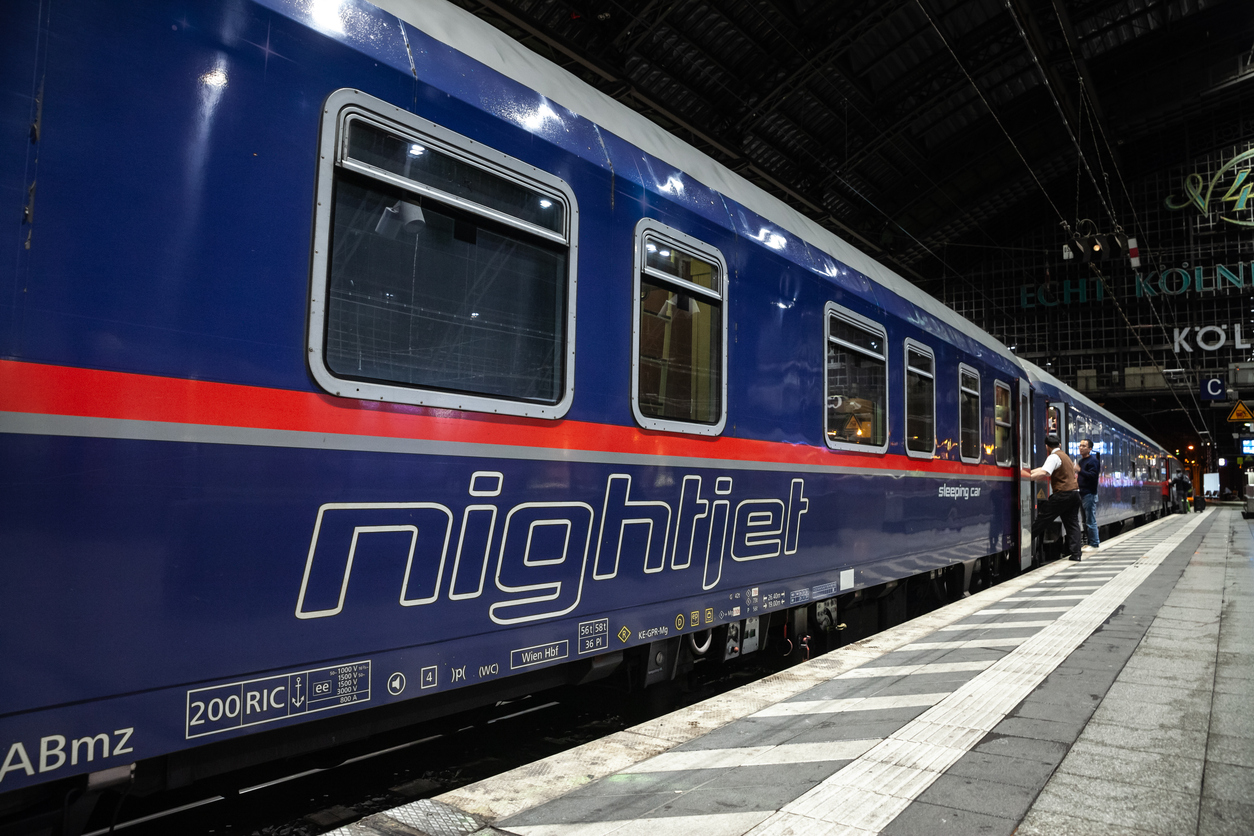
Night trains in Europe are enjoying a revival after years when many routes fell quiet. New trains have been ordered, services withdrawn in the 2000s have been restored and operators are stitching together a more coherent overnight network that reaches across borders.
The renewed interest has not appeared in a vacuum. Travellers who want to reduce their carbon footprint are looking for alternatives to short-haul flying, some countries have introduced or discussed taxes that make those flights less appealing and airport congestion has made predictable rail journeys more attractive. Political backing has helped too, notably in Austria, France and parts of Scandinavia, and investment in modern rolling stock has improved the experience on board so that a night on the rails feels more like a small moving hotel than a compromise.
The Major Operators
ÖBB Nightjet: The Market Leader
Austria’s ÖBB has turned Nightjet into the best known brand for cross-border sleepers. These trains link Austria and Germany with Italy, Switzerland and the Netherlands, and they have been joined by a new generation of carriages since December 2023. The original order for 33 new trains was revised in mid-2025, with 24 new Nightjet trains now planned alongside an expanded fleet of daytime Railjet services.
The incoming couchette and sleeping cars place a premium on privacy and security, with better compartment layouts, showers in some rooms and dedicated storage for bicycles. The new generation includes innovative mini cabins for solo travellers, offering maximum privacy in a compact space with a proper bed, storage and charging points.
However, the Nightjet network has faced some setbacks. In December 2025, services linking Paris with both Berlin and Vienna were discontinued after the French government withdrew financial support. Nightjet now operates as the backbone of Europe’s overnight network where it runs, providing frequent and reliable links on corridors where daytime high-speed trains may not offer such a neat end-to-end solution.
EuroNight: Central European Co-operation
Alongside Nightjet, there are co-operative EuroNight services that connect the capitals and regional hubs of Central Europe. These are not the product of a single company but of national railways working together to share trains and routes. The resulting network joins cities such as Budapest, Prague, Warsaw, Vienna and Berlin.
Trains can include a mix of seating coaches and modern sleeping cars with one to three berths in a compartment, so travellers can choose a level of comfort that suits the length of their journey and the price they are prepared to pay. The flexibility allows families and groups to travel together in couchettes while solo passengers can book a private room if they wish.
National Networks
France: Reversing the Decline
France has taken notable steps to reverse the decline of domestic night trains. Services radiate from Paris to destinations including Briançon in the Alps, Nice on the Mediterranean coast, Albi in the south-west and Latour de Carol in the Pyrenees. The reintroduction of these trains reflects a policy shift that recognises the value of overnight links for regions some distance from the capital.
In early 2025, the French government announced plans to order 180 new sleeper cars and 30 locomotives, representing the first large-scale investment in night trains in 45 years. This signals a renewed commitment to expanding the domestic network, though international routes have proved more challenging to maintain.
Book Intercités de Nuit services →
Italy: Continuity North to South
Italy, which never entirely abandoned the format, maintains a wide domestic overnight network under Trenitalia and Intercités Notte brands. Services link the industrial north with Sicily and Calabria via the straits and there are routes within the peninsula that make intra-Italian overnight travel straightforward.
Refurbishment programmes have given older sleepers a new lease of life, with updated interiors and showers in higher-grade compartments. The convenience of departing Milan or Rome in the evening and waking in Palermo or Reggio di Calabria continues to draw steady patronage, particularly during holiday periods when coastal destinations are in demand.
Spain: Uneven Progress
Spain’s experience has been more uneven. The former Trenhotel network once spanned the country and crossed borders, but it has not returned in full. A smaller number of overnight trains remain in operation and there are periodic discussions about adding more, though no definitive nationwide expansion has yet materialised.
Scandinavia: Long Hauls to the North
In Scandinavia the overnight tradition remains strong, with both Sweden and Norway maintaining substantial networks. SJ runs sleepers from Stockholm to the far north, including routes to Kiruna and Abisko, and on to Narvik in Norway. These trains have seen renewal too, with lighter interiors, improved lighting and the option of private family cabins that make longer journeys feel more restful.
The geography of northern Scandinavia, where distances are vast and motorways thin out, lends itself to rail travel that turns a night on board into an efficient transfer between city and wilderness.
Norway: A Robust Domestic Network
Norway operates one of Europe’s most comprehensive domestic night train networks, with four overnight routes running daily except Saturday, operated by three different companies:
- Oslo to Bergen on the Bergen Line (operated by Vy)
- Oslo to Stavanger on the Sørland Line (operated by Go-Ahead Norge)
- Oslo to Trondheim on the Dovre Line (operated by SJ Norge)
- Trondheim to Bodø on the Nordland Line (operated by SJ Norge)
The Oslo-Bergen route is particularly popular, taking approximately 7.5 hours along one of the world’s most scenic railway lines. Fares start from around €29 for a seat and from €59 for a sleeper compartment.
Accommodation options on Vy’s Oslo-Bergen service include traditional sleeper compartments with two beds, sink, mirror and towels, as well as more affordable “Rest” compartments with six berths for groups. An innovative feature is PlusNight, which offers lie-flat seats that recline completely at the touch of a button, providing privacy with wraparound seat shells angled away from the aisle. Similar accommodation types are available on the other routes, though features may vary by operator.
While breakfast is not served on board, Vy has partnered with hotels at Oslo and Bergen stations to offer discounted breakfast and shower facilities for night train passengers. A café operates throughout the night for snacks and beverages.
All Norwegian sleeper services use WLAB-2 carriages dating from 1986 (upgraded in 2007), but new Stadler FLIRT Nordic Express train sets are expected to enter service from 2028, bringing modern comfort to these well-established routes.
Book Vy night trains (Oslo-Bergen) →
Book Go-Ahead Norge (Oslo-Stavanger) →
Book SJ Norge (Oslo-Trondheim, Trondheim-Bodø) →
The New Entrants
European Sleeper: Filling the Gaps
Among the newer names, European Sleeper has gained attention. This is a co-operative private operator based in Belgium and the Netherlands that aims to rebuild cross-border links lost in previous decades. Its trains currently run between Brussels and Amsterdam at the western end and Berlin and Prague to the east.
Following the discontinuation of the Paris-Berlin Nightjet service, European Sleeper announced it would launch a replacement service from Paris to Berlin via Brussels in March 2026, operating three times weekly. The company intends to extend further when train paths become available, with Barcelona among the targets.
On board there is a familiar choice of seats, couchettes and sleeping compartments, and while the rolling stock is hired rather than purpose-built, upgrades are planned as the company matures. The cooperative funding model allows supporters to invest directly in the project, aligning commercial decisions with the interests of people who value night trains.
Seasonal and Regional Services
Outside the state incumbents and European Sleeper, there are smaller operators with a foothold in the market. In Central Europe, RegioJet and Leo Express have mounted seasonal or experimental overnight routes when train paths and demand align. Their services can add options on popular corridors and test markets that the big networks might not prioritise.
The Challenges for Start-Ups
Other private ventures have struggled to get off the ground. Midnight Trains in France proposed a hotel-style service that would bring high standards of comfort to overnight journeys, but the company abandoned the project in May 2024 after being unable to secure the necessary funding and facing difficulties in accessing the rail market as a new entrant. The failure illustrates the formidable obstacles facing newcomers, from sourcing rolling stock to navigating complex cross-border regulations.
Alternative Models: Luxury Coaches
Not every overnight journey in this space uses rails. Twiliner has developed an unusual model that relies on luxury sleeper coaches. The concept is to offer individual berths with privacy screens, quieter interiors and the ability to lie fully flat throughout the trip. Routes have included links between Switzerland and Spain and between Switzerland and northern Italy.
This approach fills gaps where rail paths do not exist or where the market may be too small for a train but large enough for a high-quality coach. In practice, such services complement the rail-based network rather than compete with it, broadening the pool of people who might consider an overnight surface journey.
The British Exception
Why the UK is Different
The United Kingdom sits slightly apart from this continental resurgence. International sleepers that would pass through the Channel Tunnel have not been revived since the 1990s, largely because of customs and security controls and the complexities of threading overnight trains through that infrastructure.
Domestically, however, Britain has two significant overnight services that cover long distances within the country.
The Caledonian Sleeper
The Caledonian Sleeper links London with Scotland, splitting into Lowland and Highland portions that serve Glasgow and Edinburgh on one hand and Inverness, Fort William and Aberdeen on the other. The train offers seats at one end of the price scale and a choice of Classic Rooms or Club Rooms for those who want to sleep more comfortably.
Club Rooms come with en suite facilities and access to station lounges, and the fleet built by CAF brings a smart hotel-style interior that underscores the premium position. From January 2026, the Highland Sleeper services will also call at Birmingham International, providing a new connection point for travellers in the West Midlands.
Journeys such as London to Inverness or Fort William can occupy much of a day by conventional means, so the overnight option retains a clear rationale.
The Man in Seat 61’s Caledonian Sleeper guide →
The Night Riviera
The Night Riviera complements that by connecting London Paddington with Penzance. This is a simpler proposition with seats and sleeper cabins in a refurbished train known for reliability and a quiet ride. It is popular for trips to Cornwall, especially during summer when demand for coastal holidays peaks.
Together these services show that overnight rail can work well in a domestic setting where geography and traffic patterns allow a full night’s run.
The Man in Seat 61’s Night Riviera guide →
Connecting to the Continent
Even without through sleepers, Britain remains well linked to the continental network thanks to Eurostar. A morning or early afternoon journey from London to Paris or Brussels can be timed to meet overnight departures the same evening. That through-planning opens up overnight travel from the UK to destinations across France, the Low Countries, Germany, Austria and beyond, albeit with a change of train.
What to Expect on Board
Seating Coaches
The simplest option is a seat in a standard coach. This is the cheapest way to travel, but a full night without a flat surface can prove tiring. Seats are best suited to shorter overnight journeys or for travellers on a tight budget.
Couchettes
Couchettes strike a balance between cost and comfort. These compartments usually have six or four berths that fold down to form beds, with a thin mattress and fresh linen. They are practical for friends or families and are widely available, though privacy is necessarily limited. Some services offer women-only compartments for solo female travellers.
Sleeping Cars
At the top end are sleeping cars, where compartments can be arranged for one, two or sometimes three people. Proper beds, thicker mattresses, crisp bedding and a washbasin are standard, with some rooms offering en suite showers and toilets. The design can feel akin to a compact hotel room on rails, especially on the newest stock.
Mini Cabins
The latest innovation from ÖBB’s new generation Nightjet is the mini cabin. These compact single-berth pods offer maximum privacy for solo travellers, with a proper bed, storage space, reading light, mirror and charging points. They sit between traditional couchettes and full sleeping compartments in terms of both comfort and price.
How to Book
Timing and Pricing
Finding a good fare has become a matter of timing as much as destination. Most sleeper services now use dynamic pricing, which means booking early usually brings lower prices, particularly if a private compartment is desired. Planning ahead is especially useful for peak seasons when entire routes might sell out weeks in advance and when families seek to secure whole compartments so that they need not share with strangers.
Where to Buy Tickets
Tickets can be bought on national railway websites and increasingly through cross-border booking platforms that understand the complexities of overnight trains:
- ÖBB Nightjet: nightjet.com or oebb.at
- European Sleeper: europeansleeper.eu
- French Intercités de Nuit: sncf-connect.com
- Norwegian night trains: Vy (Oslo-Bergen), Go-Ahead Norge (Oslo-Stavanger), SJ Norge (Oslo-Trondheim)
- Caledonian Sleeper: sleeper.scot
- Night Riviera: gwr.com
- Multi-operator bookings: thetrainline.com, omio.com
Checking both national railway websites and reputable cross-border platforms can reveal different availability and promotions, and being flexible by a day either side of a preferred date can open up options that were not visible at first glance.
What to Consider
Paying attention to the type of compartment is worthwhile, not only for comfort but for details such as whether a shower is available, whether there is secure space for a bicycle or whether a light breakfast is included in the fare. Some services include complimentary amenities such as welcome packs, breakfast and access to departure lounges, particularly in higher accommodation categories.
Popular Routes That Work Well
Even with an incomplete network, there are journeys where sleepers are already established and well-used:
- Vienna to Venice: A classic route combining two iconic cities with an overnight journey through the Alps
- Zurich to Berlin: Direct connection between Switzerland and Germany’s capital
- Paris to Nice: From the capital to the Mediterranean coast, ready for a morning by the sea
- Oslo to Bergen: One of the world’s most scenic railway lines, crossing mountains and fjords in 7.5 hours
- Stockholm to Narvik: Dramatic arrival in the mountains above the Ofotfjord, showcasing Scandinavia’s wilderness
- Oslo to Trondheim: A practical overnight link connecting Norway’s capital with its historic third city
- Prague to Zurich: Popular with leisure and business travellers crossing Central Europe
- London to Inverness or Fort William: Sleep through the length of Britain and wake in the Scottish Highlands
- Milan or Rome to Palermo: Italy’s established north-south connection via the straits to Sicily
The Challenges That Remain
An Incomplete Network
If the case for night trains rests on convenience and sustainability, it is fair to note what remains challenging. The network is not yet complete. There are countries with few or no overnight options and some borders are harder to cross than others because infrastructure managers and timetable planners must co-ordinate different operating rules and priorities.
Capacity Constraints
Popular routes can be saturated during school holidays and long weekends, leaving late planners with limited choice. High-speed lines also present an odd complication. Designed for daytime traffic and with maintenance windows at night, they can force overnight trains on to slower parallel routes, lengthening journey times even when distances are not great. That said, the longer timetable can make for a better night’s sleep if the train does not race to its destination too quickly.
Political and Financial Uncertainties
The withdrawal of some Nightjet services from France shows that political and financial support cannot be taken for granted. Night trains require subsidies or consistent long-term patronage to remain viable, and changes in government priorities can disrupt established services. Infrastructure access fees, path allocation and maintenance schedules all depend on co-operation from national rail authorities, which can favour domestic operators over new entrants.
Looking Ahead
The momentum behind sleeper trains appears set to continue, though progress will be uneven. Some countries will invest more quickly than others and certain cross-border routes will remain hard to slot into busy timetables. High-speed lines will continue to prioritise daytime expresses, leaving night trains to tread older tracks that are slower but no less scenic come morning.
Yet the attractions that have driven the comeback are unlikely to fade. Overnight trains turn long distances into restful time, cut emissions compared with short flights and deliver passengers into city centres ready to make use of the day. With flagship networks like Nightjet adding new carriages, national railways in France and Italy maintaining or restoring routes and private operators testing new ideas or stepping in where state services have withdrawn, Europe’s night trains are once more part of mainstream travel rather than a nostalgic niche.
The broader European picture is one of variety and gradual expansion, though not without setbacks. Nightjet ties together Austria with neighbours in several directions, though it has withdrawn from France for now. France’s Intercités de Nuit brings overnight trains back to routes that were once unthinkable without a sleeper, and the government’s investment in new rolling stock signals continued commitment. EuroNight co-ordination enables Central Europe’s capitals and regional centres to maintain cross-border services that would be hard to support on a purely national basis. Italy’s north-south trains continue a tradition that suits the country’s geography. In Scandinavia, the long haul to and from the far north feels well-matched to overnight rail and has benefited from new stock. Private entrants are finding niches, whether through co-operative models like European Sleeper, which is stepping in to replace withdrawn Nightjet services, seasonal experiments from operators such as RegioJet or alternative modes exemplified by Twiliner.
For those planning a journey, the practicalities matter as much as the map. The network may be imperfect and progress uneven, but the options available today offer a genuine alternative to flying and a way to travel that makes the journey part of the experience rather than time to be endured.
Further Resources
- The Man in Seat 61 - Comprehensive guides to European night trains
- Back on Track Europe - News and analysis on European rail
- Railway Gazette International - Industry news and developments
- Trip by Trip - European rail news and trip planning
Recent Musings
October 2026 Wirral Bus Network Changes Under Liverpool City Region Franchising
West Cork Bus Connections for Walkers and Other Visitors
Planning County Kerry Walks and Day Trips by Bus
Discovering County Mayo Using Public Transport
Appraising Bus Routes for a Car-Free Walking Trip in Donegal
Extras & Utilities
Carrying Bicycles on Buses in Britain and Ireland
Not Just Blogs, A Collection of Public Transport News Sources