Mixing Cycling and Bus Travel, What Travellers Can Expect in Different Countries
 Posted on November 11, 2025
 Reading time: 10
minutes.
Reading time: 10
minutes.
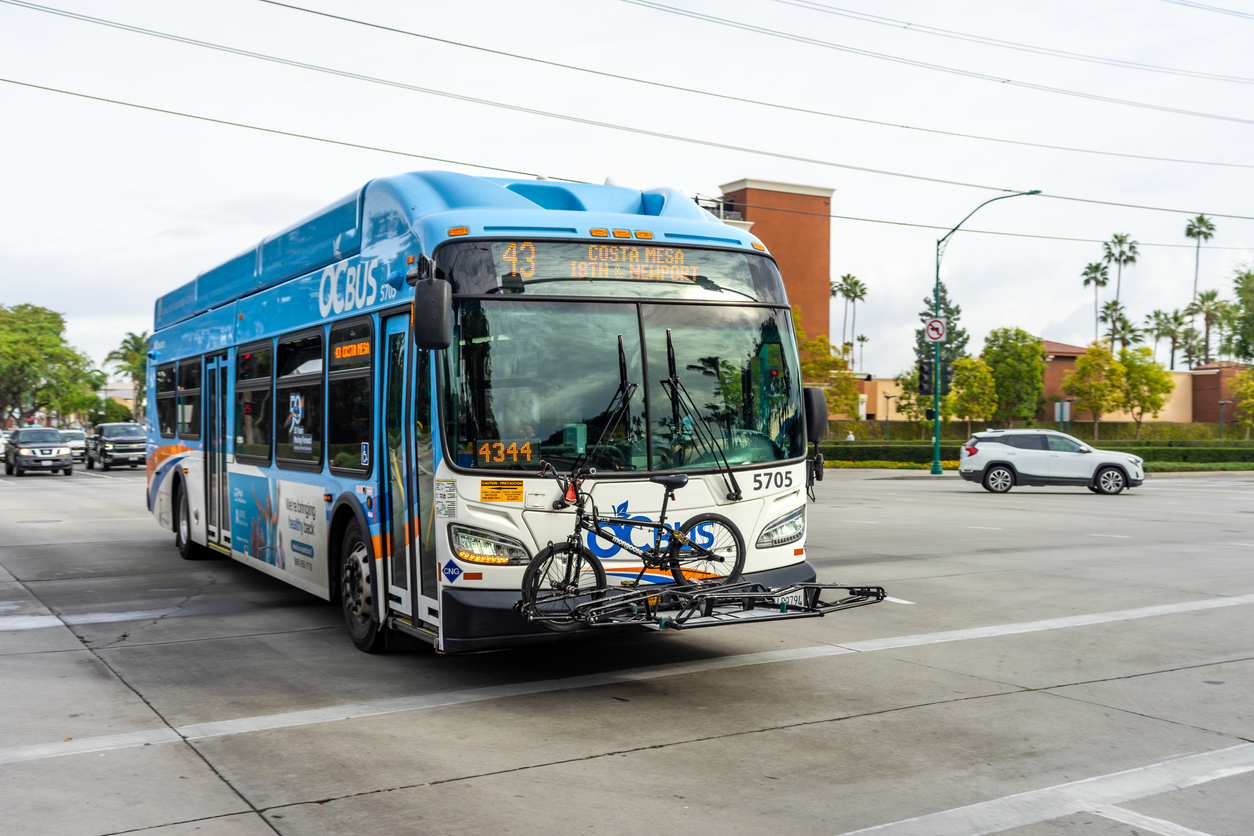
Carrying a bicycle on a bus varies dramatically by region. North America and New Zealand have made bike-on-bus travel routine through front-mounted racks, while Britain, Ireland and much of continental Europe still rely primarily on folding bicycles. Understanding these regional differences helps set realistic expectations for combining cycling with public transport.
Britain and Ireland
England, Scotland and Wales
In Britain, the guiding principle for local buses is straightforward: folding bicycles are usually acceptable if compact and stowed safely, while full-size bikes are not. The approach is consistent across major urban networks. In cities such as London, Manchester, Birmingham and Leeds, folding bikes are welcomed as long as they are safely stowed and do not create mess or inconvenience other passengers. Where crowding or safety concerns arise, drivers can refuse carriage.
Some areas enforce stricter rules. Edinburgh requires that any folding bicycle be fully folded and enclosed in a suitable carrying bag. The Peak District follows a similar approach, requiring folding bikes to be enclosed in a carry case or bike bag. These measures protect other passengers’ clothing and the bus interior whilst making bikes indistinguishable from other luggage.
Coach services offer more flexibility because underfloor luggage compartments can accommodate full-size bicycles, subject to space. National Express, which operates intercity coaches across England, Scotland and Wales, will not carry standard non-folding bicycles but will accept folding bicycles that meet specific criteria. The bike must fold in half via a frame hinge and be carried in a padded bag or hard case. If correctly folded and packed, it counts as one piece of luggage within the standard allowance. An unpacked or incorrectly packed folding bike will be refused.
Scottish intercity services allow bicycles in the luggage compartment when space permits, but stipulate that the bike must be in a box or bag. Carriage is at the driver’s discretion and, whilst often free, is never guaranteed if the coach is full.
Beyond specially equipped services, full-size bicycles rarely travel on ordinary buses in Britain. Front-mounted racks of the type common in North America have faced regulatory obstacles. A 2015 pilot in Bath was blocked by the Driver and Vehicle Standards Agency over concerns about vehicle compliance, lighting and safety standards. Even coaches with luggage holds offer carriage only conditionally, depending on available space.
Ireland
Irish intercity coaches commonly carry full-size bicycles in underfloor luggage compartments. On routes such as those connecting Dublin, Cork, Galway and Belfast, bicycles are treated as large baggage items if space is available. As of April 2024, Bus Éireann removed the €10 bicycle charge on Public Service Obligation routes, making bicycle transport free on these services. Folding bicycles enclosed in a bag or protective cover are treated as normal baggage and carried free in the luggage bay. On Expressway services, a €5 charge applies per journey. Carriage is always dependent on available space and follows a first-come, first-served approach. Reservations are not taken for bikes, so arrival time and coach loading determine whether a bike can travel. On Irish city buses in Dublin, Cork, Limerick and other urban centres, the policy mirrors the British approach: folding bikes are accepted if folded and secure, but full-size bikes are not.
Continental Europe
General Pattern
Most regular city buses across mainland Europe do not carry full-size bicycles. The default in cities such as Paris, Berlin, Brussels, Amsterdam and Rome is either to park the bike at a stop or to switch to rail, where bike carriage is often better established. Folding bikes are treated as luggage by many operators and are the practical exception.
Spain
Madrid offers a notable example of innovation. Two bus routes have been retrofitted with rear-mounted racks that each carry two bicycles. These include the Airport Express bus (Route 203) and a route serving a large park where demand from cyclists justified the investment. The solution was a compact rack on the rear of buses rather than the larger front-mounted design familiar in North America. Spanish vehicle regulations limit the size of attachments on buses, and safety concerns in mixed traffic influenced the choice of rack location and dimensions. Even this small deployment required careful compliance with national rules.
Switzerland
In mountainous areas, tourism and recreation have prompted flexible solutions. Switzerland’s PostBus network uses rear-mounted racks and, in alpine cantons such as Graubünden, Valais and Bern, full trailers during summer months to carry several bicycles. Rear racks can hold five to six bikes, whilst trailers accommodate 16 to 20 bicycles. These services are particularly helpful for reaching high passes or linking valleys without a long return ride. From the 2025 summer season, PostBus introduced mandatory reservations for bicycle transport on most tourist routes, costing two francs per reservation. Reservations may be needed on busy routes, and cyclists typically load and unload their own bikes. These services meet clear seasonal demand in regions such as Zermatt, St Moritz and Interlaken, but they are not a model that many urban networks follow.
France
As of July 2021, French regulations require all new buses used for regular road public transport services (excluding urban services) to be equipped with a system to transport a minimum of five unassembled bicycles. Some operators have moved beyond this minimum. In the Aix-Marseille-Provence Metropolis, experimental indoor bike rack systems allow up to six bicycles to be loaded on each bus, designed primarily for commuting and cycle tourism.
Broader European Context
Progress towards bike-and-bus integration has been gradual across Europe, with scattered pilots rather than widespread adoption. Legal and safety constraints play a role. Limits on overall vehicle length and concerns about the behaviour of racks in collisions make it harder to mount large devices on the front of buses. Where agencies do proceed, they often pick targeted routes where the benefits are clear and the risks manageable, such as hilly cities or corridors serving parks and tourist destinations. Interest continues to grow, and each year brings a handful of new trials or seasonal services that add to the patchwork of options.
North America
Across the United States and Canada, loading a bike on a bus is mainstream. Urban and suburban systems in cities including New York, Los Angeles, Chicago, San Francisco, Seattle, Toronto, Vancouver and Montreal almost universally fit a flip-down rack on the front of the vehicle, usually with two slots and sometimes three on longer buses or newer designs. By 2008, more than 70% of American transit buses had such racks, and today the vast majority of city fleets use them as a matter of course.
The process is designed for speed and simplicity. A cyclist lowers the rack, places the front wheel in a slot, secures the wheel or frame with a spring-loaded arm, then boards the bus. There is no reservation system and no extra charge in most cities. If the rack is full, the rider waits for the next bus, which is rarely more than a minor inconvenience outside peak hours. The hardware folds up against the bus when not in use and sits low enough not to interfere with the driver’s view.
The ubiquity of these racks makes mixed-mode commuting normal and has been credited with increasing public transport ridership among cyclists. Several North American rack designs would conflict with EU or UK construction and use rules if fitted as-is, whether because of length limits, lighting, crumple behaviour or pedestrian safety standards. Road widths, stop designs and procurement cycles also differ. Even so, the North American experience demonstrates that carrying bikes on buses can be done safely at scale.
Australasia
Australia
Adoption in Australia is uneven and determined at state or local level. Canberra stands out, with more than 90% of the city’s buses fitted with front-mounted racks that hold two bicycles. This is supported by a prominent Bike & Ride programme aimed at commuters who split their journey between saddle and seat, making Canberra the Australian city with the highest level of bike racks on buses.
In Victoria, selected routes in places such as Bendigo and some Melbourne suburbs have racks, indicating a willingness to expand where demand justifies the investment. A trial from 2016 to 2017 on routes including Essendon to Ivanhoe and Strathmore to East Coburg in Melbourne, as well as Bendigo Station to Strathfieldsaye and the Cowes to Wonthaggi route in South Gippsland, demonstrated that bike racks could operate safely on Victorian roads. Following the trial, the Victorian government approved broader rollout.
In New South Wales, including Sydney, regular buses do not carry full-size bicycles, and only folding bikes are allowed because of space and safety considerations. Similar restrictions appear in Queensland and South Australia, where attention has focused on allowing bikes on trains or ferries rather than buses. The overall picture is one of steady but patchy progress.
New Zealand
New Zealand has moved further and more consistently than Australia. From the early 2010s onwards, cities including Christchurch, Wellington, Dunedin, Nelson, Hamilton and Palmerston North began fitting front racks to public buses, often across entire fleets. Christchurch was an early adopter, and all city buses there now carry racks, with strong usage reported by both commuters and recreational riders.
The nationwide rollout encountered a setback in November 2024 when authorities suspended the use of front racks pending checks that they did not obscure headlights or otherwise breach vehicle regulations. The New Zealand Transport Agency issued an industry alert after concerns were raised that bike racks loaded with bicycles could partially obstruct headlights on some bus models, potentially making them non-compliant with road safety regulations. This was a precautionary step affecting cities across the country.
A working group comprising councils, public transport operators and transport agency officers was formed to find an agreed pathway to restore bike rack service. In April 2025, a daytime exemption was issued, and through May 2025, bus operators added LED lighting strips to bike racks and completed compliance checks. By mid-2025, bike racks were restored to full 24/7 operation in most regions after buses were modified to meet lighting requirements. The suspension lasted approximately six months, and whilst frustrating for cyclists, it was resolved without permanently removing the service.
Auckland, which had not previously adopted front-mounted racks, used this period to trial interior bike racks. From July 2025, 15 double-decker buses on the Northern Express 1 route (connecting Albany and the city centre via the Auckland Harbour Bridge) were fitted with interior racks holding two bikes each. This trial allows cyclists to cross the harbour bridge with their bikes, filling a significant gap in Auckland’s cycling network. Integration with the mobile app allows users to check in real time whether an approaching bus has a bike rack.
Across New Zealand, it is now common to take a bike on a bus without paying an additional fare, with the intention of supporting cycling as part of everyday mobility. The November 2024 suspension and subsequent restoration demonstrated the commitment to bike-on-bus services even when regulatory issues arise.
Practical Implications
Geography and governance shape what is possible. In Britain, Ireland and most of Europe, a folding bicycle remains the most reliable means of using buses as part of a longer trip. Enclosing the bike in a bag is not just courteous but often a condition of carriage. Where a full-size bicycle is involved, intercity coaches with underfloor bays offer the best chance, though availability should never be assumed. Fees vary, and space is allocated on the spot.
In North America and much of New Zealand, the expectation is that a bus will have a rack and that there will be no extra charge. Even there, capacity is finite, and riders remain beholden to the first-come rule if the rack is already full. Australia sits between these extremes, with Canberra leading the way and other cities gradually expanding provision.
The direction of travel is positive. Each year brings incremental progress as operators respond to demand for intermodal journeys and update fleets. The success of rear racks and trailers in Switzerland, the rear-mounted solution in Madrid and the spread of interior racks in Auckland all show that there is more than one way to solve the problem. Safety and legal compliance will continue to guide what is possible in each jurisdiction. For now, knowing the rules of the region you intend to visit and preparing a folding bike for easy carriage are the best ways to make bike-and-bus travel work smoothly in Britain and Ireland. Elsewhere, the growing presence of racks on buses has made mixed-mode trips far simpler, encouraging more people to ride to the stop, load the bike in seconds and continue their journey with minimal fuss.
Recent Musings
October 2026 Wirral Bus Network Changes Under Liverpool City Region Franchising
West Cork Bus Connections for Walkers and Other Visitors
Planning County Kerry Walks and Day Trips by Bus
Discovering County Mayo Using Public Transport
Appraising Bus Routes for a Car-Free Walking Trip in Donegal
Extras & Utilities
Carrying Bicycles on Buses in Britain and Ireland
Not Just Blogs, A Collection of Public Transport News Sources