Germany's Trains Are Fast but the Network Is Not
 Posted on November 8, 2025
 Reading time: 8
minutes.
Reading time: 8
minutes.
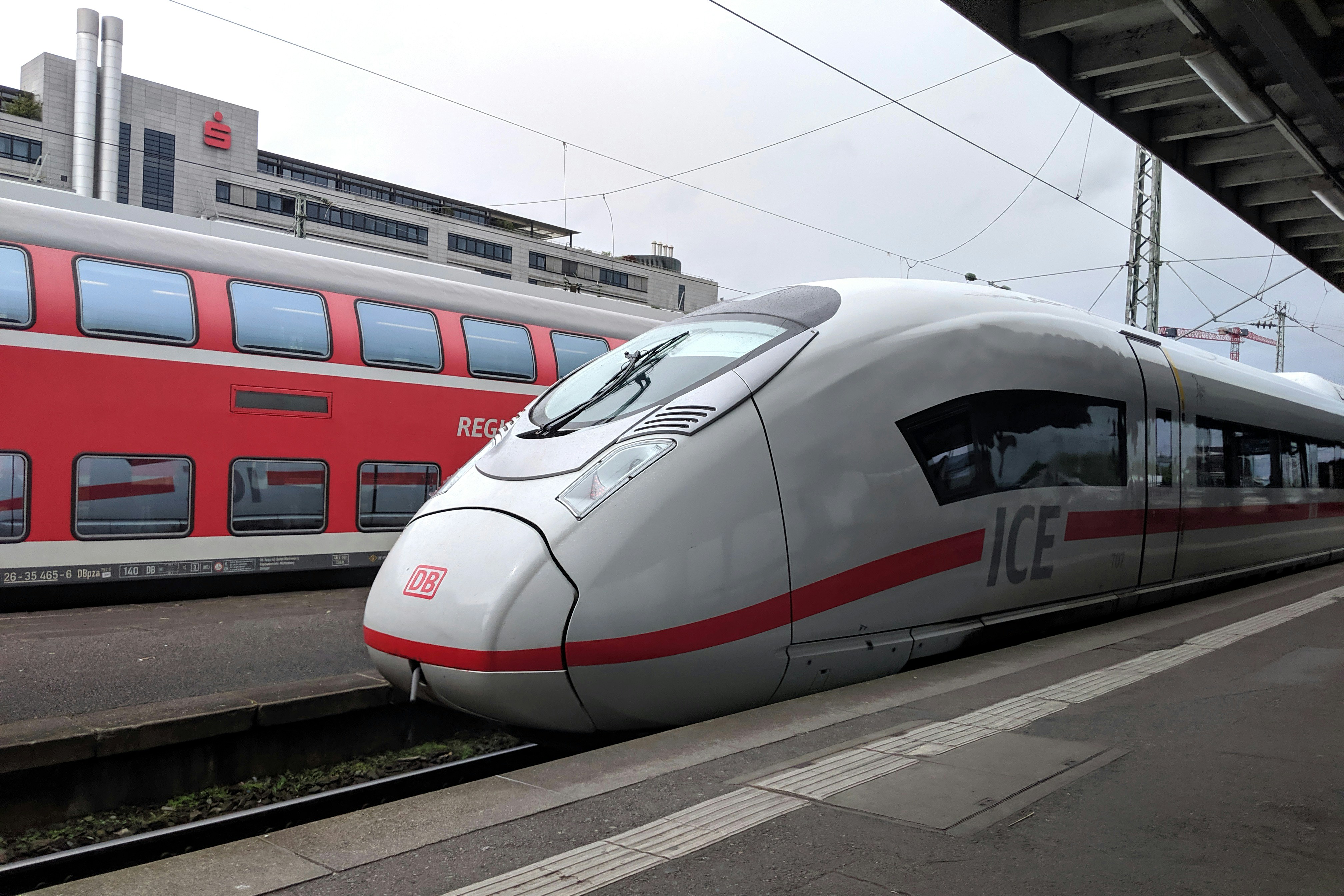
A recent business trip to Germany exposed me to something that I had not anticipated: a German’s criticism of their own railway system. While my previous experiences of it on S-Bahn and EuroCity services have been positive ones, someone else suffered a three-hour delay while en route Berlin to Mainz for a job interview. Thankfully, they were offered the job, yet it also highlights the problems experienced on long distance journeys. It does not help that the network is vast, meaning that trains capable of 300 km/h and a timetable that links almost every major city with hourly departures are leaving travellers to routinely find that their journeys feel slower and are less reliable than they ought to be.
This is exacerbated while air travel inside Germany has faded into a niche that mostly feeds international hubs. Domestic passengers now account for only around 6% of total air traffic, with volumes at roughly 50% of 2019 levels. Airlines have cut frequencies or withdrawn routes, focusing connections on Frankfurt and Munich hubs, with Düsseldorf, Hamburg and Berlin serving as secondary bases. The remaining city pairs tend to survive for business transfers more than point-to-point demand, with durations in the air around an hour but door-to-door times that are not markedly faster than the train once airport procedures and transfers are counted.
Policy and public sentiment encourage modal shift for distances under 600 km, and rail-air partnerships now integrate ICE segments into flight itineraries, particularly at Frankfurt where long-distance trains stop under the terminals. Rail has won the domestic transport debate, yet the gap between capability and experience has structural roots that explain why the system performs as it does, why some corridors shine while others disappoint and why the current programme of renewal is both remedy and temporary burden.
Reach over speed
The design choices that built the network remain visible in every timetable. Germany opted for reach over pure speed, weaving high-speed sections into a framework of conventional track rather than building dedicated lines in the French manner. ICE trains share corridors with regional services and freight, adjust to varied signalling systems and stop frequently to serve intermediate markets. The result is a network that connects more places more often, but rarely sustains top speed for long.
First, Berlin to Hamburg covers 255 km in around one hour 45 minutes on a largely upgraded line with few stops, making it one of the quickest corridors in the country despite a 230 km/h limit rather than the 300 km/h available elsewhere. (Note: this route is currently closed for major modernisation from August 2025 through April 2026, with diverted services taking around 2 hours 50 minutes.)
In contrast, Munich to Hamburg stretches to nearly six hours over 800 km because the route mixes fast sections with slower approaches and dense intermediate traffic, flattening the average pace to around 140 km/h. After that, Berlin to Munich takes just under four hours for 623 km thanks to a 300 km/h corridor through Thuringia, yet the approaches to both cities remain constrained. Lastly, Stuttgart to Berlin needs five and a half hours for 635 km, averaging closer to 115 km/h. In summary, the trains can do far more in isolation, but the system was not designed to let them.
The reliability split
That design shaped not only speed but reliability. Long-distance services achieved 62.5% punctuality in 2024, Deutsche Bahn’s worst performance in at least 21 years, using the company’s six-minute threshold. Early 2025 figures showed modest improvement to around 65-66% punctuality, though delays remained a persistent challenge. Regional trains hover around 90%, S-Bahn networks in Berlin, Munich and Hamburg sit in the high eighties to low nineties, and the overall passenger rail average is close to 89.5%.
The split is not accidental. ICE and Intercity trains traverse the busiest trunk routes, rely on some of the oldest infrastructure and operate with thin buffers that leave little room to recover when something goes wrong. A defective signal or a late freight train can ripple across entire corridors because there is no slack in the timetable and no easy way to bypass a bottleneck. Regional services run on less congested lines, face fewer long-distance dependencies and benefit from shorter routes that contain disruption more easily.
The weight of decades
The infrastructure itself carries the weight of decades. Deutsche Bahn’s own reports describe a network condition grade of 3.0 on a school-style scale where 1 is very good and 6 very poor, with a significant share of switches, track and signalling assets in poor condition. Thousands of kilometres are classified as high-stress network where capacity is routinely stretched. Commentators trace a large proportion of delays directly to ageing and overloaded assets, particularly on the trunk routes that long-distance trains depend upon.
Digital signalling is still being rolled out, older systems fail more often and recovery is slower when they do. Staffing shortages among technicians and drivers complicate disruption management, rolling stock reliability varies by fleet, and operational coordination between infrastructure managers and train operators has come under scrutiny. From a passenger’s perspective this all manifests as missed connections, crowded trains and compensation claims that are theoretically possible but not always smooth to pursue.
The east-west pattern
Geography adds another layer of complexity. The east-west divide that loomed over German infrastructure at reunification never entirely vanished, even as huge sums were poured into reconnecting the country. The west and south hold a denser web of high-speed and trunk routes such as Cologne to Frankfurt, Hanover to Würzburg and Mannheim to Stuttgart, paired with intense regional and freight flows through the Rhine corridor. The east saw dramatic modernisation on lines like Berlin to Leipzig, Berlin to Dresden and the Berlin to Erfurt to Munich axis, yet many east-west links still blend new sections with older, slower approaches and junctions.
Congestion in the west arises from volume, while in the east speed restrictions and work sites remain more common. The result is not a formal split so much as a pattern. Western routes offer more choice but experience more delay, eastern routes can feel newer but are sometimes slower or less frequent. Ongoing digital programmes aim to close the gap, although many priority corridors remain in the west and south because that is where demand is highest.
Customer sentiment
Customer sentiment reflects the split in performance. Deutsche Bahn publishes satisfaction scores on the same school-grade scale used for infrastructure condition. For 2024, long-distance scored 2.7, regional rail 2.2 and regional bus 2.1. Booking and digital tools perform strongly, with an external ranking placing DB near the top among European operators for ease of booking and traveller experience, yet public perception on open platforms is often harsher, highlighting gaps between daily reality on the long-distance network and the expectations that the brand sets. The numbers indicate a system that functions but carries a backlog, and the distance between what the trains can do and what passengers actually experience feeds frustration.
The renewal programme
The renewal programme is enormous in scale and ambition. Deutsche Bahn plans to spend more than €23 billion in 2025 alone across track, stations and energy systems, with a separate €4 billion fund paying for hundreds of smaller upgrades by 2030. National investment across railway infrastructure runs to around €107 billion over the coming years. The strategy moves from patching to comprehensive overhauls, targeting 24 of the most important routes by 2030 and all 42 key corridors by 2036.
Stations are being assessed for throughput at nearly 300 locations, with plans to refurbish 500 by 2030 and another 500 by 2035. A framework agreement with Alstom covers at least 1,890 digital interlocking units worth more than €600 million between 2025 and 2028, supporting the wider rollout of the European Train Control System. Progress on the smaller programme is steady, with approaching half of the projects targeted for completion by the end of 2025.
The direction is clear, the investment is flowing, and the benefits are phased. The paradox is that rebuilding the network temporarily makes performance worse before it gets better. Works remove capacity while they proceed, diversions stretch journey times and passengers feel the consequences.
Alternative strategies
Some travellers have adapted by threading journeys together using only regional services. It is a workable strategy on many corridors, especially in the west and south where towns are close together and Regional Express services are frequent. Punctuality is better, fares are lower with day passes and the Deutschlandticket, and engineering works often affect these services less dramatically than they do the long-distance network.
The trade-offs are clear. Trips take far longer and may involve multiple changes, comfort is variable and a few cross-state links remain patchy. For those not in a hurry the experience can be calmer and more predictable. Others opt to mix modes, inserting a short ICE leap where regional options are sparse then dropping back to local trains.
The path forward
None of this diminishes the ambition of Germany’s railway. It remains the largest integrated system in Europe, with the broadest reach and the most frequent long-distance links. The current problems are structural and widely acknowledged, and the remedy is equally structural. Renewals are now concentrating on entire corridors rather than permanent patches, digital interlocking systems and ETCS are being rolled out at scale, and stations are being upgraded to handle more trains with fewer conflicts.
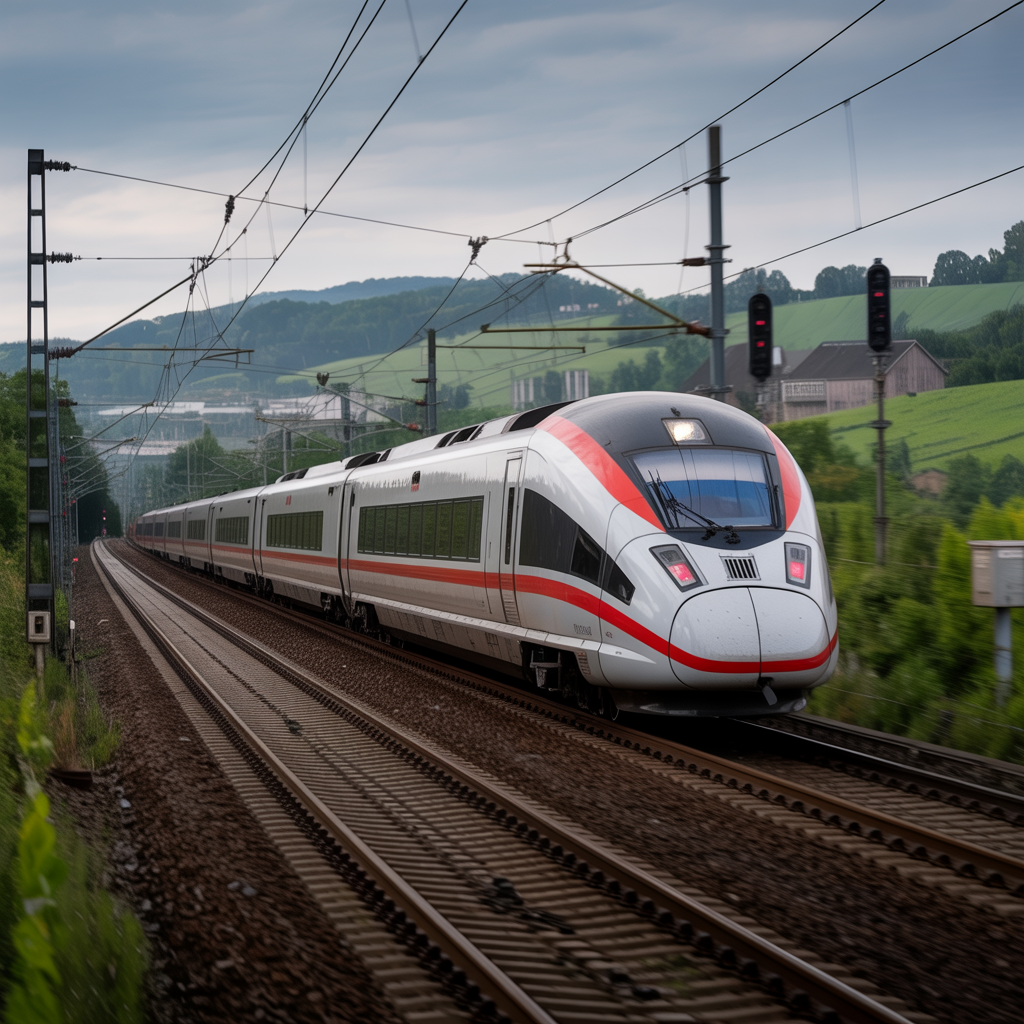
The transition is messy. Works shrink capacity before they expand it, diversions make timetables look erratic and passengers feel the consequences. Yet the direction is set, and the investment is flowing. In the interim, it helps to choose routes with more upgraded sections, to allow sensible buffers for connections and to consider the occasional regional alternative where that keeps a day on track. If the programme to 2030 and beyond delivers as planned, average speeds should climb and punctuality should recover, putting the famous numbers back within reach of what travellers actually experience.
Recent Musings
October 2026 Wirral Bus Network Changes Under Liverpool City Region Franchising
West Cork Bus Connections for Walkers and Other Visitors
Planning County Kerry Walks and Day Trips by Bus
Discovering County Mayo Using Public Transport
Appraising Bus Routes for a Car-Free Walking Trip in Donegal
Extras & Utilities
Carrying Bicycles on Buses in Britain and Ireland
Not Just Blogs, A Collection of Public Transport News Sources