Scenic Rail Routes for Getting Around Cornwall
 Posted on September 16, 2025
 Reading time: 11
minutes.
Reading time: 11
minutes.
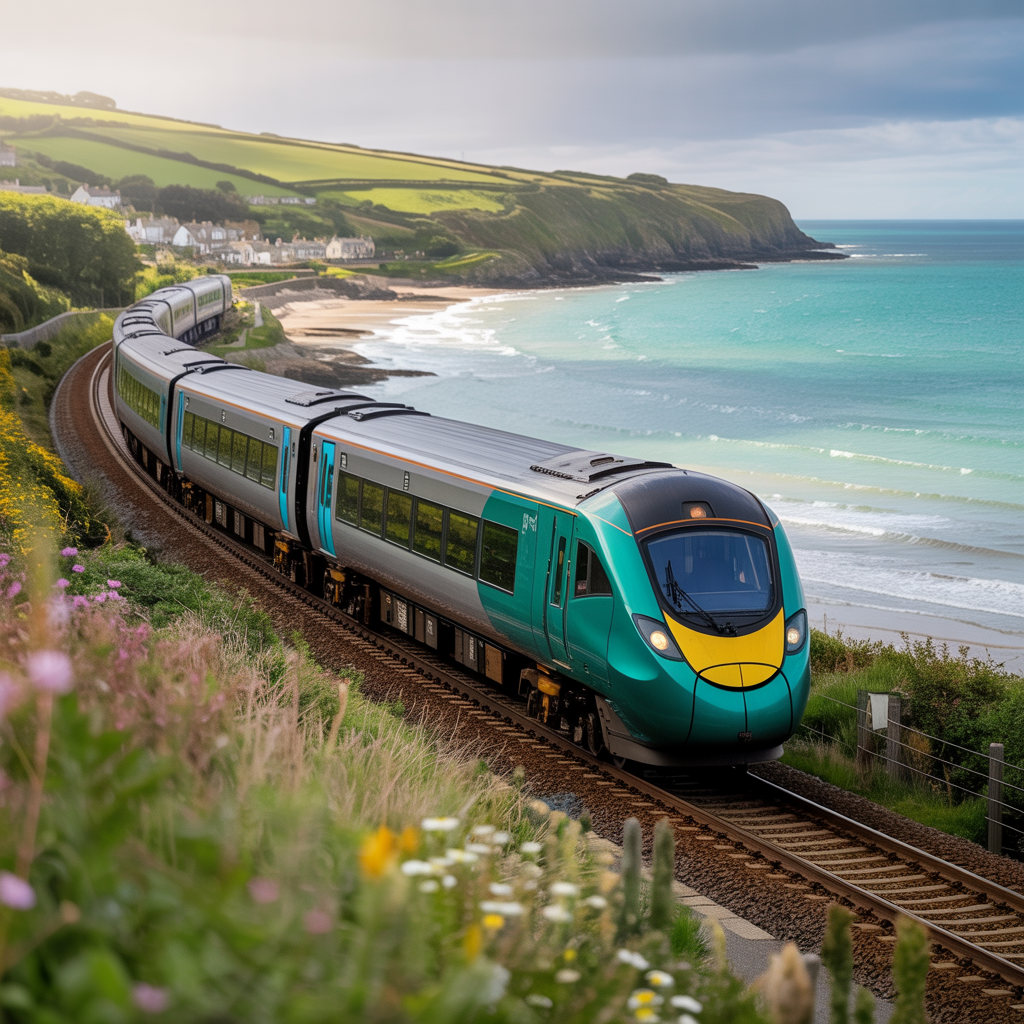
Cornwall’s network of branch lines has long offered a simple way to reach parts of the county that otherwise would be awkward by rail. Threading along estuaries, skirting surf beaches or cutting across quiet countryside, these short links add a great deal of flexibility for anyone planning day trips or longer stays without a car. They connect the main Cornish towns with smaller seaside communities, make coastal walking easier to plan thanks to convenient returns by train, and provide journeys that are as attractive as the places they serve.
The St Ives Bay Line: Coastal Views and Artistic Heritage
The St Ives Bay Line between St Erth and St Ives is the best known of the set, largely because of its setting. The track runs close to the shore with open views over the Hayle Estuary before turning to follow the curve of Carbis Bay, so the last minutes of the ride feel like an extended coastal lookout. The train drops you near the heart of St Ives, where beaches are within easy reach and the town centre is compact enough to explore on foot without effort. Cultural stops such as Tate St Ives and the Barbara Hepworth Museum sit alongside Porthmeor and Porthminster beaches, and there is straightforward access to the South West Coast Path for those who want to combine rail with a short clifftop walk. The line’s brevity aids its popularity, keeping travel light and allowing time for unhurried wandering.
The Looe Valley Line: River Journey to a Working Harbour
By contrast the Looe Valley Line from Liskeard to Looe offers a quiet river journey. The train winds along the East Looe River, hugging the water meadows and creeks in a way that feels particularly scenic at high tide when the river fills and glints beside the track. The end of the line is the harbour town of Looe, where a sandy beach spreads out from the river mouth and trawlers still come and go. Simple pleasures are at hand here, from fish and chips to short boat trips, and the immediate surroundings lend themselves to easy strolling. Those wanting more exertion can follow the coast path towards Polperro for a stretch before returning by train. Adding to the character of this route is the unusual connection at Liskeard, where the branch diverges from the Cornish Main Line on a sharply curving link that requires trains to reverse direction. It is an oddity in the network and often remarked upon, yet it functions smoothly and adds a memorable twist to the excursion.
The Maritime Line: Connecting City and Port
The Maritime Line between Truro and Falmouth Docks forms an east–west spine that ties Cornwall’s only city to its main port. This is very much a line of two halves. Truro offers the striking three-spired cathedral, a tidy compact centre, and markets and shops that work well for a short meander before catching the next train. Falmouth then brings an entirely different setting with beaches, a busy harbour and a choice of attractions that includes Pendennis Castle on its headland and the National Maritime Museum Cornwall by the water’s edge. The service also acts as a gateway to the Fal estuary’s ferries, opening up simple hops across to St Mawes for another change of pace. Because the Maritime Line runs frequently for most of the day, it is straightforward to fold into a wider plan or to use as a base for a relaxed afternoon in a single place.
The Atlantic Coast Line: Cross-Country Route to Surf Country
If there is a wilder thread in the set it is the Atlantic Coast Line from Par to Newquay, a cross-country arc that takes in rural scenery and glimpses of Cornwall’s china clay country. In some sections the landscape feels distinctly inland before the line approaches the coast again and ends at Newquay, a resort town whose name is practically shorthand for surfing. Beaches such as Fistral are the main draw, while the Blue Reef Aquarium and easy access to the coast path lend variety to a visit. The service to Newquay is seasonal and timetables can be more limited than on the other branches, so advance checking is important, but when it is running the route adds another option for a day out that does not rely on a long bus journey or a car.
Planning Day Trips: Combining Multiple Lines
Together these branches form a useful framework for exploring Cornwall without driving. They link the county’s principal settlements with seaside towns such as St Ives, Looe, Newquay and Falmouth, while leaving Truro within easy reach for urban diversions. They do so along corridors that in many places shadow estuaries or coastlines, giving the train ride its own value as a scenic interlude. For those planning to walk parts of the South West Coast Path, the lines are practical too, because they create natural start and end points for an out-and-back day when the return is by rail rather than retracing steps on foot.
Because the branches are short and connections on the main line are regular, it is simple to build a day trip around one or two of them. Starting in Truro, one natural shape is to go west first to St Erth for the St Ives Bay Line. The connection is quick, the sea views begin almost at once, and a morning in St Ives can be spent split between the art galleries and the beaches, with time left for a harbour wander. After returning to Truro around midday, the afternoon can be given over to the Maritime Line. This keeps travel times short and steady, and allows for a sequence that moves from a compact city centre to a port town with a different rhythm. In Falmouth the National Maritime Museum Cornwall is close to the station and makes a straightforward visit, though it is equally easy to walk the harbour front or take a ferry over to St Mawes for an hour before catching a return train. An evening meal in Falmouth or back in Truro rounds off the day without the need to watch the clock too closely.
For those beginning further east, Plymouth offers another simple pairing. The Looe Valley Line lies within easy reach after a short trip on the main line to Liskeard. The ride down the valley is a pleasure in its own right, and time in Looe can be used to explore the harbour and beach or to stretch out along the coast path towards Polperro, keeping an eye on the timetable to ensure a relaxed return to the station. By early afternoon, carrying on along the main line to Truro brings the Maritime Line within reach for a second leg. Even a brief look at Truro’s cathedral and centre adds balance to the day before heading to Falmouth for a stroll by the harbour and perhaps some seafood. From there, returning east is simple because main line services run frequently, and the overall structure gives variety without a succession of long journeys.
In summer, adding the Atlantic Coast Line makes sense when a beach day in Newquay appeals. From Truro a change at Par is all that is needed to reach the resort, where the long sands and surf schools make the most of fair weather. The Blue Reef Aquarium sits close to the shore for a compact indoor visit, and a short section of the coast path can easily fill an hour before the return train. Because the Newquay service is seasonal and sometimes less frequent, a little timetable planning goes a long way, but for those who want the colour and bustle of a classic seaside spot it is an obvious inclusion.
A Complete Circuit: All Four Branches in One Day
Some prefer to make the journey itself the focus. In that spirit a one-day circuit that crosses most of the branches can be arranged when services are running to their summer pattern. A workable weekday example using Summer 2025 times begins in Plymouth with an early main line train at about 07:18 to Liskeard, arriving around 07:49. The first branch is the Looe Valley Line, with a departure from Liskeard at 08:16 reaching Looe at 08:49. This allows a short harbour wander or a coffee before taking the 09:02 back to Liskeard, due at 09:34. The next step is a westbound main line run to Par, aiming to be there by 12:00 to meet the Atlantic Coast Line departure at 12:16 for Newquay, which arrives at 13:04. After a quick look along the seafront, the 13:20 makes the return to Par by 14:08. From Par the main line hop to Truro sets up the Maritime Line, where a 15:15 departure rolls into Falmouth Docks at 15:39 for a mid-afternoon harbour stroll or a swift museum visit. The 16:50 back from Falmouth reaches Truro at 17:18, which leaves comfortable time to continue west to St Erth for the St Ives Bay Line. An early evening departure at 18:18 reaches St Ives at 18:29, often just in time for late sun on the beaches and an easy bite to eat. The 20:05 return to St Erth arrives at 20:16, after which the main line eastwards completes the circuit back towards Plymouth.
This sample itinerary is designed with enough slack to feel unrushed. The individual branches are short, typically between ten and forty minutes end to end, so no single leg dominates the day. That makes it possible to step off, take in the scene, and step back on without feeling constrained, and it provides a mix of riverside, inland and coastal views that rarely repeats itself.
Practical Considerations and Travel Tips
As always, the plan depends on current timetables. The times cited above are taken from the Summer 2025 schedules for the branch lines, which are published to apply from 18 May to 13 December 2025, and they match with the pattern of frequent main line services that link Plymouth, Liskeard, Par, Truro and St Erth. Falmouth trains run broadly every 30 minutes for most of the day, while the St Ives service is also generally half-hourly. The Newquay branch sees a seasonal pattern with fewer trains outside the peak months, and the Looe line has no Sunday service after late October. With that in mind, a quick check of National Rail or the operator’s timetable before travelling is advised, and if travelling on a Sunday or in shoulder seasons, making allowances for last trains helps keep the day relaxed. Leaving comfortable interchange time at the bigger stations is sensible too, particularly when changing between branch and main line platforms.
Any plan will benefit from a small amount of preparation. Picking a weekday in summer or early autumn simplifies matters because services are more frequent and the Newquay line is running to its seasonal pattern. Checking the latest times shortly before travelling helps avoid surprises, especially if planning the all-in-one circuit where missed connections can compress later stops. Travelling light keeps station changes swift, and choosing footwear that works both on platforms and on short coastal paths ensures spontaneous detours are comfortable. With those simple steps in place, the branch lines reward curiosity with a range of experiences that can be fitted into a single day or spread over a week with equal success.
Walking Integration: Rail and Coast Path Connections
Beyond the obvious highlights, the branch lines lend themselves to simple add-ons. Ferries across the Fal can augment a Falmouth visit without adding much complexity, and the short walks that radiate from St Ives and Looe make it easy to balance time on the train with time on foot. The unusual reversing manoeuvre into and out of the Looe branch is an attraction in its own right for railway enthusiasts, yet even for casual travellers it creates a pleasing sense of variety within a relatively compact network. Meanwhile, the Atlantic Coast Line’s glimpse of china clay country sets it apart from the more overtly seaside routes, and adds breadth to a day that might otherwise be entirely coastal.
Making the Most of the Network
The overall effect is to make Cornwall feel smaller in a good way. Linking the mainline corridor with these branch spokes allows quick access to St Ives, Looe, Newquay and Falmouth from hubs such as Truro or Plymouth, with the option to combine two or more in a day without excessive effort. Because the trains spend so much time alongside water or within sight of the sea, the journeys themselves rarely feel like gaps between attractions. Instead, they provide vantage points that are hard to gain by road, crossing tidal estuaries at the right height or rounding bays in a way that consistently reveals fresh views. For those who enjoy walking, being able to step onto the South West Coast Path, follow it for an hour or two, and then rejoin a branch line for the return neatly solves the usual problem of out-and-back routes.
In summary, Cornwall’s branch lines form a compact, scenic, and practical network that opens up the county well beyond the main line. The St Ives Bay Line offers a coastal finale into a walkable town rich in art and sea air. The Looe Valley Line follows its river to a classic harbour with straightforward access to coastal walking, and reflects a quirk of railway design with its reversing link at Liskeard. The Maritime Line ties the county’s city and port together with frequent trains that make combining cathedral, castle and quayside simple. The Atlantic Coast Line cuts across to Newquay with a seasonal service that rewards timing with surf beaches and an energetic seaside atmosphere. Used individually or woven together, they provide an easy framework for car-free exploration that makes the most of Cornwall’s shorelines and estuaries while keeping travel straightforward.
Recent Musings
West Cork Bus Connections for Walkers and Other Visitors
Planning County Kerry Walks and Day Trips by Bus
Discovering County Mayo Using Public Transport
Appraising Bus Routes for a Car-Free Walking Trip in Donegal
Exploring Mid Wales by Public Transport from Shrewsbury, Newtown and Llandrindod Wells
Extras & Utilities
Carrying Bicycles on Buses in Britain and Ireland
Not Just Blogs, A Collection of Public Transport News Sources